- Sort out the legal marriage at home or through your embassy before the trip, so the Bali ceremony can be purely about the celebration.
- For a July, August or holiday-season date, start venue enquiries about a year out. Wet-season dates offer more choice and often better rates.
- Check the year's Nyepi and Galungan dates before committing, since one can ground flights and the other can thin out staff.
- Ask a Balinese celebrant to suggest an auspicious date. It adds meaning at no extra cost.
- Build a buffer day either side of the wedding, and confirm your travel insurance covers volcanic disruption.
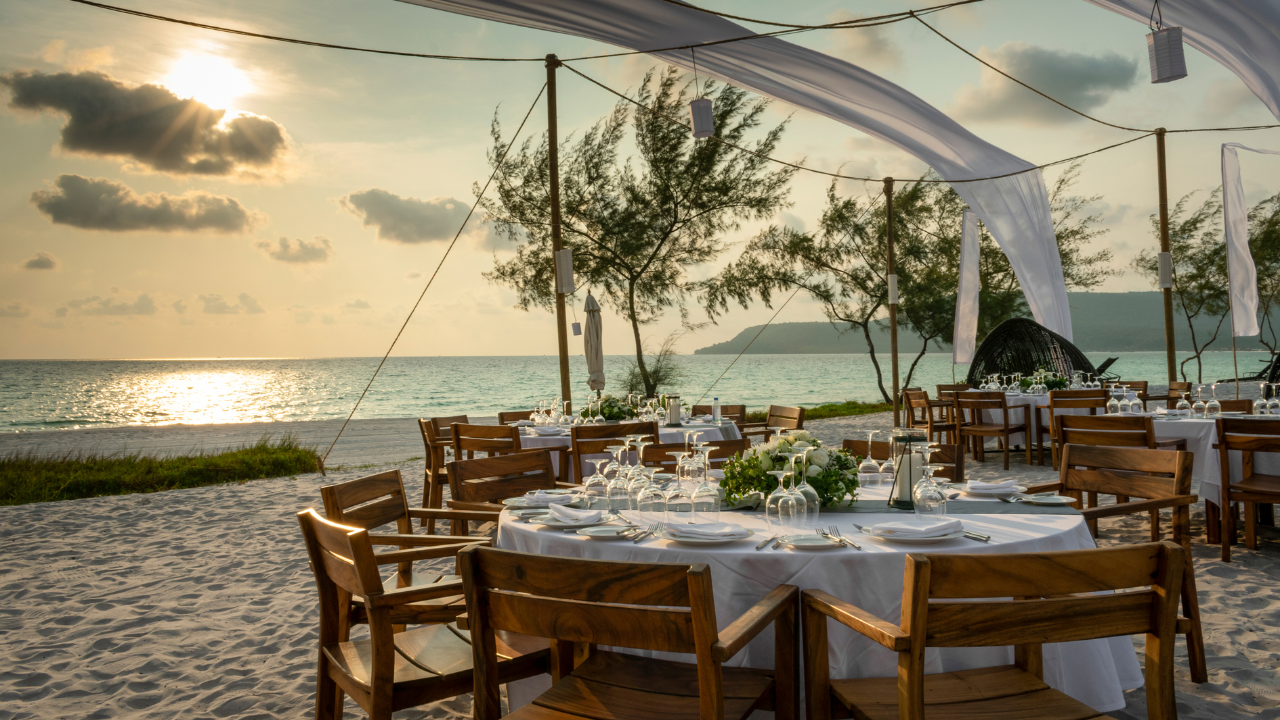
- Choose your coast for the light you want: the south and west for sunset, Candidasa and the east for sunrise and a quieter setting.
- Local traditions like a melukat blessing, Balinese ceremonial dress and a live gamelan procession can make the day unmistakably Bali.
- Bali's Hindu culture means a full bar and dishes like babi guling are standard at receptions.
- Ask who cooks the food. An in-house kitchen allows a custom menu and a smoother move from ceremony to celebration.
A Bali destination wedding is what many couples dream of, and the lucky ones who make it happen are in for one of the most dreamlike experiences of their life. It's the same island where Chris Pratt and Anna Faris married at a Jimbaran resort in 2009, and where former Miss Universe Jennifer Hawkins and Jake Wall said their vows on a cliff-top in Uluwatu.
Like any wedding, planning one on the island comes with its own important things to know and its own logistics. Today, we share twelve interesting facts and must-knows about having a wedding on one of the most popular and beautiful tropical destinations in the world.
The Ceremony on the Beach Runs Separately From Your Legal Marriage

Indonesia handles marriage exclusively through religion, with a civil-marriage route absent from the system entirely. Legal marriage requires a religious ceremony conducted by an officiant of one of six state-recognised religions, with both partners registered under that same faith, followed by civil registration.
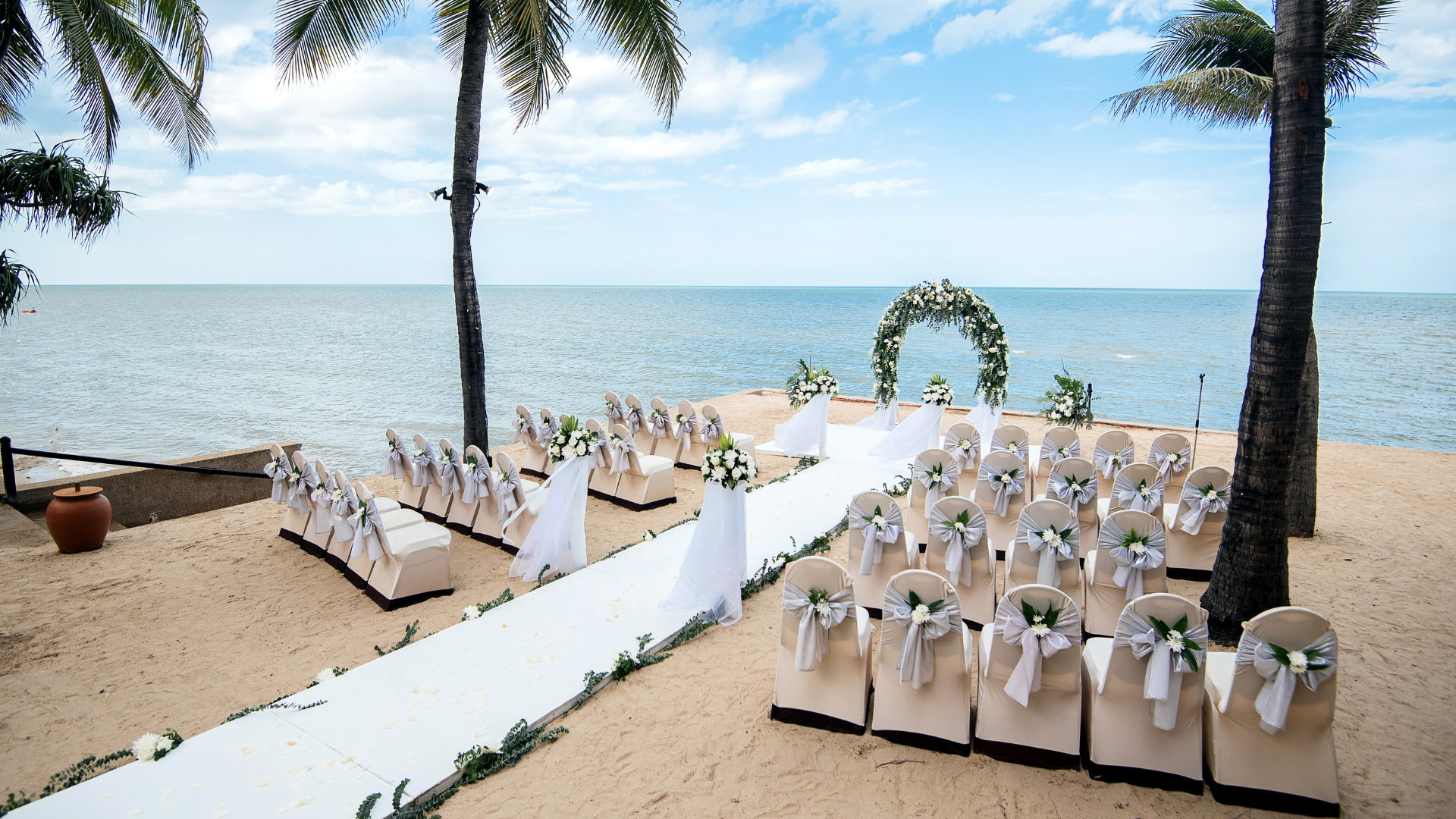
Most foreign couples fall outside that requirement, and most skip the legal route by design. Instead, the wedding a couple has in Bali runs as a symbolic event, separate from any government registration, and the legal paperwork gets handled elsewhere at a registry office at home before the trip, or through an embassy.
Dry Season Is Also the Busiest Booking Season
April through October is Bali's dry season, and it's also when wedding demand peaks across the island, especially July, August, and the window from mid-December through early January.
Full-property venues that host one wedding party at a time have exactly one date available per booking window, so the venues couples want most fill up close to a year ahead for peak dates. Off-season dates (the wetter months) carry far more flexibility and, often, better rates, which is a trade worth weighing against the weather risk.
One Day a Year, the Entire Island Shuts Down
Nyepi, Bali's Day of Silence, falls once a year on the Hindu lunar calendar (mid-to-late March, on a date that shifts annually). For 24 hours, the airport closes entirely, flights stay grounded, vehicles stay off the roads, and everyone on the island, tourists included, stays inside their accommodation with lights dimmed.
Every vendor stands down, every vehicle stays parked, and every guest stays exactly where they are. A wedding date scheduled too close to Nyepi risks colliding with a shutdown that sits outside the reach of any amount of planning, so it's worth checking the year's date before locking anything in.
A Ten-Day Island-Wide Festival Can Quietly Reshape the Wedding Week
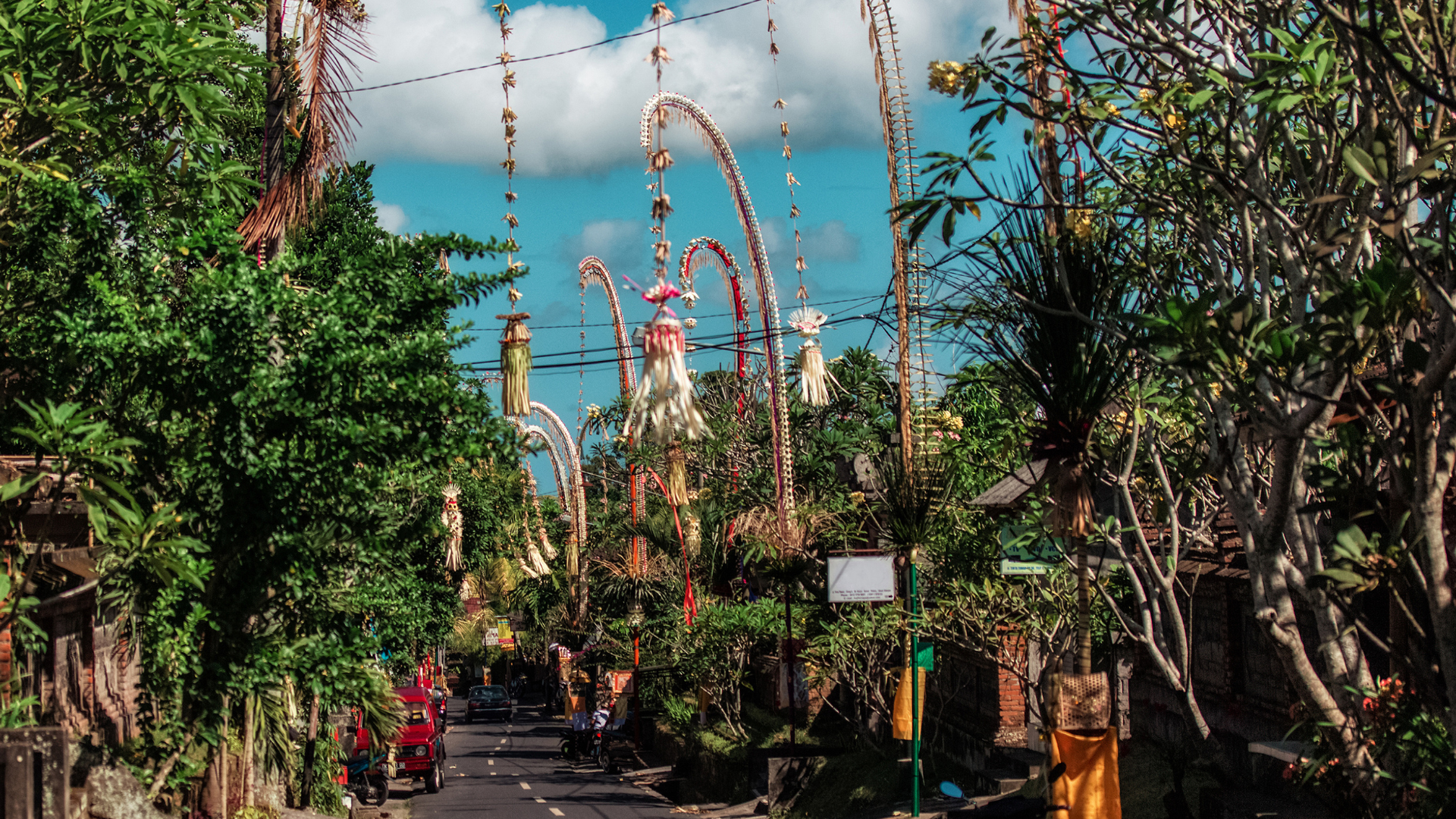
Galungan and Kuningan are Bali's most significant recurring holy days, arriving roughly every 210 days on the Pawukon calendar and running across a ten-day window. Galungan marks the day ancestral spirits are believed to visit the living, and Kuningan closes the celebration ten days later. Streets fill with penjor, tall bamboo poles arched with offerings and palm-leaf decoration, and many local staff take leave to observe the holiday with family, which can thin out vendor and venue-staff availability right when a couple wants everyone fully present.
It runs as a completely different kind of disruption to Nyepi. Nothing shuts down entirely, but confirming staffing and vendor commitments gets harder during the window, so it's worth checking the dates against a wedding date early.
Balinese Couples Pick a Wedding Date With a Priest
Balinese Hindu tradition runs on the Pawukon calendar, a 210-day cycle used to mark which dates carry good fortune for a major life event and which ones a family avoids entirely. A local priest, a pedanda or pemangku, typically gets consulted well before a wedding date is set, checking it against the calendar the same way a couple elsewhere might check a venue's availability first.
Few foreign couples marrying in Bali follow the system to the letter, but plenty pick up the habit informally, asking a celebrant or wedding planner to flag a date that lands well by local custom, alongside the practical checks around season and venue availability. It turns date-picking into something closer to a blessing, and it's a detail worth asking a Balinese celebrant about directly, since the custom runs deep.
The Island Sits Beside an Active Volcano

Mount Agung, East Bali's tallest peak, is an active volcano that erupted in late 2017, sending ash high enough to close Bali's international airport for several days and strand tens of thousands of travellers mid-trip.
Eruptions of that scale are rare, and the mountain sits dormant for years at a stretch, but the 2017 closure is recent enough that wedding planners and travel insurers alike now treat it as a real, if unlikely, planning consideration.
Couples flying in guests from overseas sometimes build in a buffer day either side of the wedding date and take out travel insurance that explicitly covers volcanic disruption, a detail worth raising with an insurer directly, since standard travel cover often leaves that specific risk out by default.
The Ocean Behind a Couple Depends Entirely on Which Coast They Pick

Most people picture a Bali wedding with the Indian Ocean behind them at sunset, the classic breath-taking cliff-top shot out of Uluwatu. That view is real, and it belongs to Bali's south and west coasts, where the Indian Ocean meets the island directly across dramatic cliffs and beachfront stretches that photograph as pure tropical paradise.
Bali's east coast runs a completely different setting. Around Candidasa, the coastline fronts the Bali Sea instead, catching sunrise over the water rather than sunset, backed by a lush jungle interior and a quieter kind of natural beauty, with the sea breeze carrying differently than it does in the south. Couples choosing a venue purely off a photo often assume every coastline faces the same direction, and it's worth asking a venue directly which ocean and which direction it actually faces before booking, since a beach that catches an amazing sunrise trades away a simply stunning sunset, and the reverse holds true.
Bali's south also carries the island's heaviest wedding-venue concentration, along with denser traffic, bigger tourist crowds, and, in some areas, sound curfews on receptions.
A Purification Ritual Often Comes Before the Vows
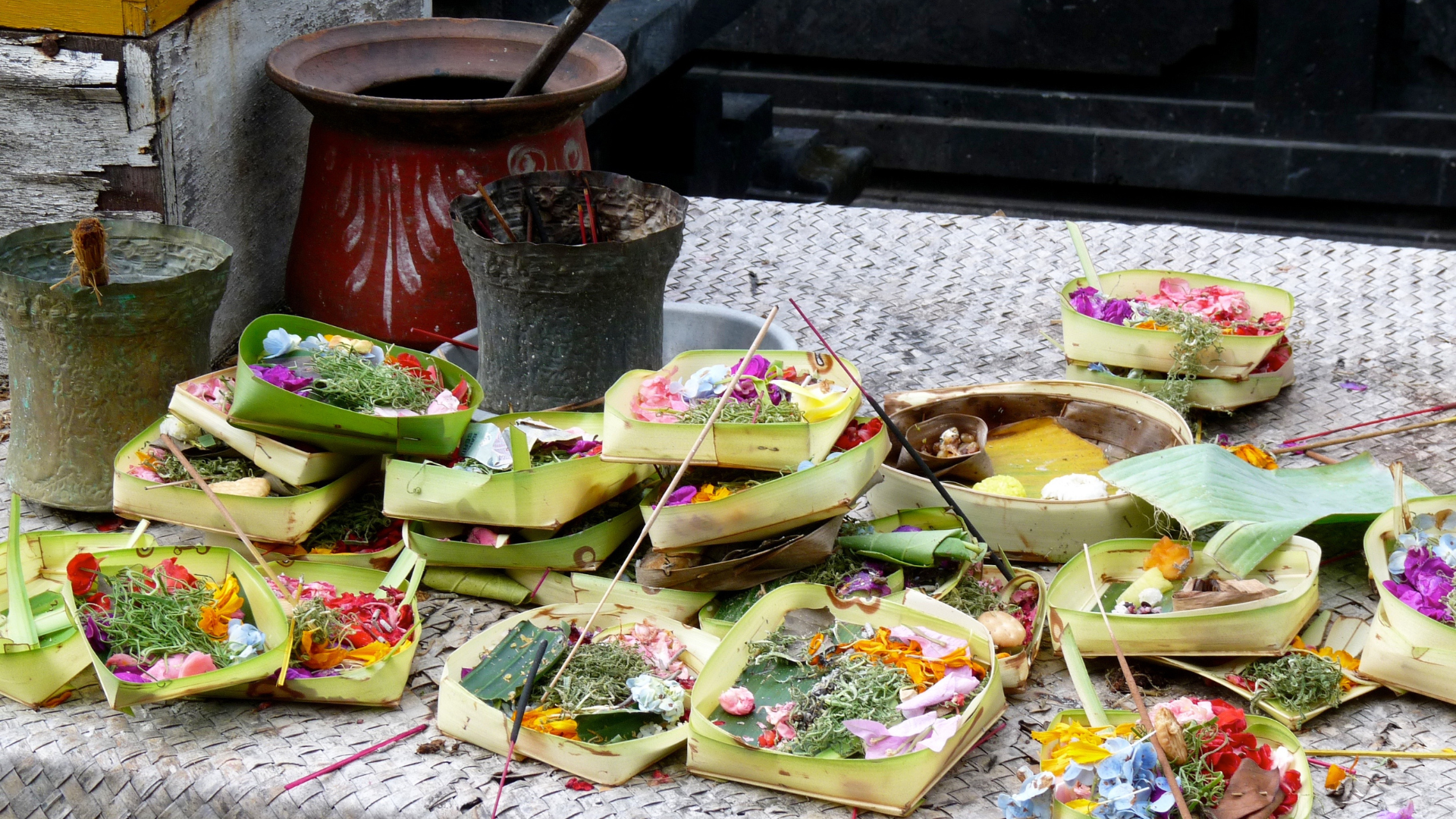
Melukat is a Balinese Hindu cleansing ceremony, a holy-water blessing performed at a temple or natural spring to wash away negative energy before a major turning point in life. It has run as a purely local, spiritual practice for generations, and over the last decade it has crossed over into something couples getting married in Bali now request directly, usually scheduled the morning of the ceremony or the day before.
A priest leads the blessing, pouring water over the couple's heads at a series of spouts, each said to carry a different intention. It's a genuinely different way to start a wedding day, and a growing number of couples now build it straight into the morning schedule.
Traditional Balinese Dress Makes a Common Guest Appearance
Many foreign couples marrying in Bali add a formal-wear change partway through the day into Balinese ceremonial dress. This includes a kebaya, a fitted lace or brocade blouse paired with a sarong for the bride, and an udeng, a folded head cloth, alongside a sarong and sash for the groom. Some venues offer the full outfit as part of a styling package, and others leave it to a couple who prefer their own style to source it through a stylist ahead of time.
It reads as a genuine nod to the setting, and it tends to show up in the wedding album far more often than a couple expects going in, since photographers gravitate toward it for the contrast against a beach or garden backdrop.
A Live Gamelan Orchestra Is a Booking Option
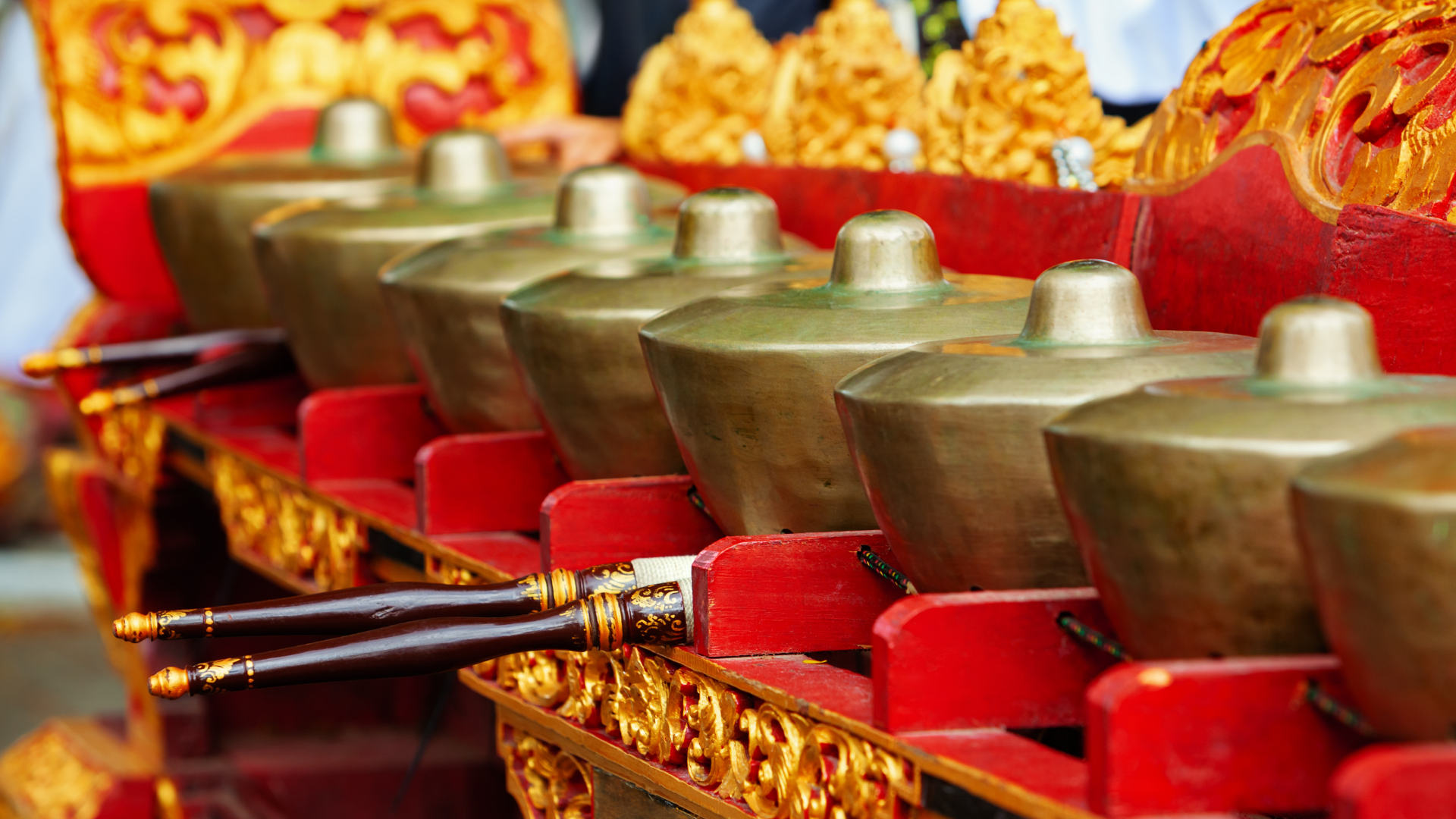
Gamelan is Bali's traditional percussion orchestra, a mix of metallophones, gongs, and drums that provides the sound behind most Balinese ceremonies and temple festivals on the island. Couples can book a gamelan ensemble directly for part of the wedding day, most commonly to accompany a ceremonial procession where offerings, umbrellas, and decorated towers of fruit and flowers get carried in behind the couple on the way to the ceremony space.
It runs as a genuinely different entertainment option to a string quartet or a DJ, distinctly tied to the island, and it's worth asking a planner or venue directly whether local musicians are available for hire.
Bali Runs on Different Rules to the Rest of Indonesia at the Dinner Table
Indonesia overall is a majority-Muslim country, and alcohol and pork carry real restrictions across much of it. Bali is the exception, as the island holds a significant Hindu majority, and both alcohol and pork appear freely on menus, including at weddings, where a full bar and dishes like babi guling, Bali's famous suckling pig, show up as standard reception fare. Couples planning a reception menu, or briefing guests on what to expect, can treat Bali's dining culture as its own thing entirely, separate from assumptions that might apply to travel elsewhere in Indonesia.
The Kitchen Matters More Than the Florist
Reception catering is where the difference between venue types shows up fastest. A resort running from a fixed catering list offers a set menu with limited substitution, sometimes pulling in nearby restaurants for overflow. A venue with its own in-house kitchen and chef team, common at private-villa properties, can build a genuinely custom menu around the couple rather than a template, adjusting for dietary needs, cultural requirements, or a specific dish that matters to the family.
Live music, timing, and how the room shifts from ceremony to celebration all run through the same team when catering sits in-house, rather than being coordinated separately with an outside restaurant partner. It's worth asking who actually cooks the food, how the celebration gets staged once dinner wraps, and how much of the menu is fixed before a couple ever gets involved.
Common questions
What should couples look for in Bali wedding venues?
Bali wedding venues range from a resort to a private estate, and each one plays host to a different kind of day. A hotel ballroom suits a big day with a large guest list, while a private villa or wedding chapel plays host to a more intimate setting for close friends and family instead. The right choice comes down to guest count, budget, and the vision a couple has for their special day.
What's typically included in Bali wedding packages?
Bali wedding packages usually cover the ceremony space, decor, and a reception menu, with the finer details, florals, styling, and any add-ons, confirmed once a couple's guest list and budget take shape. Couples planning a destination wedding in Bali can expect a proposal built around their own ideas rather than a fixed template, so the final package reflects their own love story rather than a copy of someone else's.
What makes an intimate wedding in Bali different from a larger celebration?
An intimate wedding in Bali usually means a guest list built around close friends and family rather than a big day with hundreds of guests. Many couples choose this route for the quiet moments it allows: real time with each guest, a slower pace, and a setting that feels personal rather than crowded.
Can guests stay on-site, or do they need nearby hotels?
Some Bali wedding venues suit guests staying entirely on-site, while others work better paired with nearby hotels for overflow. It's worth confirming this early, since it shapes the whole weekend, from the ceremony through to the moment everyone gathers to celebrate afterward.
How should a couple plan the honeymoon after their wedding?
A honeymoon booked straight after the wedding lets a newly married husband and wife begin the next part of life together, without the post-wedding scramble of arranging a second trip. Many couples simply extend their stay by a few nights once guests head home, turning the same setting into their honeymoon before flying out.
How far in advance should a couple confirm a wedding chapel or venue?
A wedding chapel or private venue in Bali should be confirmed well ahead of a couple's preferred date, since the best dates for a perfect day book out months, sometimes close to a year, in advance. Checking a venue's own website for real availability is the fastest way to confirm a date early.
Tell us what you have in mind and we will come back with what the estate can hold.
Plan your wedding
Vows by the sea, the full estate, and a day made entirely yours.
Learn more →
Plan your vacation
Family holidays, reunions, and quiet time together, by the sea in Candidasa.
Learn more →