- Galungan celebrates the victory of dharma (virtue) over adharma (evil). It also marks the return of the ancestral spirits to their family homes.
- The festival falls every 210 days on the Balinese pawukon calendar. It usually takes place twice a year.
- Galungan opens a ten-day festival period. It ends with Kuningan, when the ancestors return to the heavens.
- The festival recalls the god Indra's victory over King Mayadenawa, a ruler who banned worship of the gods.
- The first recorded Galungan dates to 882 CE. King Sri Jayakasunu restored it around 1204 CE after a lapse.
- Preparations begin 25 days before Galungan, at Tumpek Wariga.
- Penjor, tall bamboo poles decorated with young coconut leaves, line the streets for 35 days.
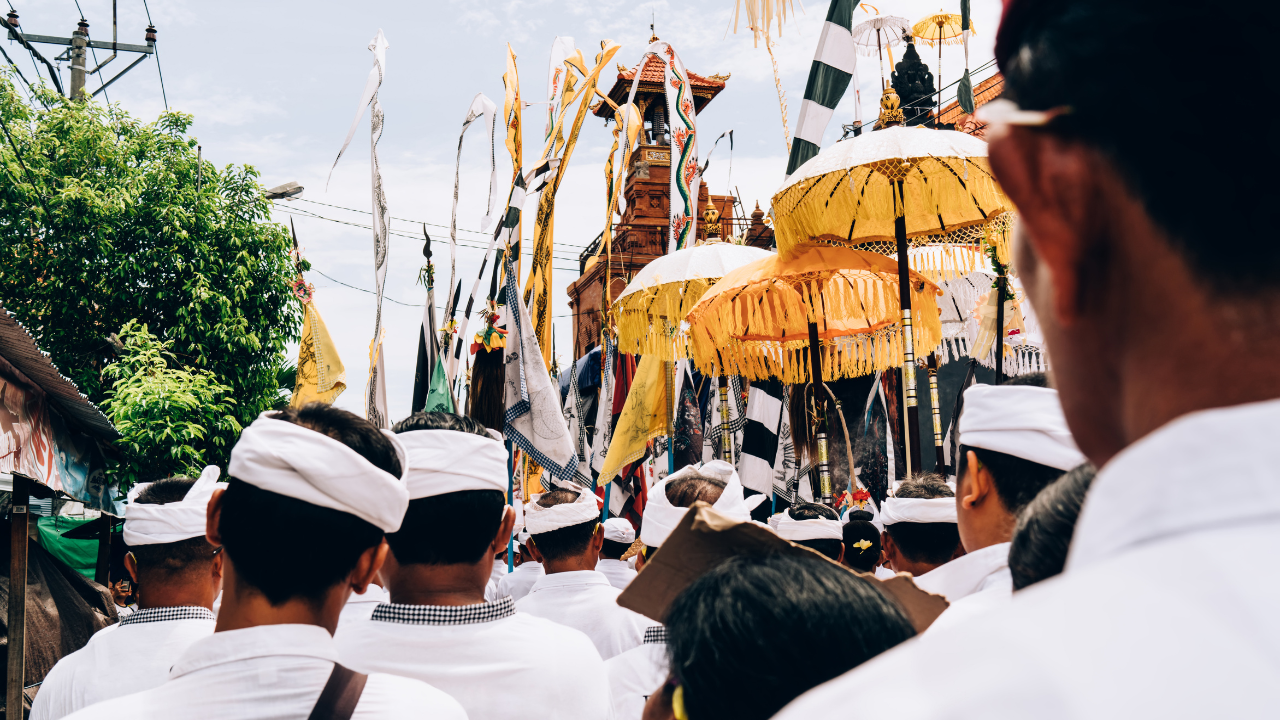
- Families pray first at the family temple, then at the village temples, in traditional attire.
- Festival dishes include lawar, sate lilit, jukut ares, babi guling and nasi kuning.
- The next Galungan falls on 13 January 2027, with Kuningan on 23 January 2027.
Galungan is a Balinese Hindu holiday that celebrates the victory of dharma (virtue) over adharma (evil) and marks the return of the ancestral spirits to their family homes. It falls every 210 days, on the Wednesday of Dungulan, the 11th week of the Balinese pawukon calendar. Galungan day opens a ten-day festival period that ends with Kuningan, the day the ancestors depart. It is the most important recurring holiday for Balinese Hindus and is celebrated in every village across the island.
During Galungan, families pray at the family temple and the village temples, present offerings to the gods and ancestors, and raise a penjor, a tall bamboo pole decorated with young coconut leaves, at the entrance to every home. Kitchens prepare traditional Balinese dishes such as lawar and sate lilit, and Balinese people who live away from their home village travel back for the festival.
For visitors, Galungan is a unique opportunity to see Balinese culture at its most active. This guide covers the history and origins of Galungan, its ceremonies and dates, the meaning behind its symbols, the food of the festival, and practical etiquette for visiting.
What Is Galungan?
The name Galungan comes from Old Javanese and carries the meaning of victory, or of fighting and winning a battle. Dungulan, the name of the Balinese calendar week in which Galungan falls, carries the same meaning, so both the festival and its week point to the same idea of a battle won.
In the Hindu religion as practised in Bali, that battle has two levels. On one level, Galungan commemorates a mythical war between the gods and a ruler who denied them. On a personal level, it marks the victory each person wins over the negative forces within the self, such as anger, greed, laziness and the other qualities Balinese teaching associates with adharma. Many Balinese priests and teachers describe Galungan as a day for self-reflection and self-control as much as a day of celebration.
Galungan is also a festival of the ancestors. Balinese people believe that on Galungan the spirits of deceased relatives descend to visit their former homes. Families receive them through prayers and offerings at the family temple and across the household compound. The ancestral spirits stay with the family through the festival period and depart on Kuningan, ten days later.
Gratitude runs through every part of the holiday. Families give thanks to Ida Sang Hyang Widhi Wasa, the supreme god of Balinese Hinduism, for the creation of the universe, for harvests and for the health and prosperity of the household. In Balinese thought, gratitude, harmony with the gods, and harmony between people and the natural world form a single whole, the same principle described in Tri Hita Karana.
The Origins of Galungan: Indra and Mayadenawa
The story behind Galungan is the legend of King Mayadenawa. In Balinese tradition, Mayadenawa ruled from the ancient kingdom of Bedahulu. He was a descendant of giants, a skilled practitioner of magic and a ruler with a reputation for cruelty. He declared himself greater than the gods, banned his subjects from worshipping at the temples, and forbade the rituals and offerings that structured Balinese life.
The people of Bali appealed for help, and the god Indra descended from the heavens with an army to confront him. The war ran for a long time. Mayadenawa used his magic to change shape, taking the form of animals, plants and stones to escape his pursuers. In one well-known episode, he crept into Indra's camp at night and poisoned the water supply, and many of Indra's soldiers fell ill. Indra struck the ground and created a spring of holy water that restored his army. Balinese tradition links that spring to Tirta Empul in Tampaksiring, a temple where Balinese Hindus still come to bathe in holy water.
Indra finally defeated Mayadenawa, and the victory of the god over the godless king became the victory of dharma over adharma that Galungan celebrates. Some versions of the story explain the ten days between Galungan and Kuningan through the same legend. Indra's forces feared Mayadenawa had hidden himself in another form, and the victory was declared complete only on the tenth day.
The same legend shapes the culture of East Bali. In Tenganan, the Bali Aga village, the founding story begins with Indra's defeat of Mayadenawa, and the village's Pandan War honours Indra as a warrior god.
A History Recorded on Palm Leaf
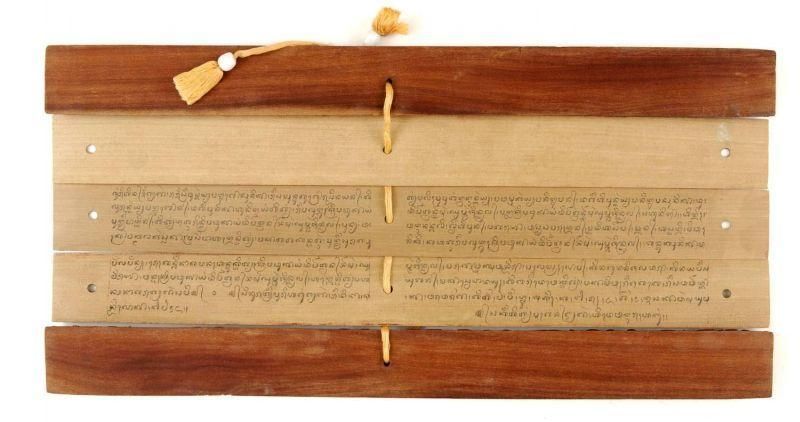
Image source: Wikipedia
The earliest written reference to Galungan comes from the lontar Purana Bali Dwipa, a manuscript inscribed on dried palm leaves. It records that Galungan was first celebrated on Buda Kliwon Dungulan, on the full moon of the fourth Balinese month, in the Saka year 804, which corresponds to 882 CE. That makes Galungan one of the oldest continuously observed religious festivals on the island.
The festival has a break in its history. According to Balinese manuscripts, Galungan stopped being celebrated for a period during the reigns of later kings, a lapse that some accounts put at around 23 years. During that time, the chronicles describe a series of calamities across the island, with short lives among the rulers and disasters affecting the land and its people.
King Sri Jayakasunu, troubled by these events, withdrew into meditation and spiritual practice to find the cause. According to the lontar that carries his name, the goddess Durga appeared to him and explained that the misfortunes followed from the neglect of Galungan. She instructed him to restore the festival on Buda Kliwon Dungulan, as his ancestors had done, and to mark it with penjor and offerings. Jayakasunu reinstated Galungan in the Saka year 1126, around 1204 CE, and the festival has been celebrated across Bali ever since.
The Pawukon Calendar and Galungan Dates
Bali runs several calendars side by side. Galungan follows the pawukon, a 210-day cycle made up of 30 weeks, called wuku, of seven days each. The pawukon also overlaps a five-day market week, and the days where specific cycles meet carry particular religious weight.
Galungan falls on Buda Kliwon Dungulan, with Buda for Wednesday, Kliwon for the fifth day of the five-day week, and Dungulan for the 11th wuku. Because the cycle repeats every 210 days, Galungan usually takes place twice in each Gregorian year, and its date moves forward by around seven months each time. In some years, the cycle produces only one Galungan. 2026 was one of those years, with Galungan falling on 17 June and Kuningan on 27 June.
Kuningan falls ten days after Galungan, on Saniscara Kliwon Kuningan, the Saturday of the 12th wuku.
| Year | Galungan | Kuningan |
|---|---|---|
| 2027 | Wednesday 13 January | Saturday 23 January |
| 2027 | Wednesday 11 August | Saturday 21 August |
| 2028 | Wednesday 8 March | Saturday 18 March |
| 2028 | Wednesday 4 October | Saturday 14 October |
| 2029 | Wednesday 2 May | Saturday 12 May |
| 2029 | Wednesday 28 November | Saturday 8 December |
| 2030 | Wednesday 26 June | Saturday 6 July |
For the next festival, the key days fall as follows:
| Day | Date | What happens |
|---|---|---|
| Tumpek Wariga | Saturday 19 December 2026 | Offerings and blessings for trees and plants |
| Sugihan Jawa | Thursday 7 January 2027 | Purification of temples and the wider world |
| Sugihan Bali | Friday 8 January 2027 | Purification of the self |
| Penyekeban | Sunday 10 January 2027 | Fruit and rice set to ripen and ferment |
| Penyajaan | Monday 11 January 2027 | Rice cakes made for offerings |
| Penampahan Galungan | Tuesday 12 January 2027 | Ceremonial cooking; penjor raised |
| Galungan | Wednesday 13 January 2027 | Prayers at family and village temples |
| Manis Galungan | Thursday 14 January 2027 | Family visits |
| Kuningan | Saturday 23 January 2027 | Ancestors depart; ceremonies close by midday |
| Pegatwakan | Wednesday 17 February 2027 | Penjor taken down; the cycle ends |
Dates follow the Balinese calendar issued for each year. Our team confirms the local ceremony schedule for every stay.
The 25-Day Lead-Up to Galungan
Galungan begins long before the day itself. The preparations run through a series of named days, each with its own rituals and purpose.
- Tumpek Wariga, 25 days before Galungan: The cycle opens with offerings to Sang Hyang Sangkara, the deity associated with the growth and health of plants. Families sprinkle holy water on the trees in their gardens and plantations and present offerings of bubuh, a rice porridge, so the coconut, banana, mango and other fruit trees bear fruit in time for the festival. The day is also known as Tumpek Bubuh and Tumpek Pengatag.
- Sugihan Jawa, six days before: The word sugi means pure or clean, and jawa here comes from jaba, meaning outside. Sugihan Jawa is a day for purifying everything outside the self, the bhuana agung or greater world. Families and temple communities clean and purify their temples and shrines.
- Sugihan Bali, five days before: Sugihan Bali turns the same purification inward, toward the bhuana alit, the inner world of the individual. Balinese Hindus bathe, cleanse themselves and ask for holy water from a priest to prepare body and mind to receive the gods and the ancestors.
- Penyekeban, three days before: The name comes from nyekeb, to cover or seal. In the kitchen, bananas and other fruits are covered to ripen, and black sticky rice is sealed to ferment into tape. In spiritual terms, the day calls for restraint, a sealing of the senses against the influences of adharma.
- Penyajaan, two days before: Families make jaja, the traditional Balinese rice cakes used in offerings and served to guests. Kitchens fill with women and girls shaping, colouring and frying cakes of rice flour and coconut.
- Penampahan Galungan, the day before: Penampahan is the busiest day of the cycle. Before dawn, men in each family or banjar, the local community association, slaughter pigs and chickens for the feast and gather to prepare lawar and sate. The communal preparation of lawar, known as ngelawar, is a social event in its own right. In the afternoon, after midday, families raise their penjor in front of the house. Balinese teaching also reads Penampahan as the day the forces of adharma make their final attempt to tempt people away from virtue, which makes it a day for vigilance as well as preparation.
Penjor: The Tall Bamboo Poles of Galungan
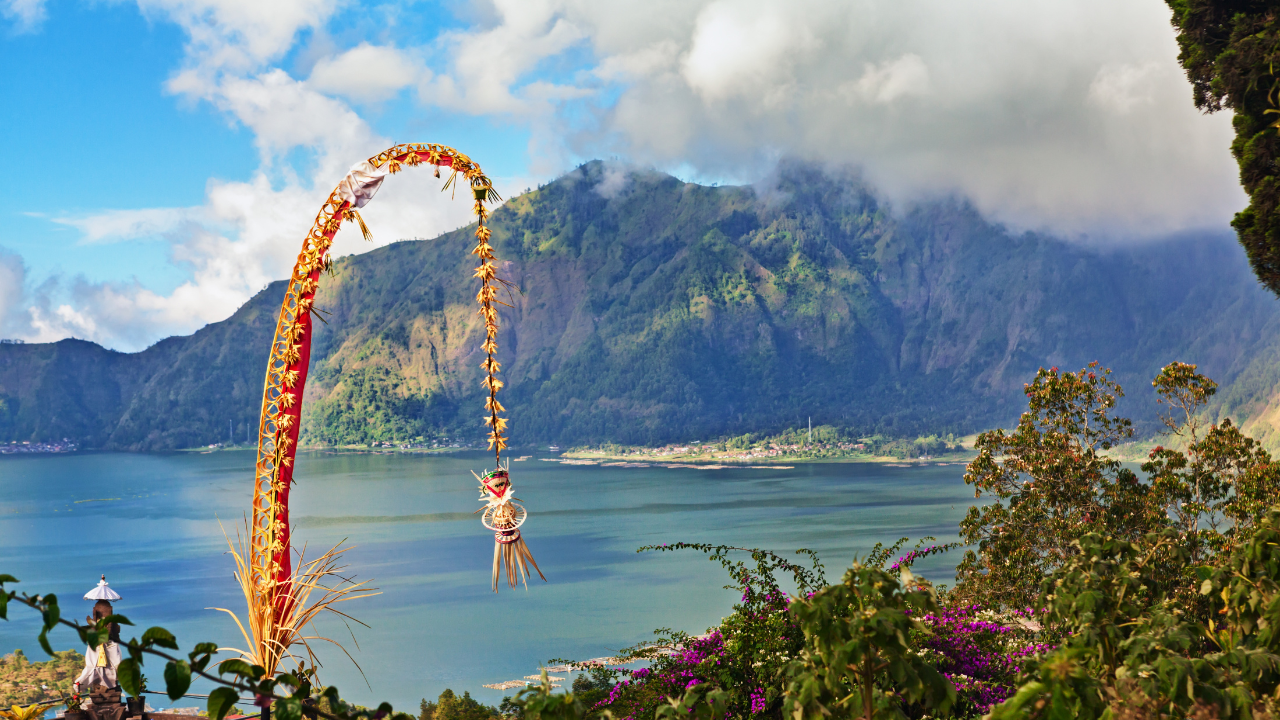
The most visible symbol of Galungan is the penjor. Each household raises a tall bamboo pole at the entrance to its compound, curving over the road at the top. By the evening of Penampahan, these bamboo poles line the streets of every village, so a drive anywhere in Bali becomes a route under hundreds of arching poles.
A penjor is built from a single long bamboo stem, trimmed and bent so its tip arcs downward. Families decorate the pole with young coconut leaves, called janur, cut and woven into intricate patterns, along with palm fronds, rice stalks, corn, coconut, fruits, rice cakes and cloth. Near the base, a small bamboo shrine called a sanggah penjor holds daily offerings.
Every element of the penjor carries meaning. The curved pole is read as the shape of a mountain, a reference to Mount Agung and to the gods who dwell there, with the arched tip as its summit. The harvest items hung along its length represent the abundance of the earth, offered back in gratitude. Many Balinese also read the penjor as a sign of victory, the banner of dharma raised over every household.
Penjor building is a family activity, and in many villages neighbours and banjar members compete in friendly fashion over whose pole shows the most skill and beauty. The penjor remain standing for 35 days, until Pegatwakan, when families take them down and burn the dried decorations.
Galungan Day: Prayers at Family and Village Temples
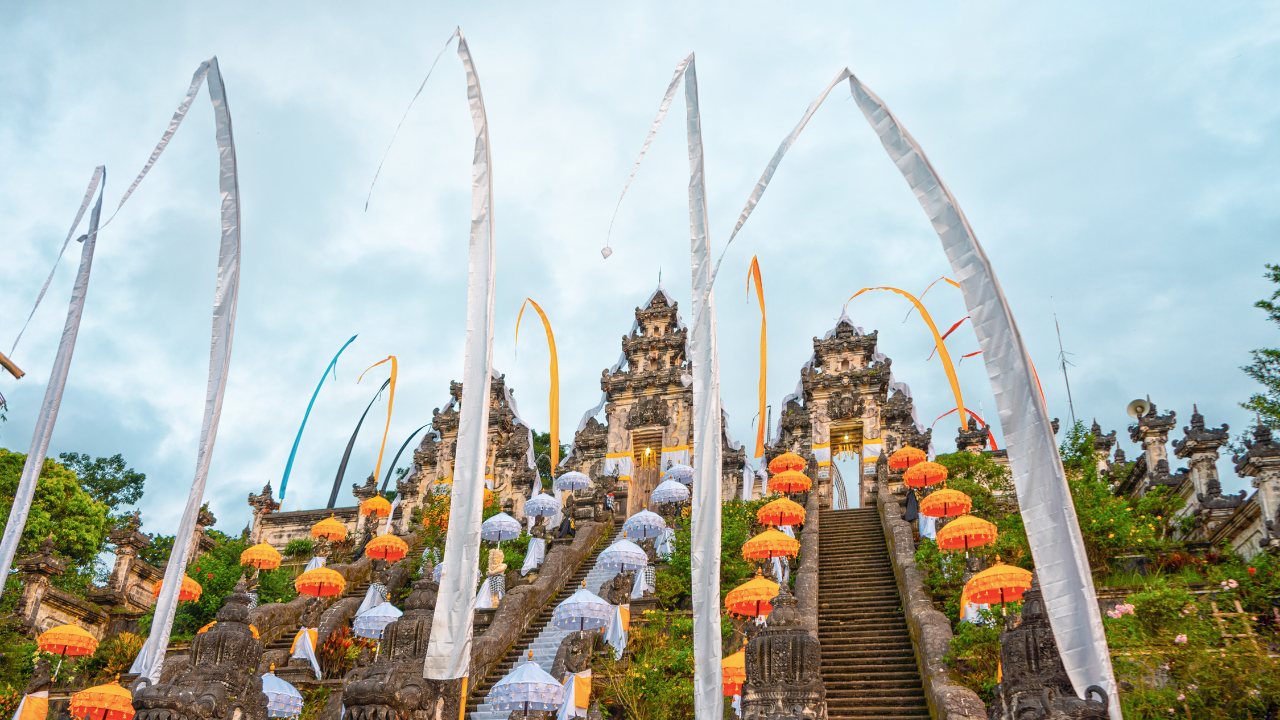
On Galungan day itself, families rise early to complete their offerings. Women carry towering banten, ceremonial offerings built from fruits, cakes, flowers and rice, stacked into elaborate arrangements and balanced on the head. Smaller offerings go to every shrine in the house compound, to the kitchen, the well, the gate and the vehicles.
The Galungan ceremony begins at the family temple, called the sanggah or merajan, the shrine area within every Balinese compound where the ancestors are honoured. This is where the family receives the returning ancestral spirits. The household gathers in traditional attire to pray, receive holy water from the head of the family or a priest, and press grains of rice to the forehead and throat as a sign of blessing.
After the family ceremony, people move on to the village temples. Each traditional Balinese village maintains three principal temples, known together as the Kahyangan Tiga: the Pura Puseh, dedicated to the origins of the community; the Pura Desa, the village temple for the living community; and the Pura Dalem, associated with death and the ancestors. Through the day, these temples are filled with families in ceremonial dress, gamelan music and the scent of incense and flowers.
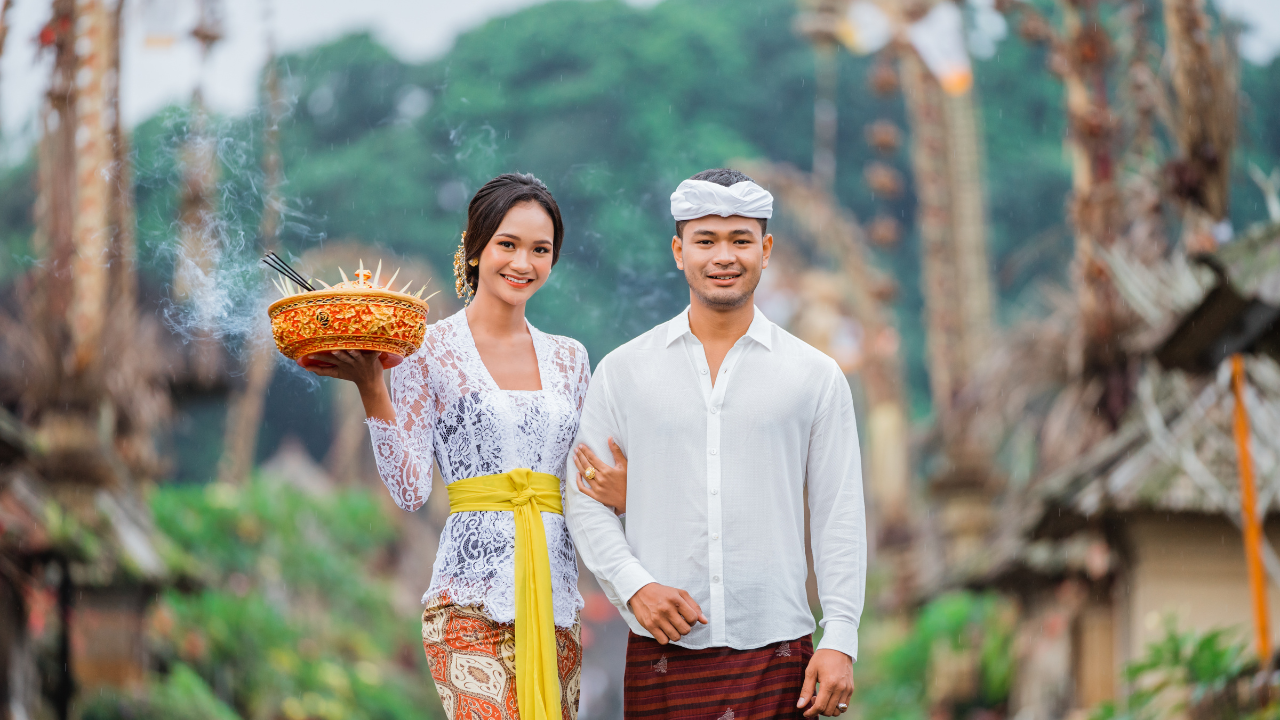
Traditional attire is required for temple worship and is part of the festive character of the day. Men wear a kamen, a wrapped sarong, with a saput overcloth, a sash, a shirt and an udeng headcloth. Women wear a kebaya blouse with a kamen and a sash, often with flowers set in their hair. Many families buy or sew new clothes for Galungan.
Galungan is also a homecoming. Balinese people who live and work away from their home village travel back to celebrate Galungan at home, and family temples across the island reunite generations who see each other only a few times a year. After prayers, the family shares the food prepared on Penampahan.
Traditional Balinese Dishes of Galungan
Food is central to the Galungan experience. The festival is the time of year when Balinese families prepare their most elaborate meals, and many authentic Balinese dishes, the culinary delights of the season, are closely tied to the Galungan table. Much of the cooking happens communally on Penampahan, and families share the results over the following days.
Lawar
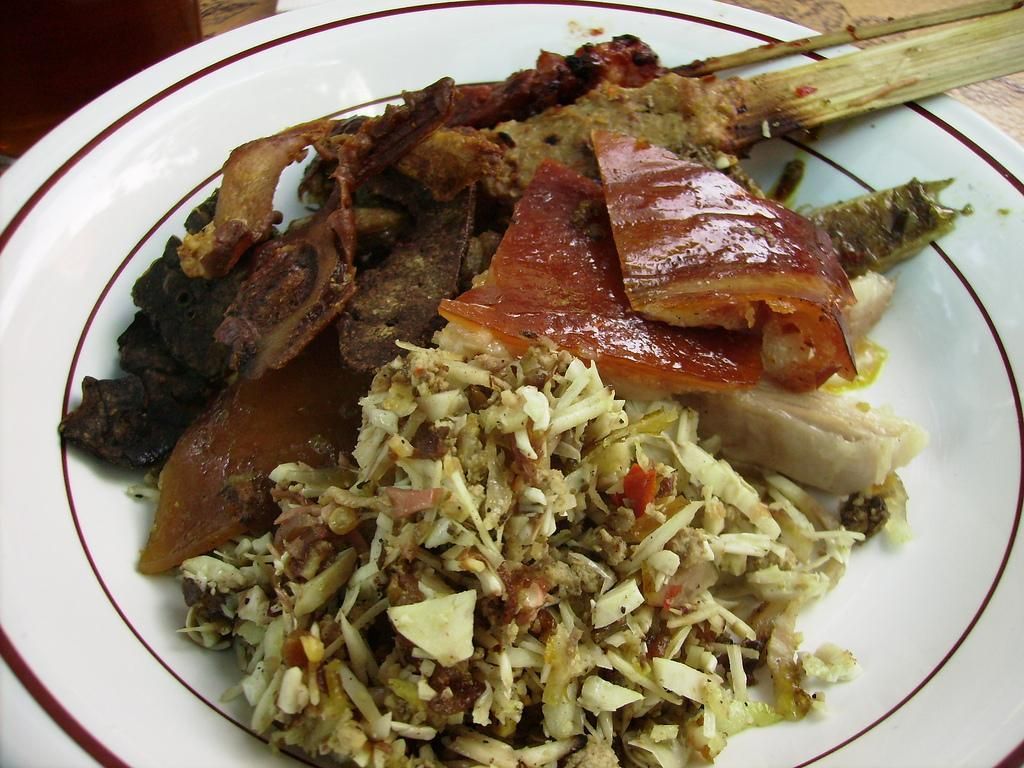
Image Source: Wikipedia
Lawar is the defining dish of Penampahan. It combines finely chopped meat, usually pork or chicken, with grated coconut, green beans or young jackfruit, and base genep, the Balinese spice paste of shallots, garlic, galangal, turmeric, ginger, chillies and other aromatics. Some versions include fresh blood for colour and depth of flavour. Men in each family or banjar prepare lawar together in the early morning, chopping and mixing by hand, and the dish is eaten the same day.
Sate lilit
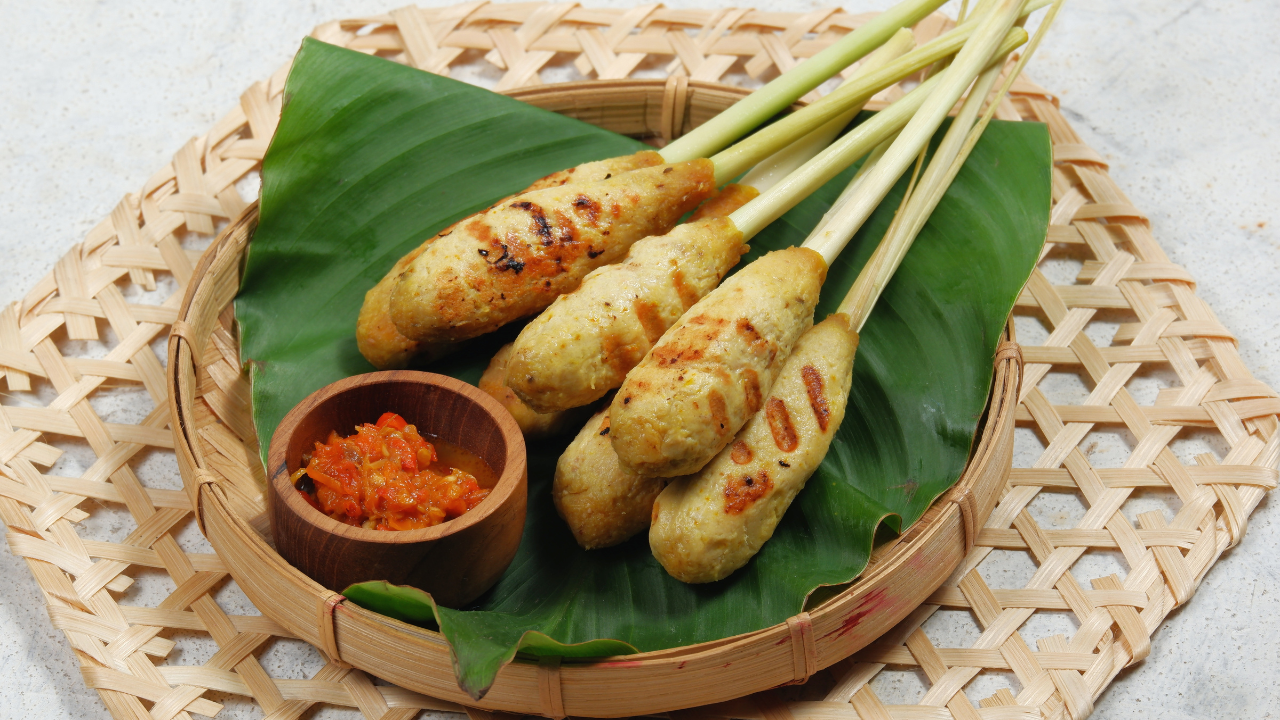
Sate lilit is minced meat or fish mixed with grated coconut and spice paste, then wrapped around flattened bamboo sticks or lemongrass stalks and grilled over coconut husk embers. The word lilit means to wrap or wind around. During Galungan, families make sate lilit in large quantities, both for offerings and for the table. The grated coconut keeps the meat moist, and the smoke from the husks gives it a delicious, lightly charred finish.
Jukut ares
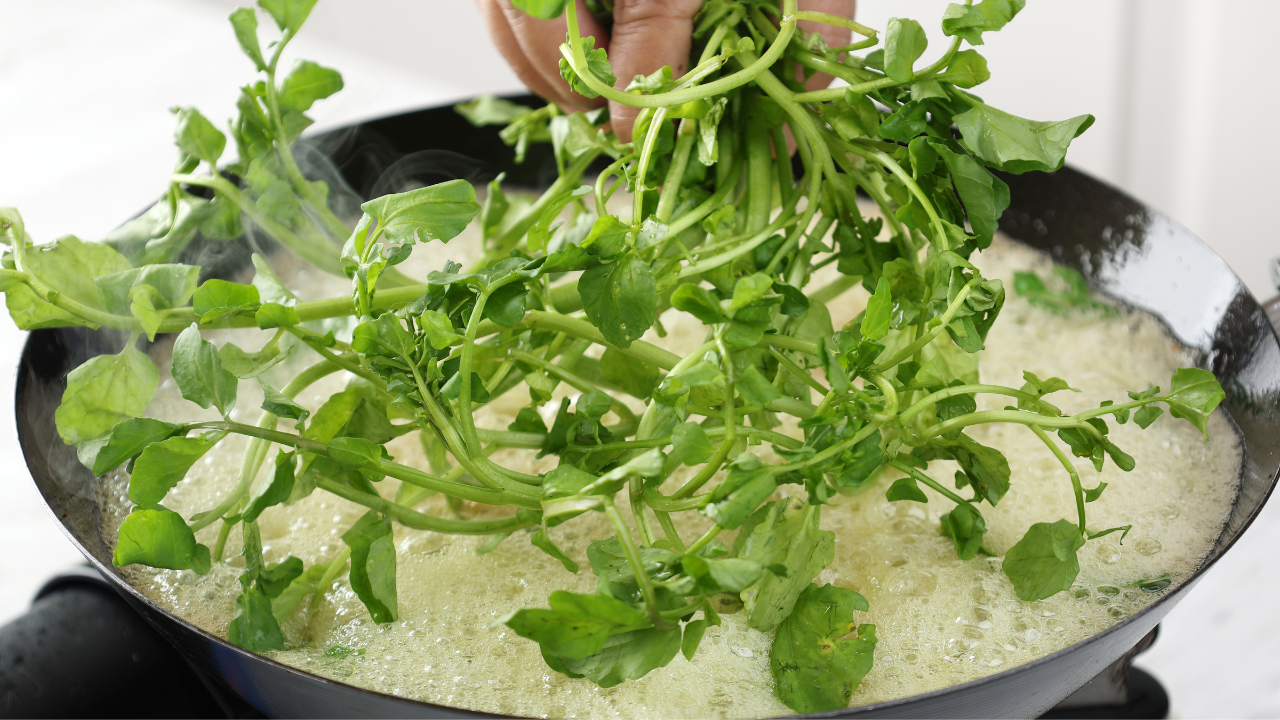
Jukut ares is a soup made from the tender inner trunk of the banana tree, simmered in a spiced broth with pork or chicken. The banana stem gives the soup a soft, slightly crunchy texture. Jukut ares is one of the traditional dishes most closely associated with Galungan, and many families serve it alongside lawar and sate.
Babi guling and tum
Spit-roasted pork, rubbed and stuffed with spice paste, appears at many Galungan feasts. Tum, minced meat seasoned with spices and wrapped in banana leaf parcels before steaming, is another festive staple. Families also make urutan, a Balinese pork sausage, from the same Penampahan preparations.
Nasi kuning
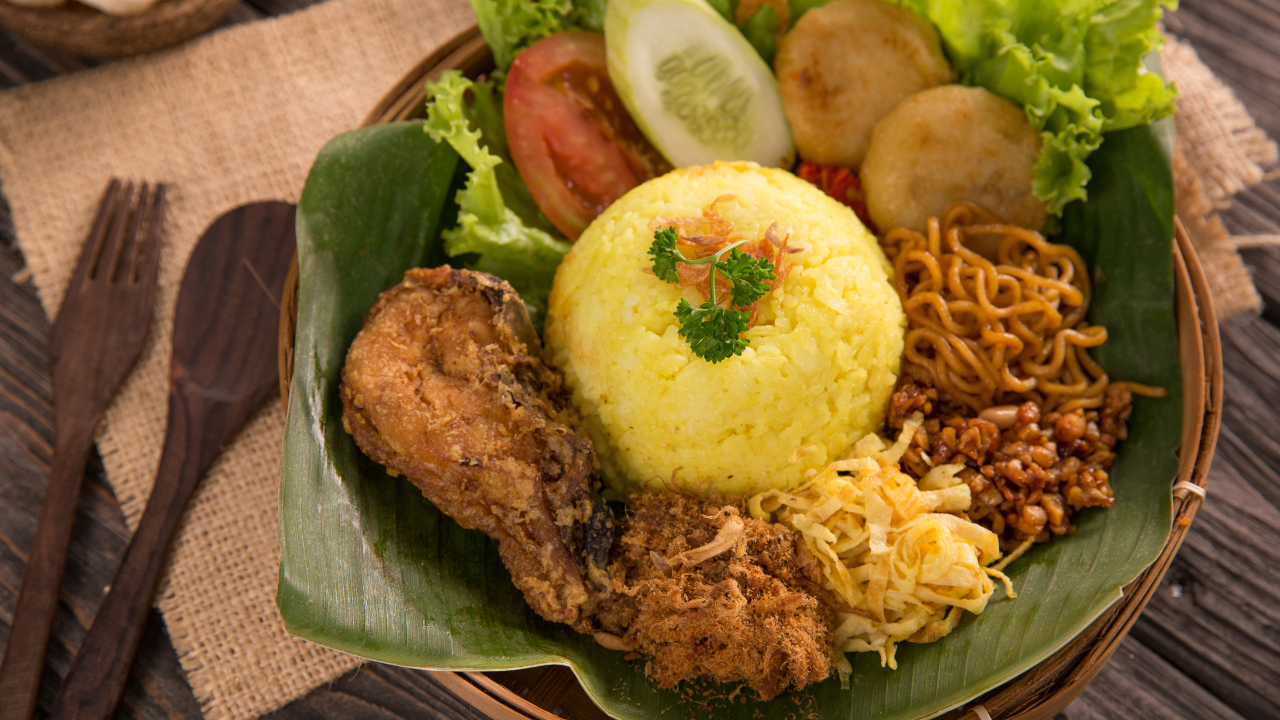
Turmeric-yellow rice is the signature dish of Kuningan, served with side dishes such as shredded chicken, egg, fried peanuts and sambal.
Experiencing Galungan from The Seed

The Seed sits on the beachfront at Candidasa, inside one of the most culturally active regions of Bali. During Galungan, guests step out of the estate into a coastline lined with penjor and village temples busy with families in ceremonial dress.
Our concierge team plans cultural experiences around the festival dates and the local ceremony schedule. Options include:
- Canang making on-site: A local instructor guides guests through weaving and assembling canang sari, the daily offerings placed across the island, with palm leaf, flowers and rice. It is a hands-on introduction to the offerings that fill every temple during Galungan.
- Tenganan village tour: A guided walk through the Bali Aga village near the estate, whose founding legend shares its roots in the story of Indra and Mayadenawa.
- Indonesian cooking classes: The Bloom Kitchen chef team leads hands-on classes in traditional Indonesian cuisine, including sate, sambal and banana leaf-wrapped fish. A personalised workshop can be built around dishes the guest chooses.
- Private excursions across Karangasem: Private transport and guided visits to the region's temples and water palaces, timed around opening hours and ceremony days.
For a group or family planning a stay around Galungan, our team can build the itinerary around the key days in the calendar, so you can witness and embrace the festival with the right context and respect for the communities celebrating it. See Local Discoveries and Cooking Classes for more, or share your dates through our Stays page.
Common questions
What is Galungan in Bali?
Galungan is a Balinese Hindu holiday that celebrates the victory of dharma, or virtue, over adharma, or evil. It also marks the return of the ancestral spirits to their family homes. Families pray at the family temple and village temples, present offerings and raise penjor in front of their homes. The festival period lasts ten days and ends with Kuningan.
When is the next Galungan?
The next Galungan falls on Wednesday 13 January 2027, with Kuningan on Saturday 23 January 2027. The following Galungan falls on Wednesday 11 August 2027, with Kuningan on Saturday 21 August 2027. Dates follow the 210-day pawukon calendar, so the festival usually takes place twice in each Gregorian year.
How long does Galungan last?
The main Galungan festival lasts ten days, from Galungan day to Kuningan. The wider ceremonial cycle runs for 42 days, beginning with Sugihan Jawa six days before Galungan and ending with Pegatwakan 35 days after it. Preparations begin even earlier, at Tumpek Wariga, 25 days before Galungan.
What is the difference between Galungan and Kuningan?
Galungan marks the arrival of the ancestral spirits and the victory of dharma over adharma. Kuningan, ten days later, marks the day the ancestral spirits return to the heavens. Kuningan ceremonies finish before midday and feature yellow rice and woven tamiang and endongan decorations.
What are the bamboo poles in Bali during Galungan?
The tall bamboo poles that line the streets during Galungan are called penjor. Each household raises one at its entrance on Penampahan, the day before Galungan. A penjor is decorated with young coconut leaves, rice stalks, fruits and cakes, and represents Mount Agung, the abundance of the earth and the victory of dharma.
What food is eaten during Galungan?
Galungan food centres on dishes prepared communally on Penampahan, the day before Galungan. Traditional dishes include lawar, sate lilit, jukut ares banana stem soup, babi guling, tum and urutan sausage. Nasi kuning, turmeric yellow rice, is the signature dish of Kuningan, and rice cakes such as jaja uli, dodol and tape ketan appear in offerings and on family tables.
Can tourists visit Bali during Galungan?
Tourists can visit Bali during Galungan, and the island remains open throughout the festival. Hotels, restaurants and attractions operate as usual, though some local shops and services close on the main days. Visitors should wear a sarong and sash at temples, step around offerings and follow the guidance of locals during ceremonies.
Is Galungan a public holiday in Bali?
Galungan and Kuningan are official holidays in Bali. Schools close for the festival period, and many government offices and Balinese-run businesses close on the main days so staff can return to their home villages and join family ceremonies.
What should I wear to a temple during Galungan?
Temple visits during Galungan require a sarong and a sash, with shoulders and knees covered. Balinese men wear a kamen, saput, shirt and udeng headcloth, and Balinese women wear a kebaya with a kamen and sash. Visitors can wear a simple sarong and sash, which hotels and guides can usually provide.
Where is the best place to see Galungan in Bali?
Galungan is celebrated in every Balinese Hindu village, so the festival is visible across the island. Traditional regions such as Karangasem in East Bali offer a close view of village ceremonies, with penjor lining the roads and families travelling between the family temple and the village temples throughout the day.
Tell us what you have in mind and we will come back with what the estate can hold.

Plan your vacation
Family holidays, reunions, and quiet time together, by the sea in Candidasa.
Learn more →
Host your retreat
A venue for facilitators, with a full hospitality team behind every session.
Learn more →