- Tenganan Pegringsingan is home to the Bali Aga, the original Balinese, whose roots go back to the Bedahulu kingdom that ruled before the Majapahit Empire arrived in 1343.
- Village legend says Indra gave the valley to the Peneges family after they found his sacred horse, and four sacred stones in the northern part of the village are linked to the story.
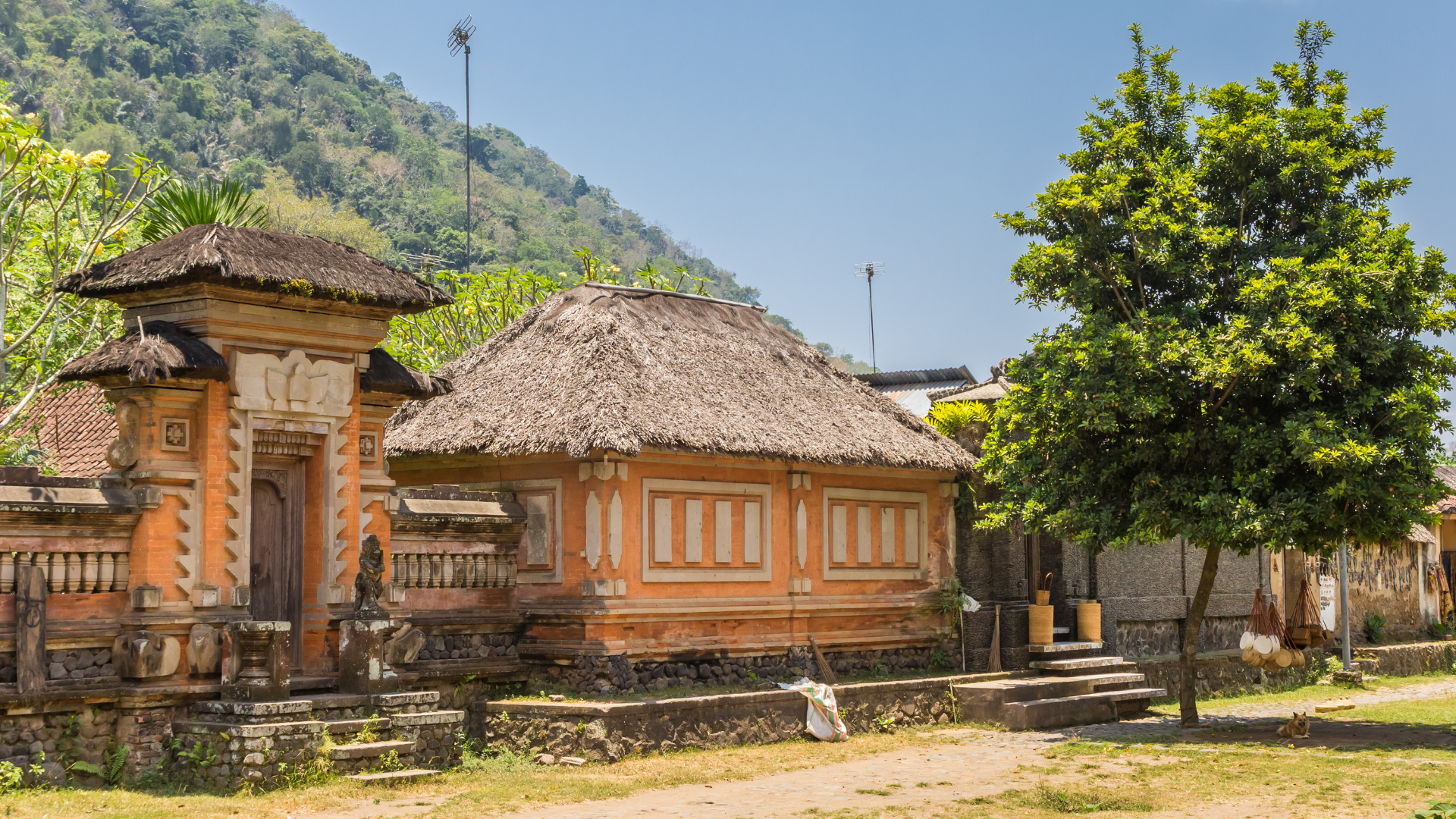
- Tenganan is laid out on a south-to-north grid of stone-paved lanes, walled family compounds and communal pavilions, following Indra's plan and the Balinese principle of Tri Hita Karana.
- The village is governed by the awig-awig, a customary law rewritten in 1842 after a fire destroyed the original palm-leaf manuscripts.
- Tenganan is the only place in Indonesia that produces double ikat geringsing cloth, and a single piece can take more than five years to make.
- Geringsing is used at every major rite of passage in the village, from the hair cutting ritual and tooth filing to the wedding ceremony and funeral rites.
- The high point of the village's own ritual calendar is Usaba Sambah, usually from mid-June, which ends with the Pandan War, fought with thorny pandan leaves and rattan shields.
- Visitors are welcome every day in daylight hours on a donation basis, and a walk through the village with a local guide takes one to two hours.
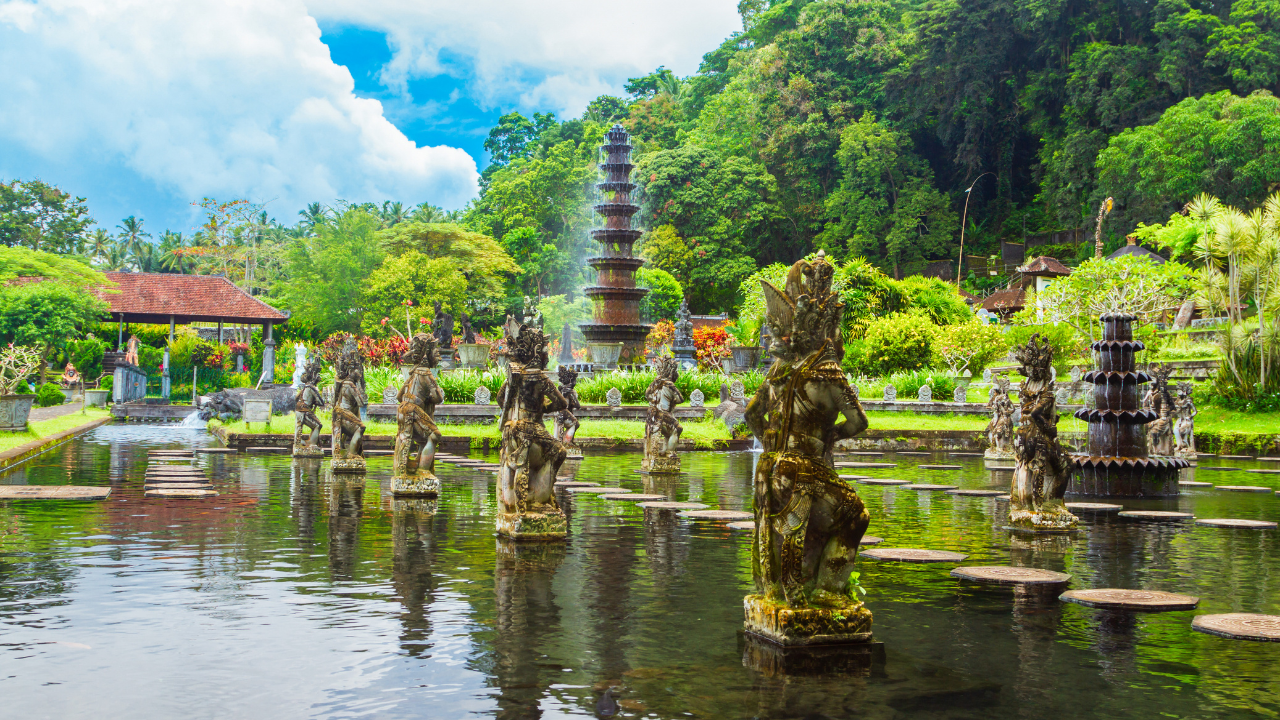
- Tenganan sits about 3 km inland from Candidasa and combines well with Tirta Gangga, Taman Ujung and Pura Lempuyang on an East Bali day trip.
Tenganan is one of Bali's oldest villages, dating back to the 11th century. Tenganan Pegringsingan village is home to the Bali Aga, the original Balinese. Across most of Bali, temples, dance and ceremony trace back to the Majapahit court culture that crossed from Java in 1343. Tenganan traces its roots to the kingdom that ruled before that arrival, and it has kept its own laws, its own calendar and its own sacred cloth ever since. That cloth, geringsing, is a double ikat textile made in only three places worldwide, and in Indonesia only here. A single piece can take more than five years to finish.
In this guide to Tenganan village, we look at its origins, history and culture, along with the things worth knowing before you visit.
Staying at The Seed? Our concierge team arranges private guided tours of Tenganan village, a short trip from the estate, so you can explore the Bali Aga way of life with a local guide.
Tenganan at a Glance
- Location: Manggis district, Karangasem Regency, East Bali; around 3 km inland from Candidasa
- Community: Bali Aga (Bali Mula), descendants of the pre-Majapahit kingdom of Bedahulu
- Territory: roughly 917 hectares of forest, rice fields and village land under customary management
- Population: around 760 residents in the customary village
- Known for: double ikat geringsing cloth, the Pandan War, gamelan selonding, lontar palm-leaf art
- Governing law: awig-awig, rewritten in 1842 after a fire destroyed the original manuscripts
- Key ceremony: Usaba Sambah, held through the fifth month of the village calendar, usually from mid-June
Where Tenganan Village Sits
Tenganan lies in the eastern part of Bali, in the Manggis district of Karangasem Regency. The approach road turns inland from the main coastal road just west of Candidasa and climbs through farmland and forest for around three kilometres before reaching the walled village at the head of the valley.
Three hills frame the settlement, including Kangin Hill to the east, Kaut Hill to the west and Kaja Hill to the north. The village name comes from this position. It derives from ngetengahang, meaning to move to the middle, from the root tengah, or centre. The settlement carries the name middle because it sits at the centre point between the ridges. The second half of the full name, Pegringsingan, comes from the geringsing cloth that has become its signature.
A river divides the wider Tenganan area in two. West of the river lies Tenganan Dauh Tukad, a separate customary village with its own ceremonies and a growing community-based tourism programme. East of the river lies Tenganan Pegringsingan village, the settlement most visitors come to see.
Who Are the Bali Aga People?
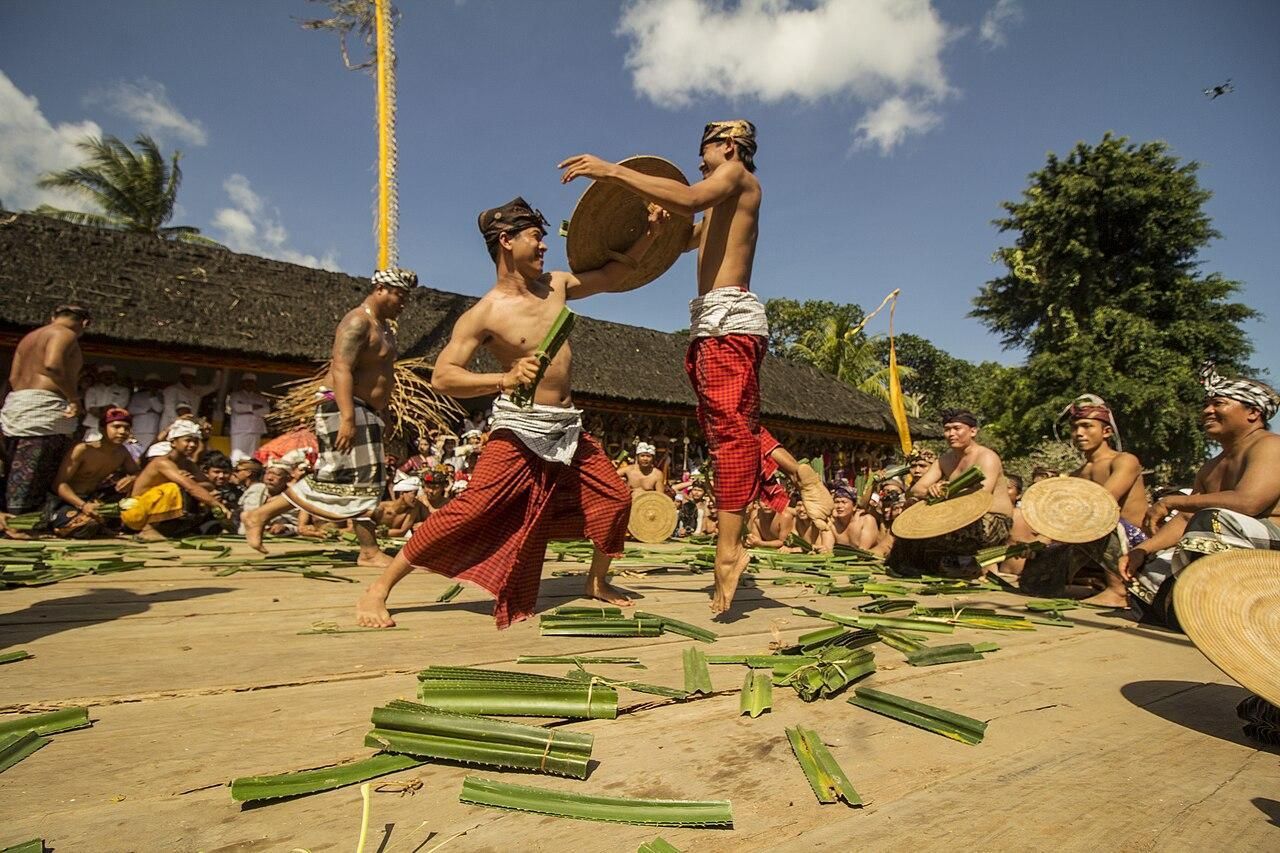
Image source: Wikipedia
Bali Aga is the name given to Bali's indigenous people, the communities who lived on the island before the Hindu-Javanese migration. The word aga is an old Javanese term for mountain, so the phrase translates more precisely as the mountain people of Bali. Many Balinese prefer Bali Mula, meaning original Balinese, or Bali Kuno, meaning ancient Balinese.
- The pre-Majapahit kingdom: Between the 8th and 14th centuries, Bali was ruled by the Warmadewa and Jaya dynasties of the Bedahulu kingdom, centred on Pejeng in today's Gianyar. The archaeological sites of Goa Gajah, Yeh Pulu and Gunung Kawi belong to this era. In the 11th century, the kingdom was ruled by King Udayana, a figure who appears in Tenganan's own founding legend.
- The Majapahit arrival: In 1343 the Hindu-Javanese Majapahit Empire took control of Bali, and its court culture shaped the temples, palaces, caste structure, rituals and performing arts that define most of Balinese life today. Many Bali Aga communities sat in remote hill country and absorbed less of this influence by circumstance. For the Tenganan people, keeping apart was a deliberate choice rooted in pride in their ancestry and in the story of how their land was granted to them.
The Founding Legends of Tenganan
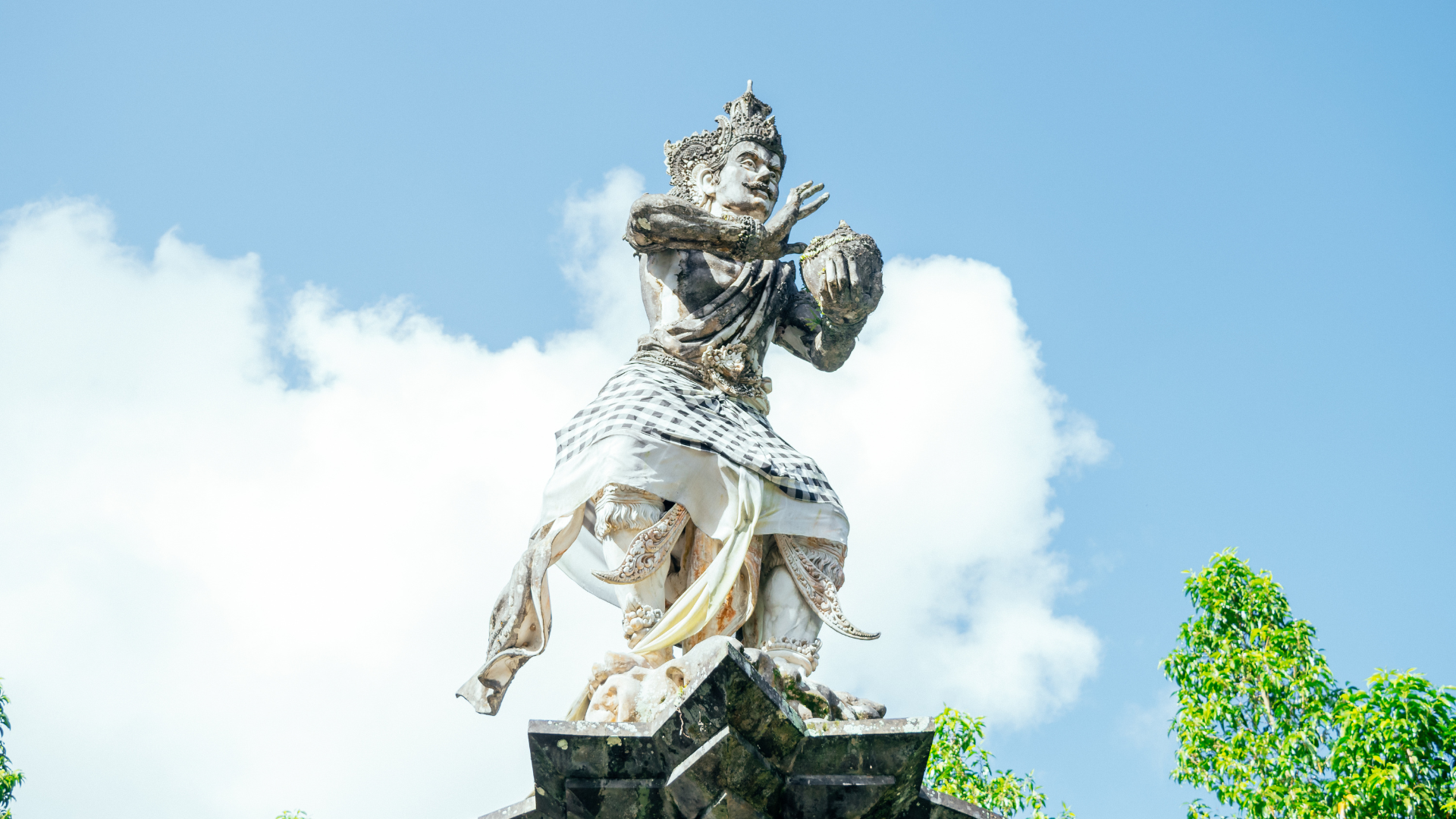
Tenganan's origins are explained through several related legends. Each one links the village to the god Indra, to a sacred horse, and to a grant of land given to the Peneges family, the warriors the Tenganan people descend from. These stories are the basis for the village's claim to its territory and for its worship of Indra.
The main legend is set in the Bedahulu kingdom, called the Belalu kingdom in some versions. Its ruler, King Mayadenawa, declared himself greater than the gods and banned his subjects, including the Peneges family, from worshipping at Besakih Temple on Mount Agung. Indra came down from the divine realm and defeated him. Balinese Hindus mark this victory each year at Galungan.
After the war, a sacrifice was needed to purify the land. Indra offered his sacred white horse, Oncesrawa, but the horse ran away before the ceremony. The Peneges family sent two search parties into the eastern area of Bali. The first found fertile land suited to a settlement. The second group found the horse dead.
Indra rewarded the Peneges family with all the land as far as the smell of the dead horse could reach. To extend that boundary, the men cut the carcass into pieces and carried them to the edges of the valley: the right legs to the eastern ridge, the left legs to the western ridge. Indra accepted this and granted them the full valley. This is the land Tenganan occupies today, and it is why the village worships Indra as its main god.
Two other versions exist. In the first, set in the 11th century, King Udayana of Bedahulu loses his magical horse Uccaisrawa and sends the Peneges men to find it. When they report its death, he rewards them with land. Some retellings give the land to the king's minister, Ki Patih Tunjung Biru, who found the horse. In the second version, Indra gives the valley to the Tenganan people directly, on the condition that they keep it pure in land, body and spirit. This rule of purity still shapes village law and ceremony.
Four sacred stones in the northern part of the village are linked to the horse legend and are believed to be parts of the horse turned to stone. Kakidukun, shaped like the horse's phallus, is associated with fertility. Taikik is associated with prosperity. Penimbalan is used in Teruna Nyoman, the initiation ceremony for young men. Batu Jaran marks the place where the horse died.
A Village Built as a Microcosm of the Universe
The Swiss anthropologist Urs Ramseyer, whose long study of Tenganan is summarised in the book The Theatre of the Universe, describes the village as a settlement laid out to Indra's divine plan, a microcosm of the wider world. In Ramseyer's words, "the concept of territorial, bodily and spiritual purity and integrity is of paramount importance to the culture of this village."
This single idea explains a great deal about Tenganan. The walls, the long isolation, the strict membership rules and the continuous cycle of ritual designed to keep ancestors, gods and demons in balance. Every ceremony, every boundary and every rule on land use serves the same purpose of keeping the territory whole and pure.
The layout also reflects Tri Hita Karana, the Balinese principle that every human being should live in harmony with the divine, with other people and with the natural world. In Tenganan this principle is written into law, from the orientation of the houses to the protection of individual tree species in the forest.
The Village Layout, Lane by Lane
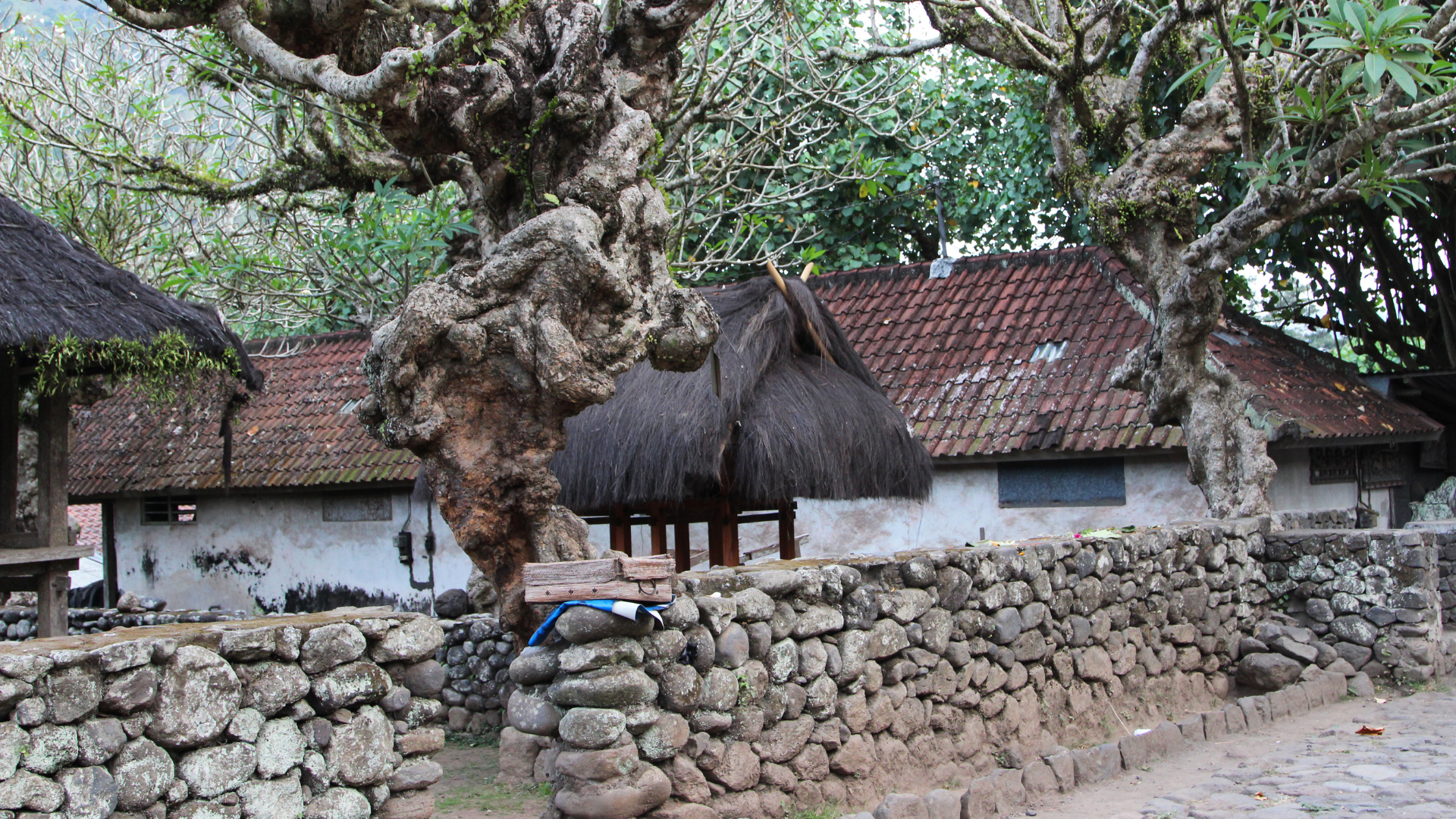
Tenganan is designed on a grid. The main village runs along a long central corridor from south to north, terracing gently upward toward the foothills, with six parallel rows of stone-paved lanes. Family compounds sit behind stone walls on the east and west sides of the corridor. Vehicles stay outside, which keeps the lanes quiet enough to hear the looms at work.
- The south gate: Entry and exit are through the gate on the south side, at the downhill end of the village. Two small temples stand on either side of the entrance.
- The long balé agung: Across from the gate temples sits the long balé agung, the open-sided hall where the village council meets. Seats in the council follow marriage and seniority within the customary village, and administrative decisions for the whole community are made here.
- The drum tower: Beside the balé agung stands the kul-kul, the drum tower. Its 21 morning strikes start each day, and different rhythms call residents to meetings, ceremonies and communal work.
- The communal pavilions: Along the central strip stand the bale petemuan, open pavilions that serve different groups within the village, including the youth associations. They host ceremonial gatherings and informal meetings, store ritual equipment, and on ordinary days serve as display spaces for local crafts.
- The rice barns and open greens: Between the pavilions, broad grassed areas and raised rice barns break up the stone lanes. The village's sacred buffalo move freely through these open spaces and graze wherever they choose.
- The northern gate and Pura Puseh: At the top of the village, a gateway leads into the hills and the temple courtyard of Pura Puseh, one of the village's key temples. The sacred stones of the horse legend stand in this northern area.
Traditional Houses of Tenganan
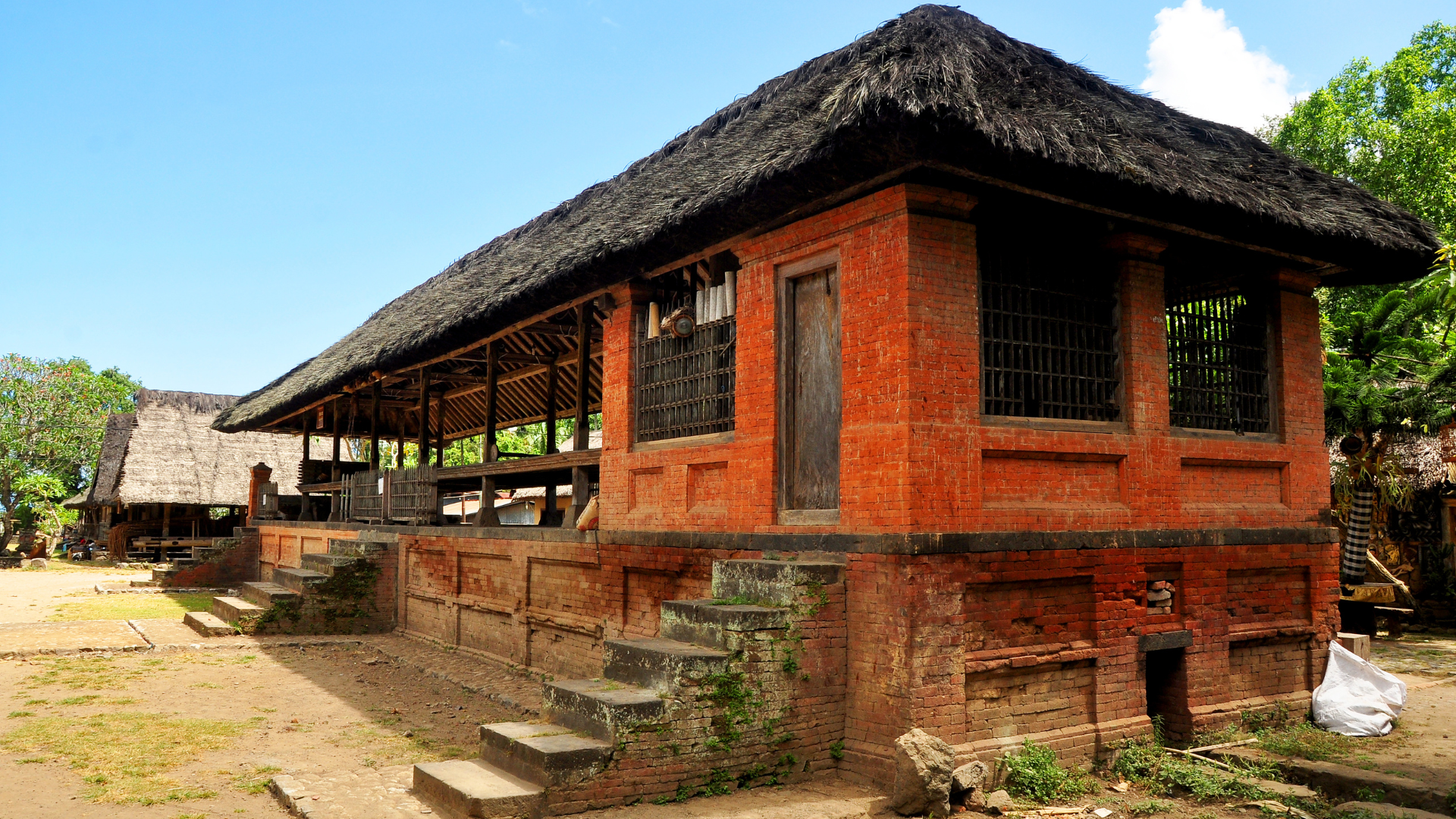
The traditional houses of Tenganan are laid out differently from the standard Balinese family compound. Each house faces onto the village's central lanes, and every entrance is a narrow doorway wide enough for one person at a time.
Inside the walls, each compound follows the Sanga Mandala concept, which divides the space into nine zones. Four main buildings sit within these zones, and each has a set purpose. The Bale Buga stands closest to the lane and is used for ceremonies. At the centre of the compound is the central bale, a raised pavilion divided into two rooms. One room is used for newborns and the other for death rituals. The Bale Meten is the family's everyday building, used for daily life and sleeping. The Paon, the kitchen, sits toward the back of the compound, with the bathroom on the south side.
The central bale has a particular role in family life. A child spends its first days in one of its rooms, and a person's final rites take place in the other, so the same structure marks both the start and the end of a life.
The Awig-Awig: Written Law of the Village
Tenganan is governed by awig-awig, a body of customary law covering land, inheritance, marriage, ritual duties and daily conduct. The original laws were written on lontar palm-leaf manuscripts. In 1841 a great fire swept through the village and destroyed them, and the community rewrote the full body of law in 1842. That text still guides village life today.
Land Rights
Land rights in Tenganan sit under customary control. The territory includes around 197 hectares of forest and around 225 hectares of rice fields. Land within the territory stays within the Tenganan community, and forest land belongs mostly to individual families, with a smaller share held by the customary village itself.
Forest Law
The awig-awig names the tree species protected from felling, which is jaka sugar palms, jackfruit, cempaka, candlenut, tehep, pangi and durian. Cutting any of them requires permission, and sanctions scale with the seriousness of the offence. Fruit may be gathered only once it has fallen from the tree, and only by Tenganan residents. Sugar palms make up around three quarters of the forest, and palm wine tapped from them is the forest's main source of income, shared between landowners and the people who work the trees.
Membership & Marriage
Membership of the customary village comes by birth. Residents historically married within the Bali Aga community, and anyone who married outside it gave up the right to live inside the village walls. Tenganan promotes internal marriage among villagers to preserve cultural identity. A strict protocol between kin groups guided marriages to protect the health of a small, closed population. Since the 1970s, contact with the outside world has relaxed some of these rules, and demographers studying the village have documented the shift from isolation to modern public health and family patterns.
Double Ikat Geringsing Cloth: Tenganan's Sacred Textile
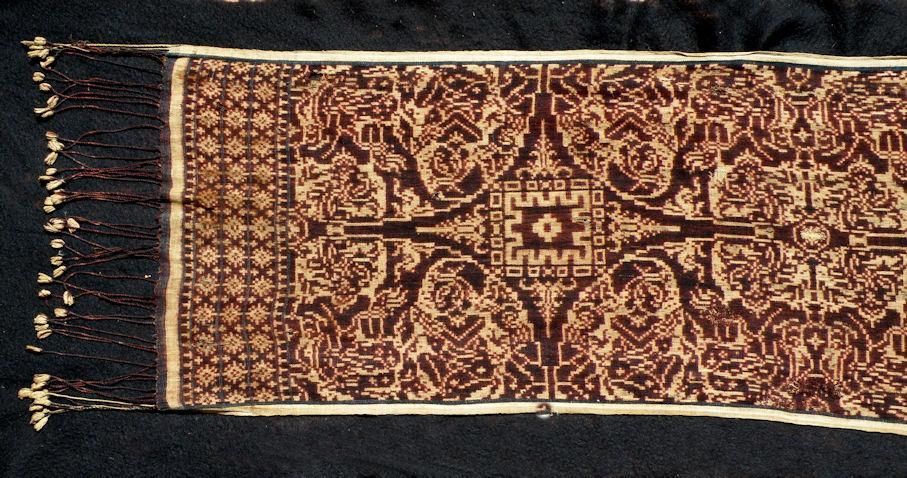
Image Source: Wikipedia
The double ikat geringsing cloth is Tenganan's defining craft, the source of its name and one of the most demanding textile techniques in the world.
Ikat is a resist-dyeing technique in which bundles of thread are tied tightly in a pattern before dyeing, so the tied sections resist the dye. In single ikat, only the warp or the weft carries the pattern. In double ikat, both sets of threads are tied and dyed separately, and the weaver must align them precisely on the loom so the pattern emerges where the two meet. Double ikat is practised in only three places worldwide: parts of India, Japan and Indonesia. In Indonesia it is confined to Tenganan.
The dye process:
- Mordanting: Cotton threads soak in a bath of candlenut oil and wood ash water to prepare the fibre for dye. Accounts describe cycles of 42 days soaking and 42 days drying, repeated many times, sometimes up to 12 rounds.
- Tying: Warp and weft threads are stretched on frames and bound with fibre in the exact sections that must stay undyed.
- Indigo: Blue dyeing takes place in the neighbouring village of Bugbug. A taboo prevents indigo dyeing inside Tenganan, so the threads travel out and back.
- Red: Back in Tenganan, the threads take red from the roots of the morinda tree and the bark of the kepundung tree. Overdyeing indigo with morinda red produces the deep black-brown seen in many cloths.
- Weaving: Women weave on traditional backstrap looms, placing each patterned thread with a sharpened cow bone.
A high-quality geringsing takes more than five years from first thread to finished cloth, and a single misaligned thread can compromise the pattern. Visitors walking the lanes often see bundles of dyed yarn drying in the sun, threads being sorted on frames and weavers at work inside the family compounds.
Geringsing combines gering, meaning illness, with sing, a word of refusal, meaning protection against sickness. Local belief gives the cloth magical qualities, including the power to ward off illness and danger, to assist in healing and exorcism, and to bring prosperity to the person who wears it.
The traditional palette of red, black and a pale natural cream connects to Tridatu, the three sacred colours of Balinese belief, which are red for fire, black for water and the pale tone for air. Together they represent balance in life, the essence of a life free of sickness.
The Patterns and Origins of Geringsing Cloth
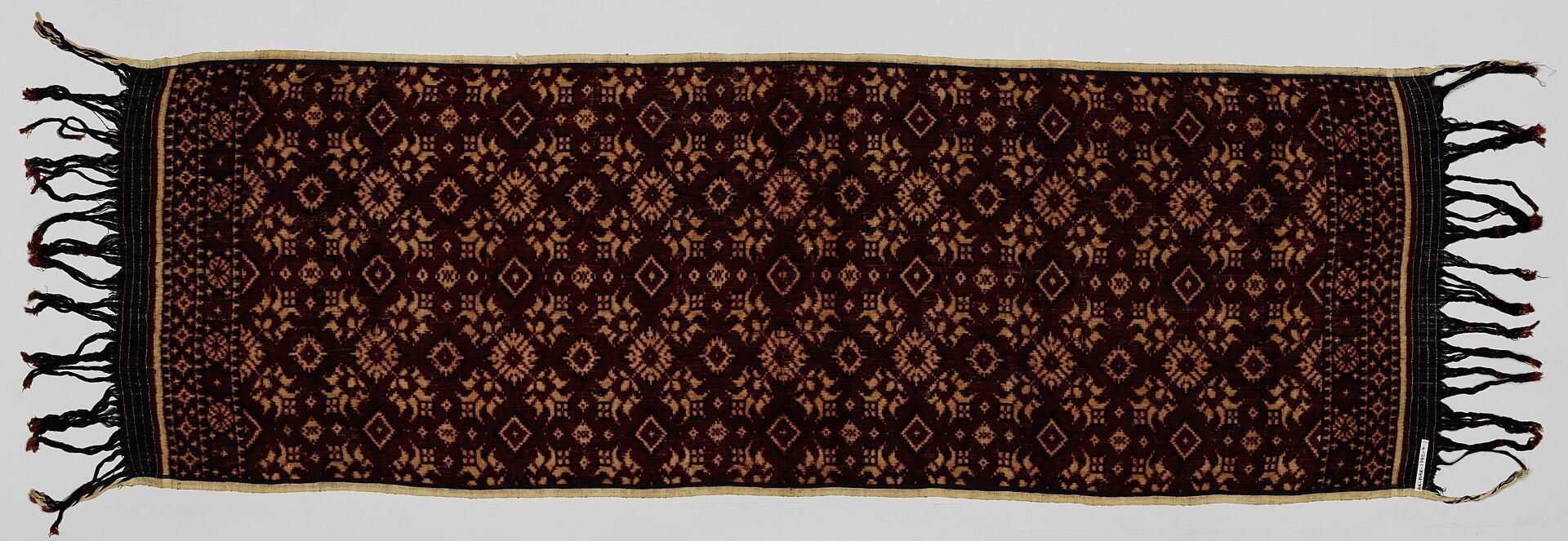
Image Source: Wikipedia
In Tenganan, the skill of weaving geringsing is believed to be a gift from the god Indra to the village's women. Every pattern woven today carries religious meaning, and each cloth design has a set role in village ceremonies. Geringsing cloth is believed to repel sickness and danger.
The most important motif is the lubeng, a four-pointed star. It is read as the cross-section of a stupa, a Buddhist shrine, or as a sacred mandala. These star motifs represent the divine realm of the gods, and they appear at the centre of many geringsing cloths.
Wayang Putri is one of the most prestigious designs. It combines lubeng stars with human figures drawn in the style of wayang kulit, the Balinese shadow puppets.
Wayang Kebo places one full lubeng between two half lubeng, and each star is guarded on every side by teledu, or scorpions. Kebo means buffalo. The buffalo never appears in the design, but it stands for a protective force that guards the wearer and the village. Unmarried women wear Wayang Kebo as a dance scarf during the sacred rejang dance.
Other patterns include Cemplong and Sanan Empeg, geometric and floral designs used for specific rituals, and Jepun, which is based on the frangipani flower.
Where The Cloth Comes From
Historians still debate where geringsing came from. Textile scholar John Guy notes that "the ancestry of Balinese geringsing is far from clear, although some cloths display the unmistakable influence of patola." Patola are silk double ikat cloths from Gujarat in India, traded widely across the region in the 16th and 17th centuries, and some Tenganan patterns closely match them.
The first European to record geringsing was the Dutch artist W.O.J. Nieuwenkamp, in 1906. Early examples went into the ethnographic museum in Leiden in the Netherlands, and geringsing cloths are now held in major museum collections around the world
Gamelan Selonding: The Sacred Iron Orchestra
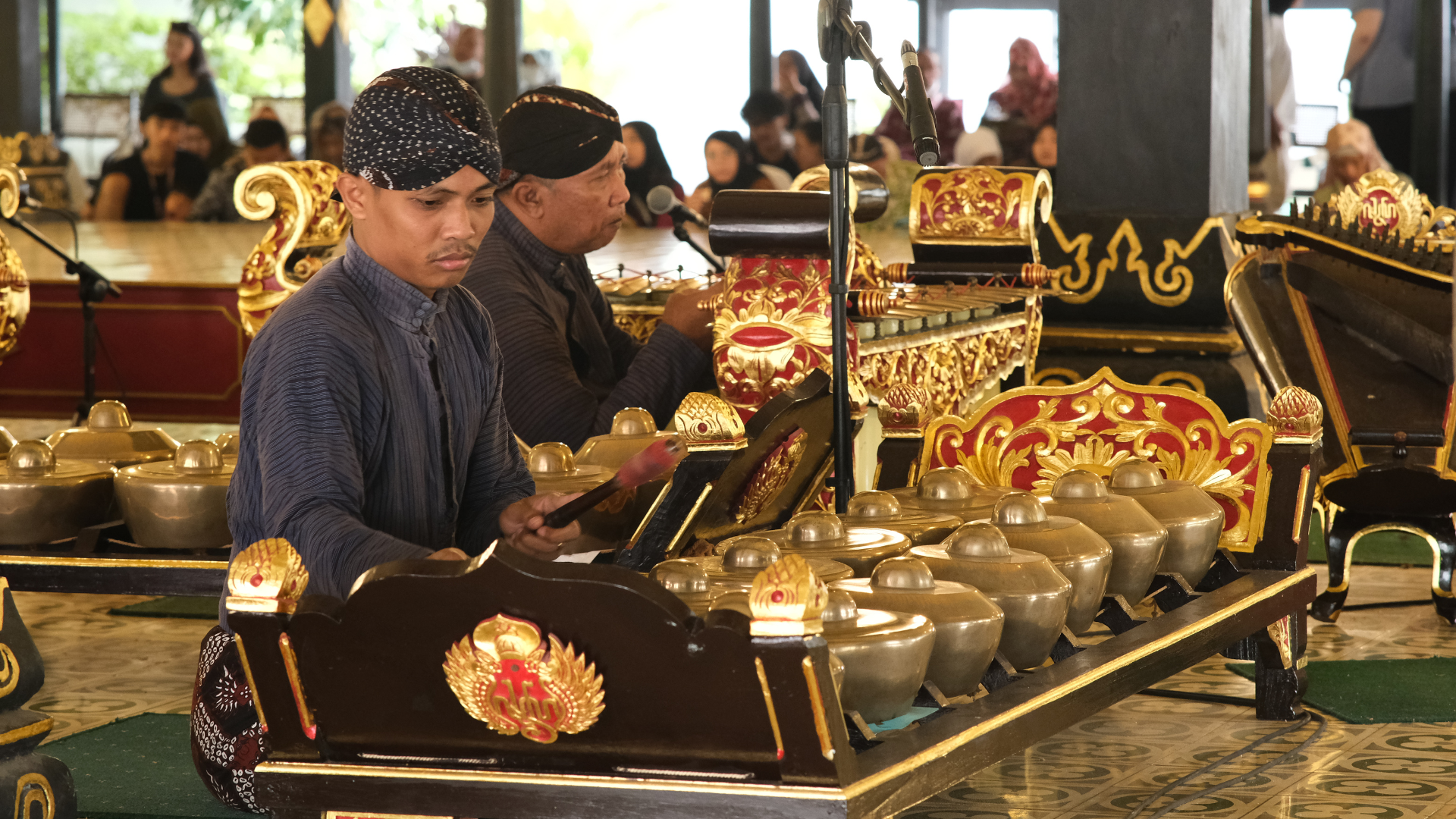
Tenganan is also home to gamelan selonding, one of the oldest and rarest musical traditions in Bali. Where most Balinese gamelan use bronze keys, selonding is played on iron metallophones, producing a deep, resonant sound. The name is often read as meaning great or large.
The Tenganan selonding is treated as a sacred ensemble. It accompanies the village's most important rituals, including the Pandan War and the rejang dance, and it plays a role in ceremonial life that sets it apart from the entertainment gamelan heard elsewhere on the island. Recordings of Tenganan selonding groups have been released internationally, and hearing it live during a ceremony is one of the most distinctive sound experiences in Bali.
Traditional Ceremonies and the Tenganan Calendar
Tenganan follows its own ritual calendar of 12 months, called sasih, similar in length to the Gregorian year. Every month carries religious ceremonies lasting one to three days, and full moon and new moon days often bring ritual activity.
- Usaba Sambah: The fifth month, sasih kelima, is the high point of the ritual year. It brings Usaba Sambah, a month-long sequence of prayer, sacred dance, offerings, ceremonial food and ceremonial gatherings, usually beginning in mid-June.
- Menek Daha: Young people complete a period of ritual seclusion and emerge in full traditional dress, including geringsing cloths woven by Tenganan women, marking their entry into a new stage of village life.
- The Daha Ngastiti: Each year one young woman who has recently reached maturity is chosen as the Daha Ngastiti. She dresses in geringsing with golden flower ornaments in her hair and holds a central place in the month's rituals.
- The swing ritual: Large wooden ritual swings, built like hand-turned Ferris wheels, are set up in the village. Seven young women ride each wheel with the Daha Ngastiti while the young men turn it by hand. The rise and fall of the wheel represents the cycle of life, with its highs and lows carried forward into the next generation.
- The Pandan War: The climax of Usaba Sambah is the mekare-kare, also called perang pandan, the Pandan War. Over two days, young men face each other in front of one of the communal pavilions. Each holds a bundle of thorny pandan leaves in one hand and a rattan shield in the other. To the sound of the selonding, pairs clash in short, fast rounds, each fighter trying to hook his opponent and drag the thorns across his back. The ritual honours Indra as a warrior god and recalls his victory over Mayadenawa. The blood drawn is a tabuh rah, a blood offering to the earth. The fights carry the energy of a war dance, with crowds cheering each bout, and the fighters embrace when each round ends. Afterwards, the participants treat each other's wounds with a traditional herbal paste and sit down together for megibung, a shared communal meal. The Pandan War is a unique tradition and a coming-of-age rite for the young men of the village.
- The rejang dance: Following the combat, the young women of the village perform the rejang, a slow, graceful sacred dance offered to the gods, dressed in their finest geringsing.
- Usaba Kasa: Earlier in the ritual year, the Usaba Kasa ceremonies also feature rejang dances, during which unmarried women wear the Wayang Kebo geringsing as a dance scarf.
Tenganan Today: From Isolation to Open Doors
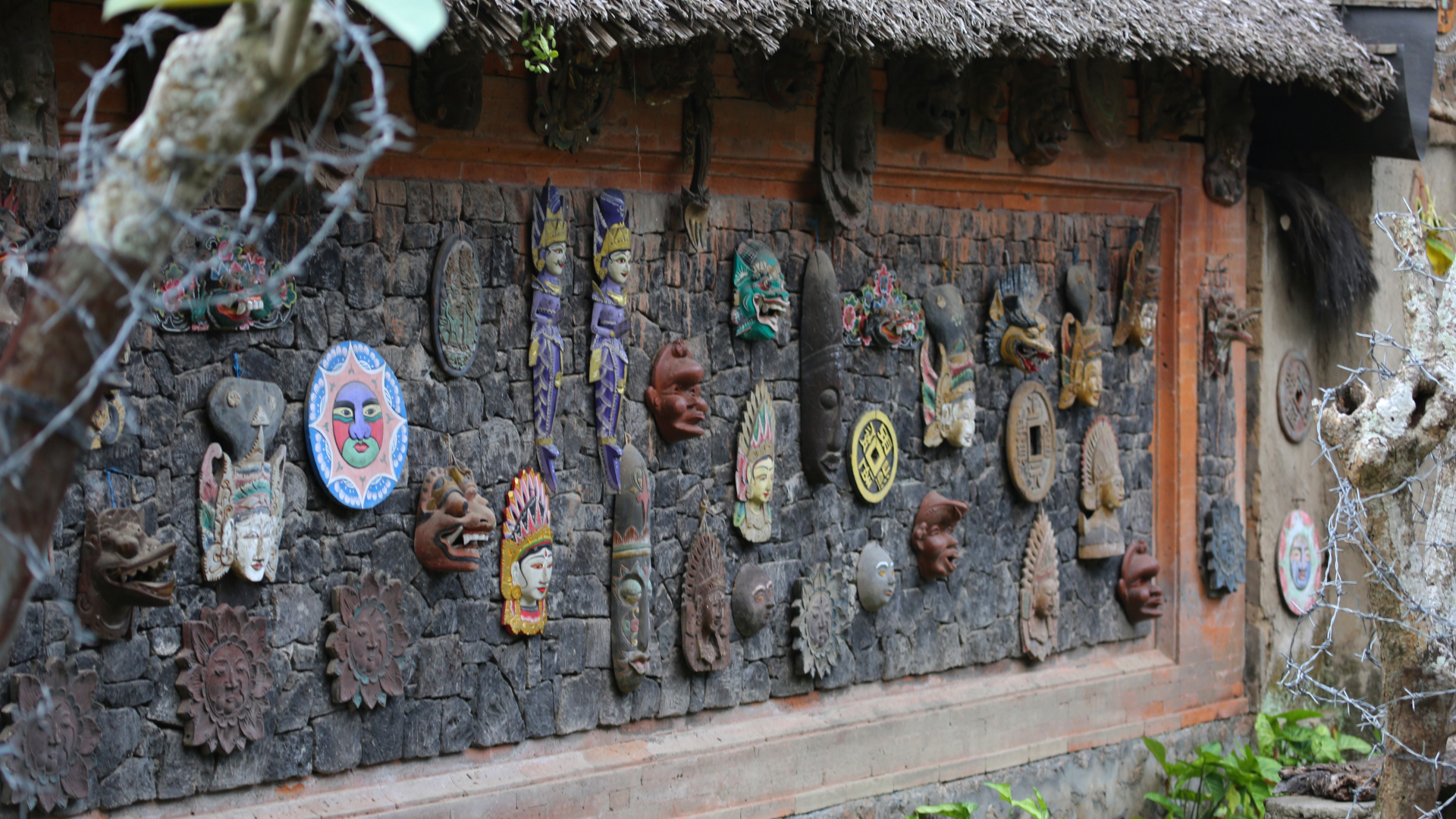
Until the 1970s, Tenganan was among the most isolated communities in Indonesia, known mainly to anthropologists. Improved roads, government communications programmes and the growth of tourism in East Bali brought steady change. Endogamy rules relaxed, children entered the national school system, and visitors began to arrive in numbers.
The village adapted on its own terms. Tourism income now supports village upkeep and education, crafts provide a livelihood for many households, and the awig-awig continues to govern land, forest and ceremony. Researchers studying the village describe a community where change is real but the core of its original customs remains intact. Across the river, Tenganan Dauh Tukad has developed a community-based ecotourism programme that offers another way into the Bali Aga world.
How to Visit Tenganan Village
Tenganan is open to visitors every day during daylight hours, and it works well as one stop on an East Bali day trip. A walk through the village usually takes one to two hours, or longer if you stop to watch the weavers or talk with the artisans.
Vehicles park outside the southern entrance. Just past the parking area is a small booth with a guest book. Instead of a fixed entrance fee, visitors sign the book and leave a small donation of their choosing, which goes toward village upkeep, education and temple projects. Near the entrance is a small museum with displays on the village's history, customs and ceremonies, and it's worth a look before you walk the lanes. A local guide from the village is usually available at the entrance to explain the legends, the layout and the rituals behind what you see, and it's customary to tip for their time. On major ceremony days, guides may be busy with village duties.
Dress modestly, with your shoulders and knees covered. Ask before photographing residents or entering a home, give the sacred buffalo plenty of room, and follow any guidance near temples and during ceremonies. Many residents are happy to talk about their work and invite visitors in to watch the weaving.
Mornings are cooler and quieter, which makes them the best time for a relaxed visit. To see the village's ceremonies, plan your trip for Usaba Sambah, which usually runs from mid-June into July. At other times of year, visitors see everyday life in the village: weaving, craftwork and ordinary village routines.
Tenganan is easy to combine with other sites in Karangasem Regency. Tirta Gangga and Taman Ujung, the two royal water palaces of Karangasem, are both within reach, as is Pura Lempuyang on the slopes of Mount Lempuyang. Candidasa, a few kilometres away, has places to eat after your visit.
Further Reading
For readers who want to go deeper into Tenganan and Bali Aga culture:
- Urs Ramseyer, The Theatre of the Universe: Ritual and Art in Tenganan Pegeringsingan, Bali
- Brigitta Hauser-Schäublin, Marie-Louise Nabholz-Kartaschoff and Urs Ramseyer, Balinese Textiles (British Museum Press, 1991)
- Kajeng Madi Kertonegoro, The Spirit Journey to Bali Aga, Tenganan Pegringsingan (1986)
- Tony and Jane Whitten, Bali: A Traveller's Companion (Archipelago Press, 2000)
- Made Wijaya, Balinese Architecture: Towards an Encyclopedia
Common questions
Is Bali Tenganan village worth visiting?
Bali Tenganan village is worth visiting for anyone interested in the island's history and culture. It's an ancient village where the Bali Aga community still follows its original traditions, from its own ritual calendar to the double ikat geringsing cloth woven only here in Indonesia. A visit gives a direct view of how the local community lives, works and worships.
How is Tenganan different from Penglipuran village?
Tenganan and Penglipuran village are both traditional Balinese villages, but they differ in history and focus. Penglipuran, in Bangli Regency, is a popular tourist attraction known for its neat rows of traditional houses and its bamboo forest. Tenganan is a Bali Aga village in Karangasem whose community predates the Majapahit era, and it's known for geringsing cloth, the Pandan War and its own customary law.
What is the connection between Tenganan and Trunyan village?
Tenganan and Trunyan village are both Bali Aga communities, descended from the island's original inhabitants. Trunyan sits on the eastern shore of Lake Batur, and it's known for laying its dead above ground beneath a sacred tree. Tenganan, in East Bali, buries its dead and is best known for its textiles and ceremonies. The two villages show how differently Bali Aga customs developed across the island.
Is Tenganan a tourist attraction?
Tenganan is a tourist attraction and also a working village of around 760 residents. Tourists are welcome to walk the lanes, watch the weavers and visit the small museum, while the community carries on with daily life and ceremonies around them. Tourism income supports village upkeep, education and temple projects.
What role does geringsing play in a Tenganan wedding ceremony?
Geringsing cloth has a central role in a Tenganan wedding ceremony. The couple wears festive geringsing, and symbolic gifts are placed on geringsing cloths during the rites. The same cloth marks every major stage of life in the village.
What is the hair cutting ritual in Tenganan?
The hair cutting ritual is one of the first rites of passage for a child in Tenganan. During the ceremony, the child receives a first piece of geringsing cloth, which starts a lifelong connection to the sacred textile used again at tooth filing, at the wedding and at death.
Can I buy souvenirs in Tenganan village?
Visitors can buy souvenirs directly from the local people in Tenganan village, at stalls along the lanes and inside family compounds. Popular items include geringsing and single ikat cloth, lontar drawings etched onto dried palm leaves, traditional Balinese calendars, wood carvings, woven bamboo baskets and trays, and honey from stingless bees.
Is it normal to bargain for crafts in Tenganan?
Bargaining is a normal part of buying crafts in Tenganan. Some sellers start with a hefty price, and friendly negotiation is expected. True double ikat geringsing takes years to make, so its price reflects that labour. A local guide can help you tell double ikat from single ikat before you buy.
What are lontar palm leaf drawings?
Lontar drawings are illustrations and script etched onto dried palm leaves with a small blade. The lines are then rubbed with a mix of soot and oil to bring out the image. Tenganan artisans use the technique for illustrated panels, lontar books and traditional Balinese calendars, often showing scenes from the Ramayana and Mahabharata.
Can tourists visit Tenganan during ceremonies?
Tourists can visit Tenganan during ceremonies, including Usaba Sambah and the Pandan War, which usually take place from mid-June into July. Visitors should dress modestly, keep to the edges of ceremonial areas and follow directions from residents or a local guide. Ceremony dates follow the village's own calendar and change each year.
Tell us what you have in mind and we will come back with what the estate can hold.

Plan your vacation
Family holidays, reunions, and quiet time together, by the sea in Candidasa.
Learn more →
Host your retreat
A venue for facilitators, with a full hospitality team behind every session.
Learn more →