- Tirta Gangga is a former royal water palace in Karangasem, built in the 1940s by the last king of Karangasem.
- The name literally means “water of the Ganges”, a reference to the sacred river of India.
- The palace’s natural spring still supplies holy water for temple ceremonies across East Bali.
- Its three terraces represent the triloka, rising from the realm of demons to the realm of the gods.
- The eleven-tiered Nawa Sanga fountain represents Shiva, whose home is Mount Agung.
- The 1963 eruption of Mount Agung destroyed most of the palace, and the royal family later restored it.
- Visitors can cross the stepping stones, feed the giant koi and swim in the spring-fed bathing pools.
- Early morning offers the calmest grounds, the softest light and the clearest views of Mount Agung.
- Tirta Gangga is roughly 30 minutes from The Seed in Candidasa, and our concierge can arrange private tours.
Tirta Gangga water palace is a former royal palace and water garden in Karangasem Regency, East Bali, built in the 1940s by the last king of Karangasem as a retreat for the royal family. The name literally means "water of the Ganges", a reference to the sacred river of India, and the site sits over a natural spring whose holy water still serves temple ceremonies across the region.
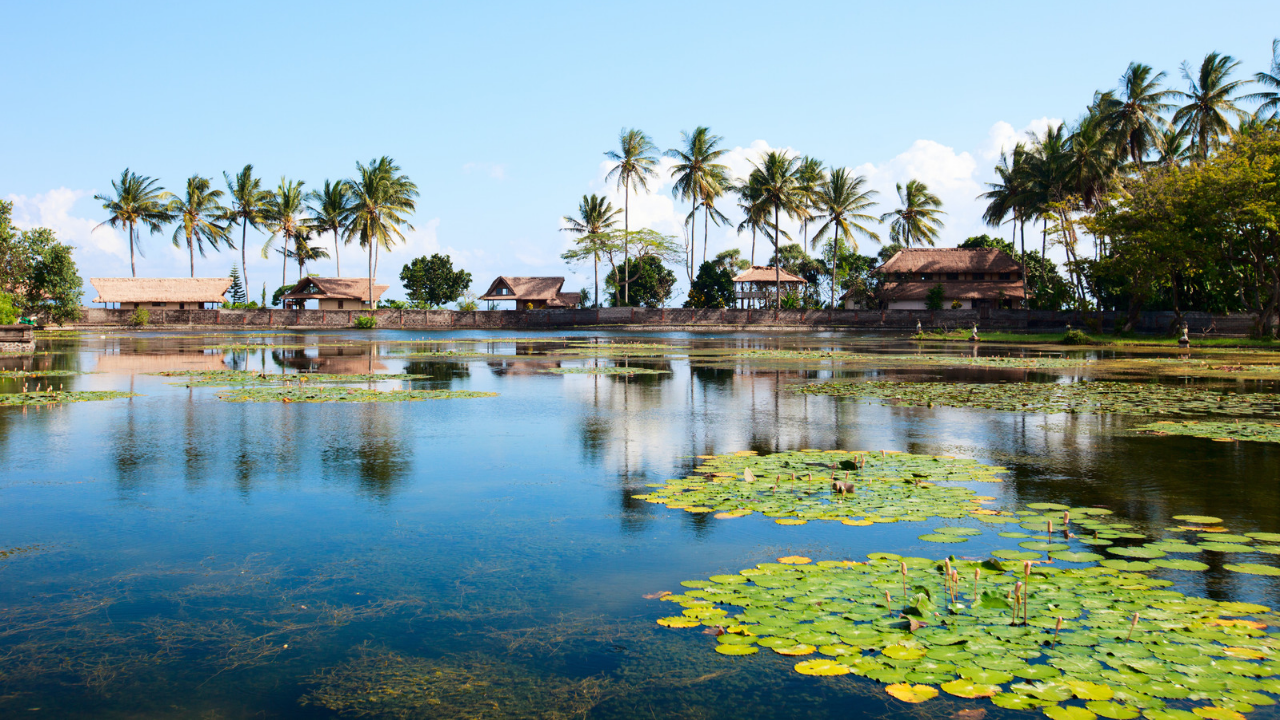
Set in the foothills of Mount Agung, close to Ababi village and around 6 kilometres north of Amlapura, the palace grounds cover roughly one hectare of tranquil pools, stone carvings, fountains and beautiful gardens. Visitors cross koi filled ponds on stepping stones, swim in spring-fed bathing pools and walk through a layout shaped by Balinese Hindu cosmology. Green rice fields and rice terraces surround the complex, and on clear mornings the volcano rises behind it.
This guide covers where the royal water palace came from, how its design carries meaning, the interesting facts most visitors miss, and the practical details you need to visit Tirta Gangga well.
Where Is Tirta Gangga Located?
Tirta Gangga is located in Ababi village, in the Abang district of Karangasem Regency, on the main road that runs north from Amlapura toward Culik and Amed. The regency is the easternmost part of Bali and home to Mount Agung, the island's highest and most sacred mountain.
The location matters to the story. Karangasem was once one of Bali's independent kingdoms, and its rulers built a series of water gardens across their territory. Tirta Gangga sits upland, inland from the coast, where the volcanic slopes feed springs that run year-round. The setting gives the gardens a peaceful atmosphere, and early mornings here often bring cooler weather than the beaches to the south.
For travellers exploring East Bali, Tirta Gangga sits on a natural route between the coast at Candidasa, the town of Amlapura, Lempuyang Temple and the dive villages of Amed, which makes it an easy addition to a wider day of sightseeing.
The Origins of Tirta Gangga
The Last King of Karangasem
Tirta Gangga was the work of Anak Agung Anglurah Ketut Karangasem, the last king of Karangasem, also recorded under his birth name I Gusti Bagus Jelantik. He ruled during the period of Dutch colonial administration, when Bali was divided into regional kingdoms that retained their royal households and ceremonial authority.
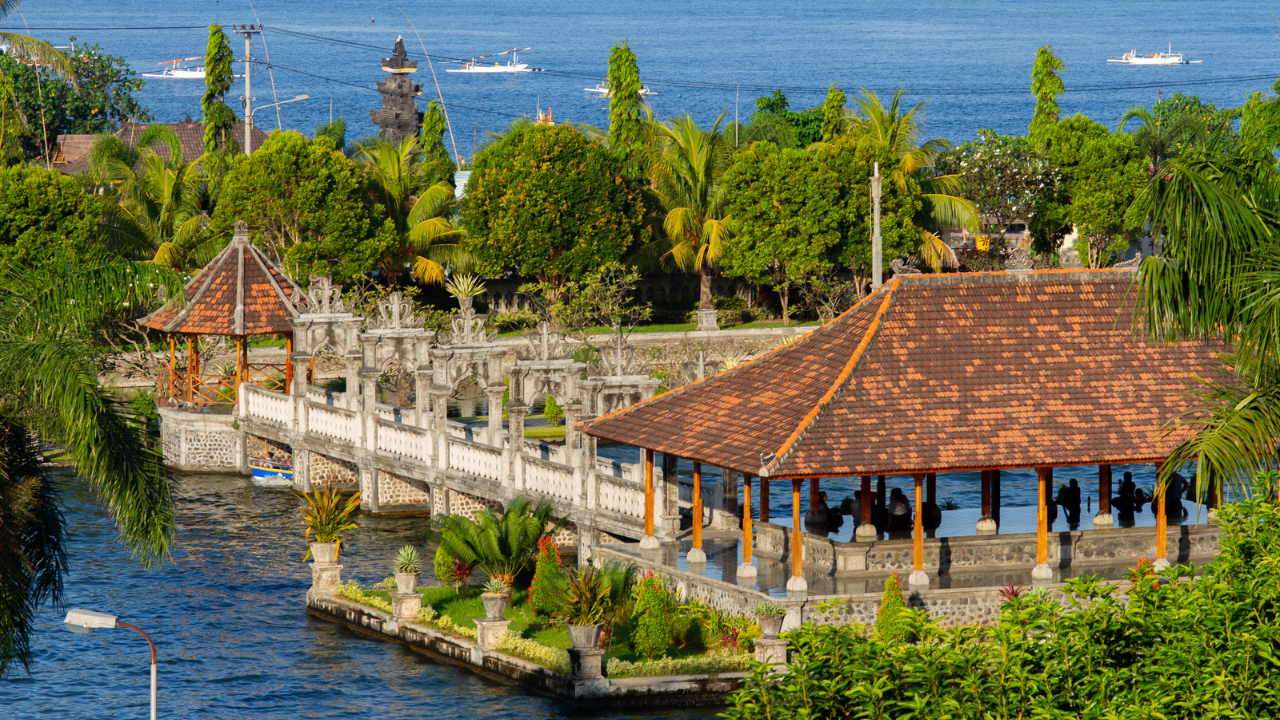
The king was a patron of architecture and the arts, and water gardens were his signature. Before Tirta Gangga, he built Taman Ujung water palace on the coast south-east of Amlapura, a grand complex of pools and pavilions started in 1909. Tirta Gangga followed decades later as a more intimate royal retreat, a place for the royal family to rest, bathe and receive guests.
Most accounts date construction to 1946, and a plaque near the main fountain records that work on the gardens began on 2 January 1948. The two dates likely reflect different phases of a project that grew over several years. One account puts the full build at eleven years.
History of Tirta Gangga Water Palace
In 1963, Mount Agung erupted in one of the most destructive volcanic events in Balinese history. The eruption damaged the water palace almost entirely. The king's residence on the upper level was lost, and much of the stonework, statuary and pool structure was ruined. For years afterwards, the gardens sat in disrepair, as the royal family lacked the funds for a full rebuild.
Restoration came in stages over the following decades, led by the royal family. Dr Anak Agung Made Djelantik, the king's son, a physician and respected scholar of Balinese art, played a central role in the early revival. His son, Prince Widoere Djelantik, managed the gardens from 2000 to 2018, repairing damaged areas and developing a master plan for the site.
Two collaborators from outside the family supported this work, including American philanthropist Michael Honack and environmentalist and designer Emerald Starr. In April 2018, Prince Widoere announced that the master plan renovation was complete. The palace grounds you see today, with their restored pools, new statues and landscaped beds, are largely the result of this long effort.
After the eruption, the king's residence on the third level remained a ruin, and the site was later put to a new use. The upper terrace now holds a restaurant and a small number of guest rooms, positioned where the royal family once looked down across the water features below. The view from this level gives the best sense of how the whole complex was planned.
Symbolism of The Water Palace
Holy Water From the Ganges
In Balinese Hinduism, tirta means blessed or holy water, and Gangga refers to the Ganges, the sacred river of India. Balinese Hindus regard the Ganges as the ultimate source of purifying water, and naming a spring after it places Tirta Gangga in that tradition. The name signals that the water here is sacred, and that the garden is built around it.
The Triloka: Three Levels, Three Worlds
The water palace is laid out across three terraces that represent the triloka, the Hindu concept of three realms:
- Swah (upper level): the realm of the gods. This northern terrace holds the sacred spring, the upper swimming pool, the Versailles pool and a pond of giant water lilies, shaded by banyan trees.
- Bwah (middle level): the realm of humans. This level holds the Nawa Sanga fountain, the lower swimming pool to its west and the Mahabharata pond to its east.
- Bhur (lower level): the lower realm, home to demons. The large South Pond, near the entrance, holds an island populated with demon figures.
Walking from the entrance toward the spring, visitors move symbolically from the lower world toward the divine, a journey that mirrors the layout of Balinese temples.
The Nawa Sanga Fountain
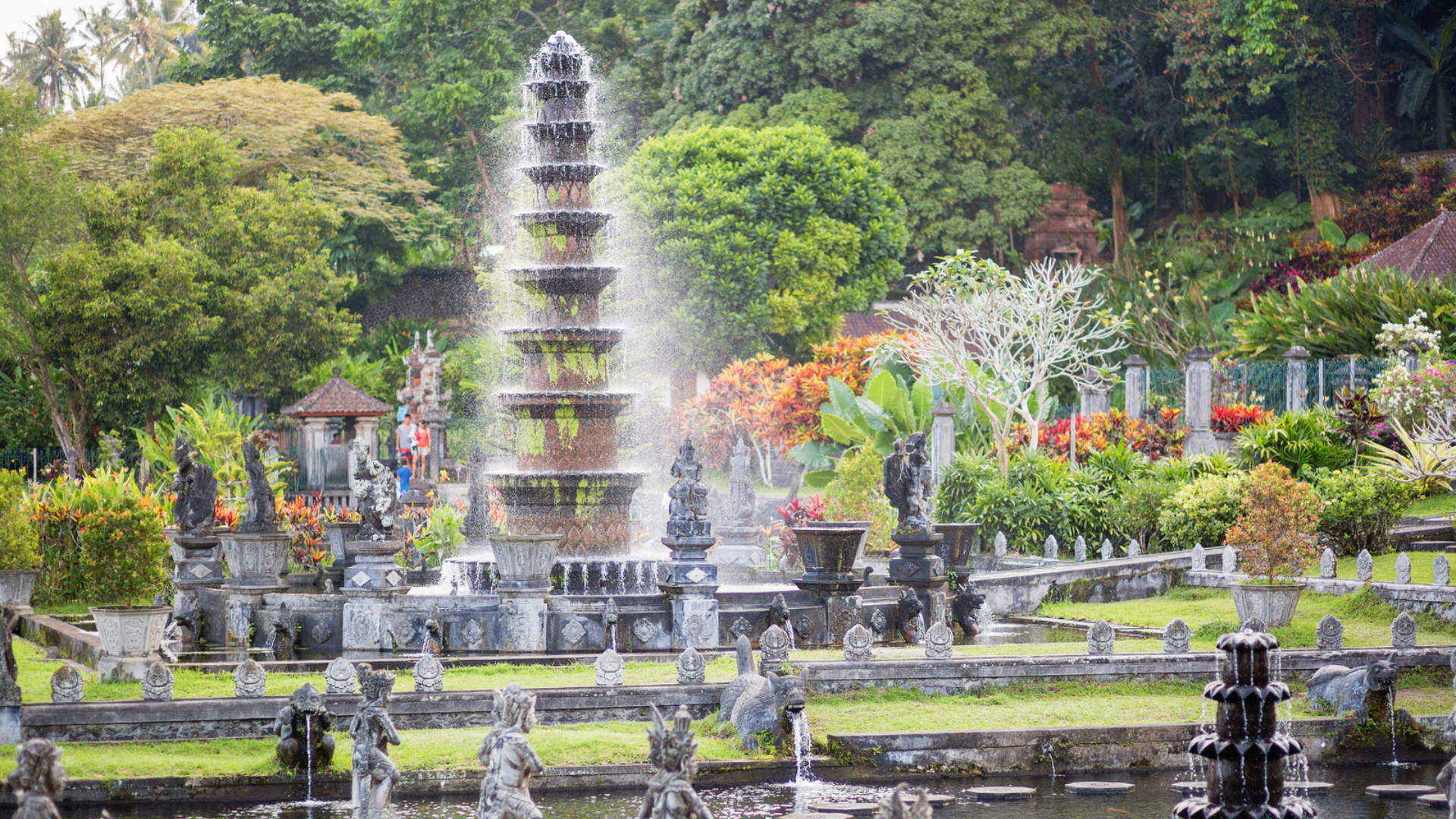
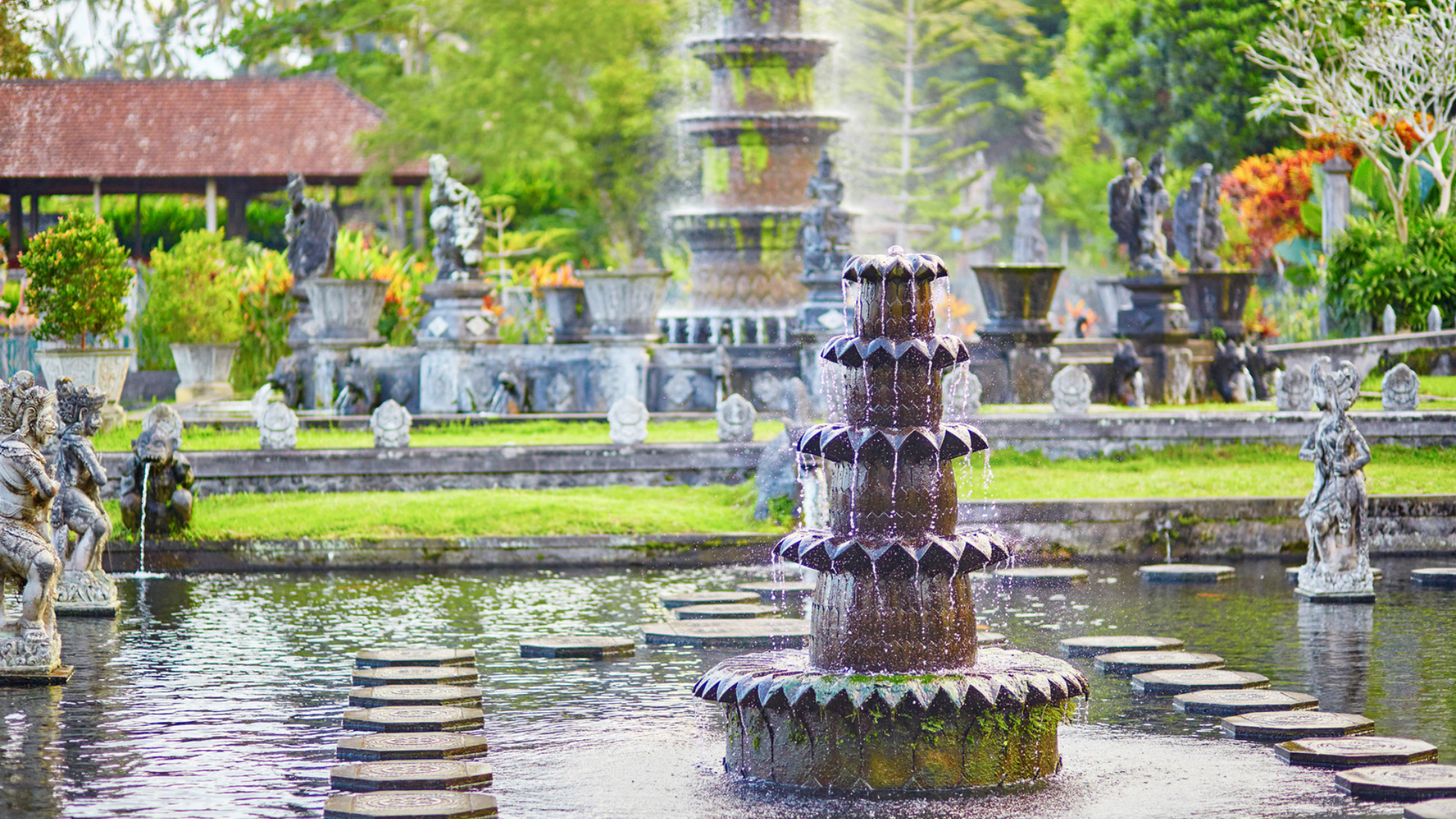
The centrepiece of Tirta Gangga is the Nawa Sanga fountain, an octagonal tower that rises in eleven tiers, with each tier designed to resemble a lotus flower. Eleven is the highest number of tiers given to a meru shrine in Balinese temples, a level reserved for the most important deities.
The fountain represents Shiva, whose home is Mount Agung, the source of the spring water. Eight deity figures surround it, each guarding one of the cardinal and intermediate directions, with Shiva at the centre as the ninth. Together they form the Dewata Nawa Sanga, the nine guardian gods of the Balinese compass. The arrangement expresses order, balance and the protection of the island.
The Spring and the Water of Eternal Life
The sacred spring is the reason Tirta Gangga exists. A small temple structure covers the source, guarded by two dragons that represent balance. A carving of Vishnu riding the divine bird Garuda sits at the top.
The imagery comes from the Hindu story of the churning of the ocean of milk, in which gods and demons worked together to produce amerta, the water of eternal life. When the demons seized the amerta, Vishnu took the form of the maiden Mohini and recovered it for the gods. The spring at Tirta Gangga is presented as a source of that life-giving water. The royal emblem, a winged water vessel that appears on some of the garden fences, carries the motto Amerta Jiwa, meaning "waters of eternal life for the soul".
The Mahabharata Pond
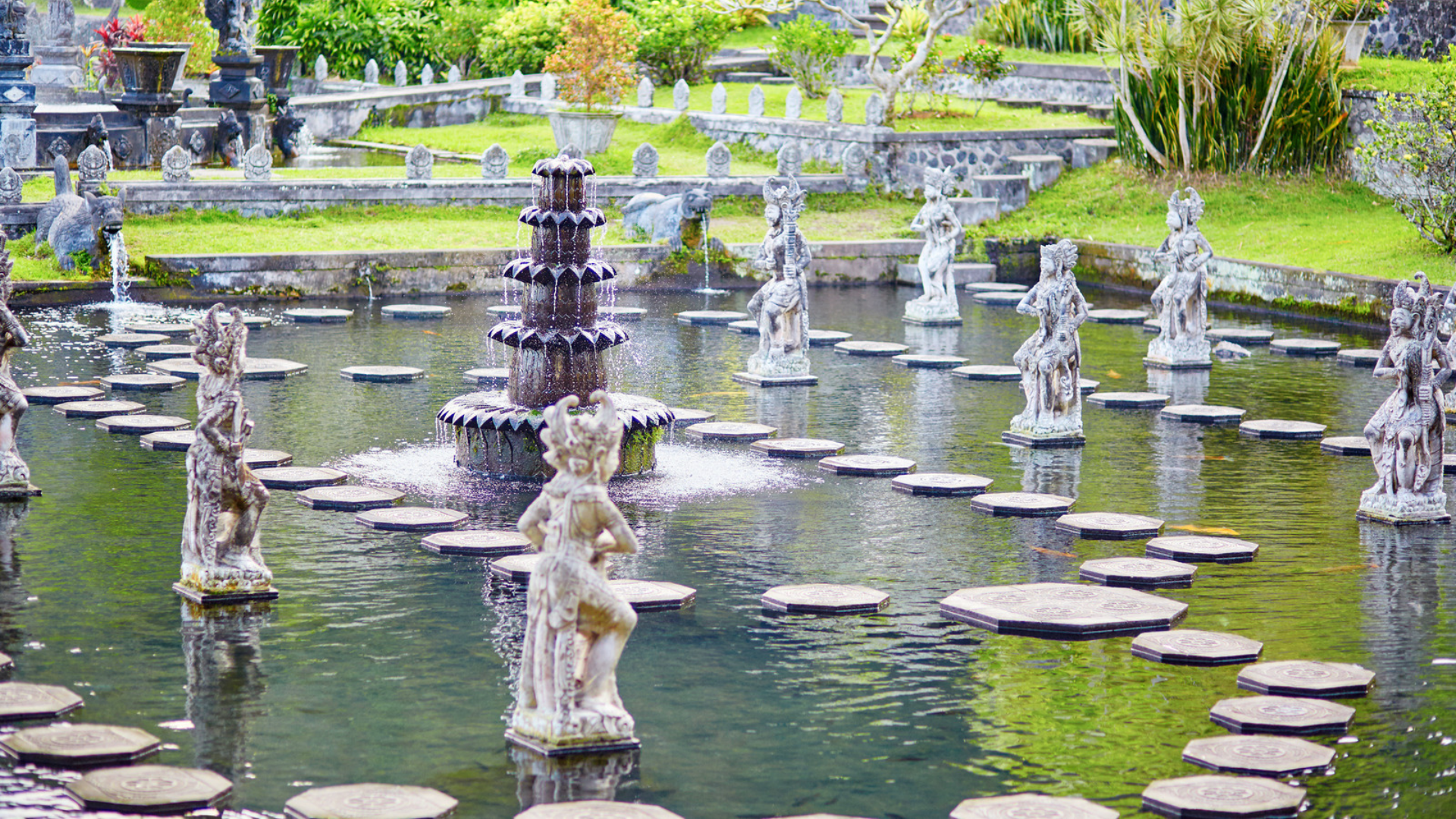
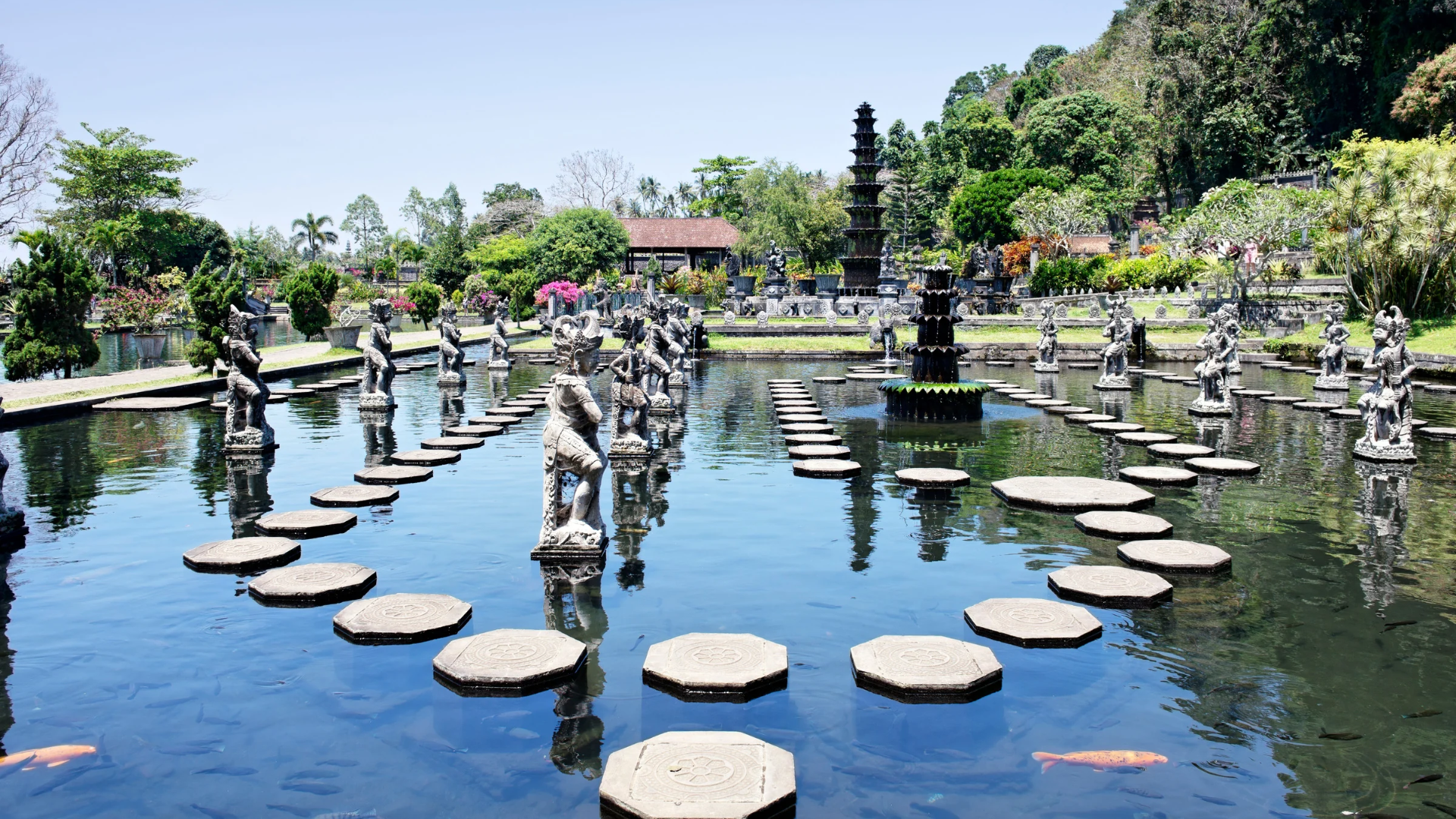
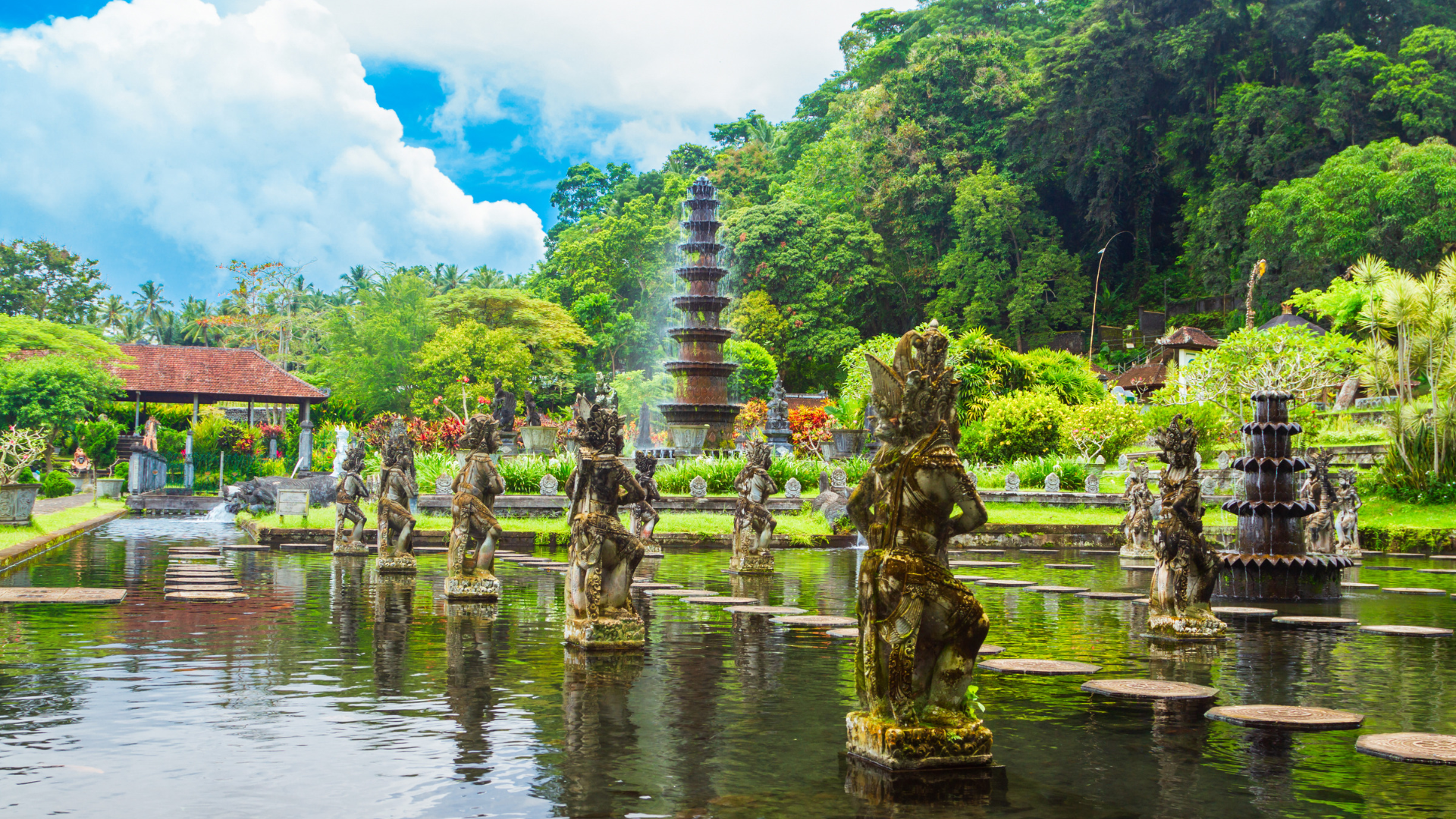
The most photographed part of the royal water garden is the Mahabharata pond. Octagonal stepping stones lead across the water between statues of figures from the Hindu epic, with the Pandavas facing their rivals, the Kurawas. The pond originally held statues of four swans associated with Saraswati, the goddess of knowledge and the arts. During the restoration, Prince Widoere reworked the pond into its current form, and Saraswati received a separate pond with her own statue.
The Meditation Circle
Under the banyan trees on the upper level, where the king spent time meditating and writing poetry, a ring of eight sculptures marks the passage between the three worlds. The figures represent an ordinary man and woman, a god and a demon, along with good and evil versions of the human figures. A lotus sits at the centre as a symbol of balance, surrounded by the black-and-white checked poleng cloth that represents the coexistence of opposing forces in Balinese thought.
Interesting Facts About Tirta Gangga
The Spring Produces a Remarkable Volume of Water
Emerald Starr, one of the restoration collaborators, once estimated the spring's flow by measuring how long the ponds took to refill after draining. His figure came to roughly 10,000 litres per minute. The local water department records a surplus flow that supplies drinking water to Amlapura and irrigation water to farmers in parts of Karangasem, so the same spring that feeds the royal pools also feeds the rice fields around it.
The Holy Water Still Serves Religious Activities
Tirta Gangga is a working sacred site. Water from the spring is collected as holy water for ceremonies at temples throughout the surrounding area, and the complex includes its own Patirthan temple at the source. On important ceremonial days, processions arrive with offerings, umbrellas and flags, led by temple priests and accompanied by beleganjur, the marching gamelan ensemble of gongs and drums.
The King Built It to Welcome the World
The plaque near the fountain describes the gardens as a gift to bring pleasure to people of all nations. Tirta Gangga began as a private royal retreat and later opened to the public, and that early intention to share it with visitors from abroad is part of why it became a popular tourist attraction.
It Is a Sister Site to Taman Ujung
Tirta Gangga and Taman Ujung water palace were both built by the same king, and both use water as their central architectural element. Taman Ujung sits on the coast with grand pavilions and broad lakes, while Tirta Gangga sits upland with a denser, more intimate arrangement of pools. Visiting both in one day gives a full picture of the king's vision.
The Koi Fish Are Part of the Experience
The ponds hold hundreds of large koi, some of them giant koi fish that crowd the stepping stones whenever visitors stop. Small bags of fish food are sold near the entrance, and feeding the koi turns the stepping stones into an interactive experience, especially for children.
The Lower Pond Has a Demon Island
The large South Pond, the first water visitors see after entering, holds an island of demon statues. Some of the figures appear as distorted versions of gods, including forms that recall Ganesha and Surya, reflecting the lower realm of the triloka.
You Can Swim in The Spring Water
Tirta Gangga is one of the few royal sites in Bali where visitors can swim. The bathing pools on the middle level are fed by the spring, and the water stays clear and cool throughout the year. Swimming carries a small additional fee on top of the entrance fee.
Rice Fields Surround the Palace
The valley around Tirta Gangga is known for its rice terraces, irrigated through the subak system that Bali's farmers have used for centuries. Walking trails lead out from the palace into the fields toward villages such as Abian Soan and Budakeling, and local guides can be arranged for longer treks.
The King's Taste for Water Gardens Spanned Two Islands
The Karangasem dynasty ruled the neighbouring island of Lombok for well over a century, and the Balinese court built several pleasure gardens there, including the water garden at Mayura in Mataram and the spring-fed gardens at Narmada. These earlier royal gardens, with their central pools and floating pavilions, shaped the tradition that Tirta Gangga and Taman Ujung later continued in East Bali.
A Small Museum Tells the Story
The Asta Gangga Museum on the grounds is a small museum covering the history of the palace and the royal family, with photographs and cultural objects. It offers useful context before or after walking the gardens.
Some Statues Are Modern Additions
Many of the stone sculptures visitors see today were carved during the restoration by master sculptors from Karangasem. The meditation circle and several figures around the ponds were added as part of the master plan, continuing the royal tradition of commissioning new work for the gardens.
Tirta Gangga Visitor Guide
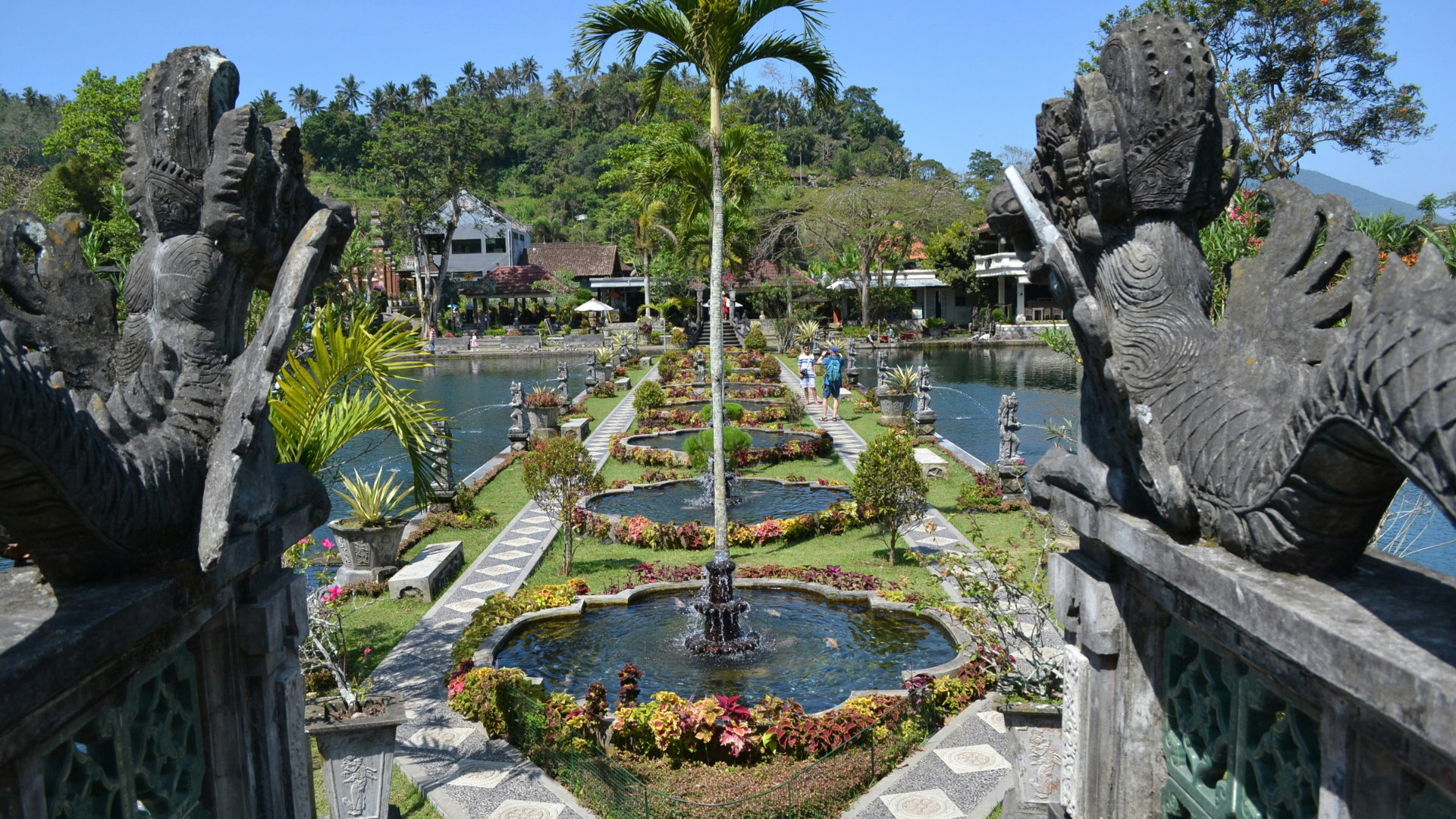
Tirta Gangga offers one of the clearest views of how Balinese royalty, religion and landscape design fit together, all within a compact, walkable site. This beautiful water palace pairs stunning architecture with peaceful gardens, and its stepping stones, koi and fountains make it one of the island's most recognisable photo spots, and the history and symbolism give it depth beyond the iconic photos. For anyone exploring East Bali, Tirta Gangga is worth a place on the itinerary.
The main factor in a good visit is timing. Midday brings tour groups, queues at the stepping stones and people lining the pond edges waiting for their photo. Arriving early transforms the experience.
How to Reach Tirta Gangga
The most comfortable way to reach Tirta Gangga is by private car with a driver. Roads in East Bali are narrow and winding in places, and a private driver handles parking and lets you combine stops across the region. Tirta Gangga is roughly 30 minutes by car from Candidasa, 30 minutes from Amed and around 20 minutes from Amlapura. From the south of the island, the drive takes two to three hours depending on traffic.
Many tours include Tirta Gangga as part of a wider East Bali day, often paired with Lempuyang Temple and Taman Ujung.
Opening Hours
Tirta Gangga opening hours generally run daily from 6:00 am to 7:00 pm, with some sources listing opening times of 7:00 am to 6:00 pm. Hours can shift around major Hindu holidays and ceremonies, so it helps to confirm on the day.
Tirta Gangga Entrance Fee
As of early 2026, the Tirta Gangga entrance fee for foreign visitors is listed at approximately IDR 90,000 for adults, IDR 45,000 for children and IDR 70,000 for visitors aged 65 and over, with lower rates for domestic visitors. Extras include:
- Swimming in the bathing pools: an additional fee of around IDR 10,000
- Fish food: from around IDR 5,000 per bag
- Traditional jukung boat ride on the large pond: around IDR 20,000
- Drone permit: available for an additional fee
- Parking: a small fee for cars and scooters
Payment is in cash at the gate, so bring rupiah.
Best Time to Visit
Visit early. The gates open at 6:00 am, and the first two hours of the day offer the calmest conditions, the softest light for photography and the best chance of a clear view of Mount Agung. Early morning visits also mean cooler weather for walking the grounds.
The late afternoon is the second-best window, when tour groups have moved on and the light turns warm across the pools.
The dry season, from roughly April to October, brings the most reliable skies and mountain views. The wet season, from November to March, brings brief heavy showers and deep green rice fields, and the gardens look their most lush.
Dress Code
Casual, modest clothing suits the gardens. Dress respectfully, with shoulders and knees covered, as a courtesy to an active religious site. A sarong and sash are required to enter the Patirthan temple area at the spring, and these are usually available on site. If you plan to swim, bring swimwear and a change of clothes for the changing rooms beside the bathing pools.
Exploring the Palace Grounds Walking Route
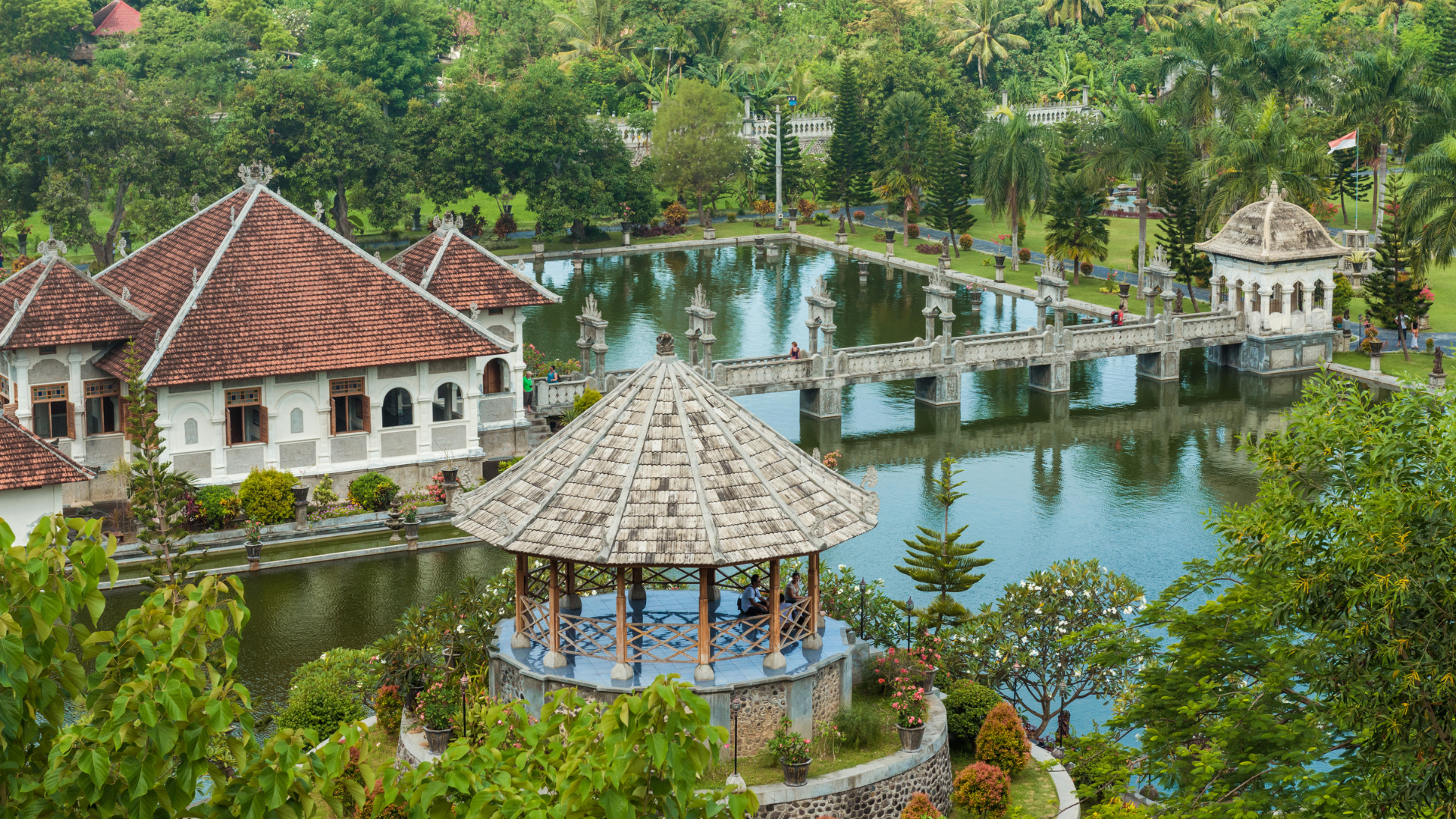
The following route moves through the triloka from the lower realm upward, which follows both the natural flow of the site and its symbolic meaning.
1. The South Pond and Demon Island: Start at the large pond near the entrance, the lowest of the three levels. Look across to the island of demon figures and the traditional statues along the water's edge. This is where the jukung boat rides operate.
2. The Mahabharata Pond and Stepping Stones: Move to the Mahabharata pond, a pond filled with koi and carved figures from the epic. Walk the stone path of octagonal stepping stones across the water, stopping to feed the koi fish and study the stone carvings of the Pandavas and Kurawas. This is the most popular photo spot at Tirta Gangga, so come here first if you arrive early.
3. The Nawa Sanga Fountain: From the stepping stones, continue to the Nawa Sanga fountain at the heart of the middle level. Walk around it to see the eight guardian figures and count the lotus-shaped tiers. Water spouts in the shape of mythical creatures line the surrounding pools.
4. The Bathing Pools: West of the fountain sits the lower swimming pool, with the upper pool on the level above. Both are fed directly by the spring. Changing rooms are available, and a swim here is a cool, memorable break during a day of sightseeing.
5. The Versailles Pool, Lily Pond and Meditation Circle: Climb to the upper level, the realm of the gods. Here you'll find the Versailles pool with its four fountains, a pond of giant water lilies and the meditation circle beneath the banyan trees, where the king once meditated.
6. The Sacred Spring and Patirthan Temple: At the top of the grounds sits the source of the water: the sacred spring and its Patirthan temple, guarded by dragons and topped by Vishnu on Garuda. Wear a sarong to enter, and keep a respectful distance if ceremonies are underway.
7. The Upper Terrace and Museum: Finish on the upper terrace, where the royal residence once stood. The view across the water features below shows the full design of the garden. Visit the Asta Gangga Museum for a short overview of Balinese history and the royal family before heading out.
Allow one and a half to two hours for the full route, or longer if you plan to swim or eat on site.
Practical Tips for Visiting
- Bring cash. Entrance, swimming, fish food and boat rides are paid in rupiah.
- Buy fish food inside the gate. Prices are usually lower at the entrance than from vendors in the car park.
- Wear grippy footwear. The stepping stones and pool edges can be slippery when wet.
- Pack swimwear. The bathing pools are one of the best parts of a visit.
- Respect religious activities. If a ceremony is underway at the spring, step aside and let processions pass.
- Plan for photos. Arrive early for iconic photos on the stepping stones without crowds.
- Combine with nearby sites. Tirta Gangga pairs well with Lempuyang Temple, Taman Ujung and the rice terraces of the surrounding valley.
Visiting Tirta Gangga From The Seed
This former royal water palace sits roughly 30 minutes by car from The Seed in Candidasa, making it one of the easiest heritage sites to reach during a stay. The Seed concierge can arrange private tours to Tirta Gangga with a driver, including early morning departures and combined itineraries with Taman Ujung, Lempuyang Temple and the surrounding rice fields. Visit our local discoveries page for more information.
Common questions
What is Tirta Gangga?
Tirta Gangga is a former royal water palace in Karangasem, East Bali, built in the 1940s by the last king of Karangasem as a retreat for the royal family. It features bathing pools, koi ponds, stepping stones, fountains and a sacred spring used for holy water.
How much is the Tirta Gangga entrance fee?
As of early 2026, the entrance fee for foreign adults is listed at approximately IDR 90,000, with reduced rates for children and seniors. Swimming, fish food and boat rides each carry an additional fee, paid in cash.
What is the best time to visit Tirta Gangga?
Early morning, between 6:00 am and 8:00 am, offers the quietest conditions and the best light for photos. Late afternoon is the next-best window. The dry season from April to October brings the clearest views of Mount Agung.
Is Tirta Gangga worth visiting?
Tirta Gangga is worth visiting for its royal history, Hindu symbolism, stepping stones and koi ponds, and its easy pairing with Lempuyang Temple and Taman Ujung on an East Bali day trip.
What is the difference between Tirta Gangga and Tirta Empul?
Tirta Gangga is a royal water garden in Karangasem, East Bali. Tirta Empul is a holy spring temple in Tampaksiring, Gianyar, known for ritual purification bathing.
Choose your dates, see the live rate and book your villa in a few minutes.
Book Now
Plan your vacation
Family holidays, reunions, and quiet time together, by the sea in Candidasa.
Learn more →
Host your retreat
A venue for facilitators, with a full hospitality team behind every session.
Learn more →