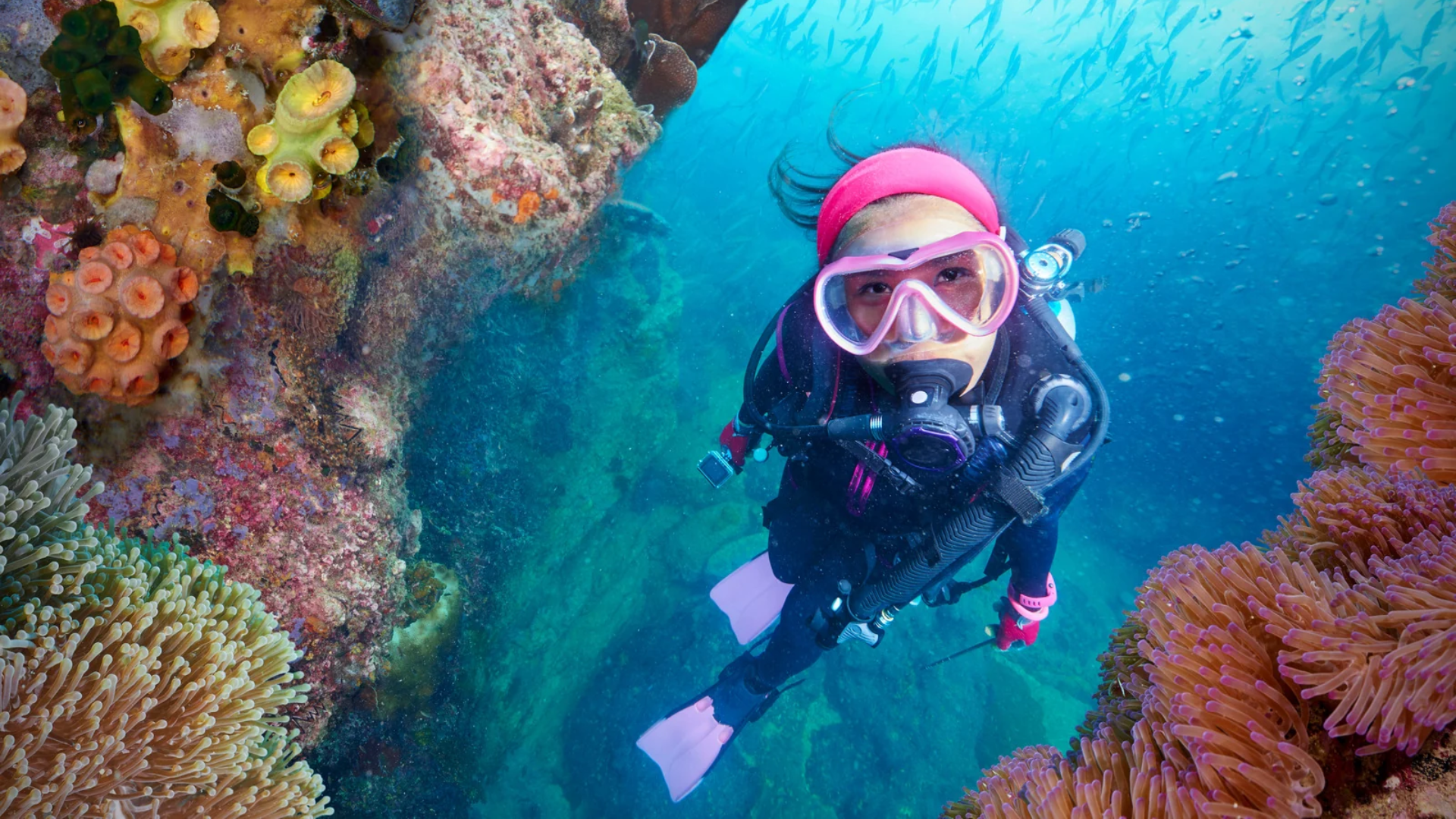
- Indonesia sits at the heart of the Coral Triangle, home to around 76% of the world’s coral species.
- Scuba diving in Indonesia runs year round, with most regions at their best from April to October.
- Raja Ampat follows a different pattern, with its calmest seas from October to April.
- Lembeh Strait is the top destination for world class muck diving and rare macro life.
- Manta rays are seen reliably at Nusa Penida’s Manta Point and Raja Ampat’s Manta Sandy.
- Most dive sites sit at 27°C to 30°C, with cooler upwellings around Nusa Penida and Candidasa.
- The Gili Islands, Amed and Tulamben offer calm conditions for first time divers.
- Komodo, Nusa Penida and Candidasa suit advanced divers who are comfortable in strong currents.
- Candidasa sits a short boat ride from walls, whitetip reef sharks and seasonal mola mola.
Indonesia spans more than 17,000 islands strung between mainland Southeast Asia and Australia, and almost all of its coastline sits inside the Coral Triangle, the marine region that holds around 76% of the world's known reef-building coral species. Warm waters, deep-ocean currents and volcanic coastlines combine here to produce spectacular coral reefs of extraordinary density, and the result draws scuba divers from every corner of the globe.
This guide covers diving conditions, the best times to go, the best dive sites by region, the marine life to look for, practical things to know before booking, and a set of facts that explain why the Indonesian underwater world is so rich.
Why Indonesia Is a World Class Diving Destination
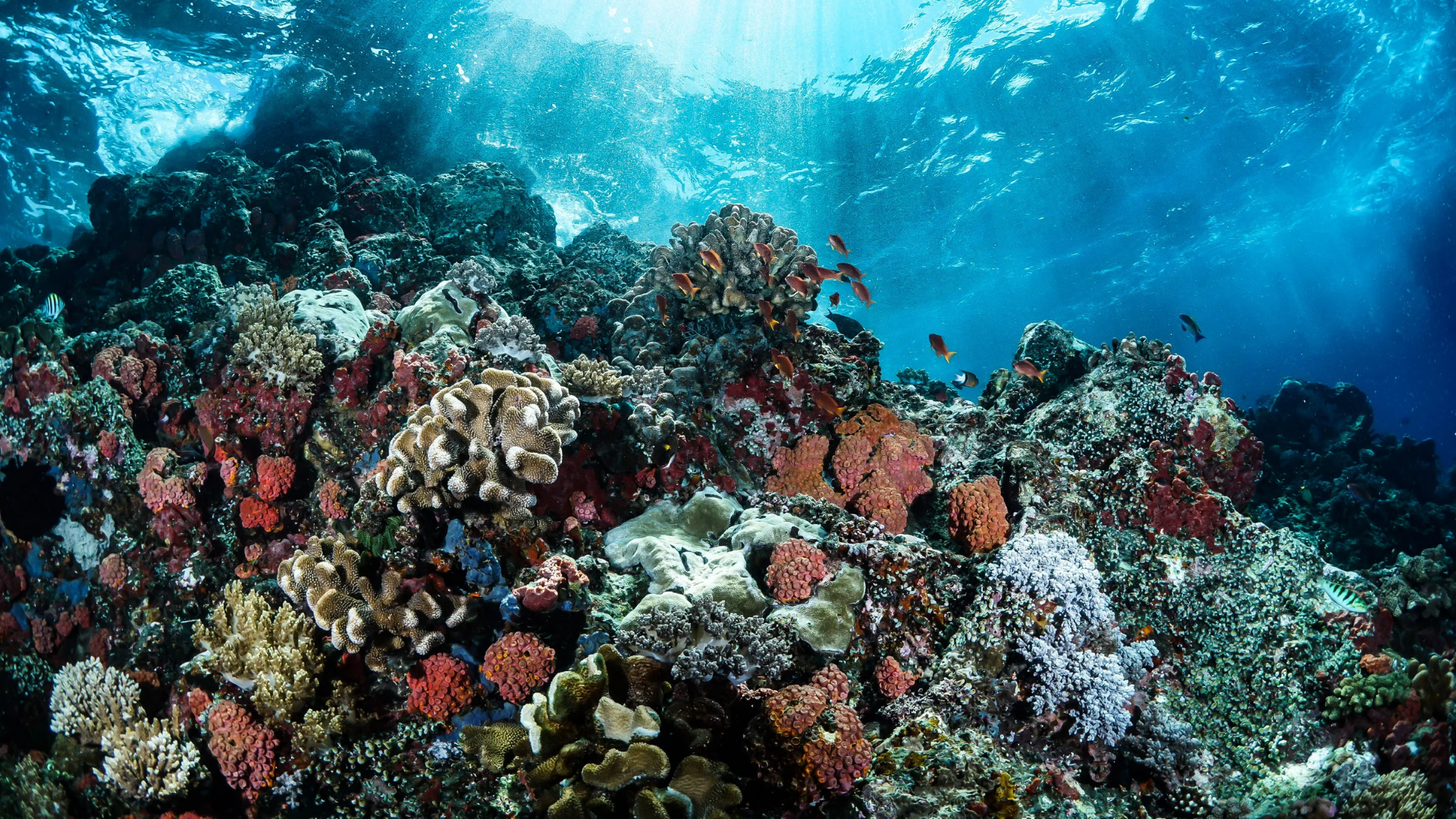
The Heart of the Coral Triangle
The Coral Triangle covers roughly six million square kilometres of ocean across Indonesia, Malaysia, the Philippines, Papua New Guinea, Timor-Leste and the Solomon Islands. Within that area sit around three-quarters of all known coral species and more than a third of the fish species found on the world's coral reefs. Indonesia holds the largest share of this region, which places it at the centre of global marine biodiversity.
The numbers in Raja Ampat alone show the scale. Surveys record more than 1,500 reef fish species and over 550 hard coral species across the islands. The Great Barrier Reef, which covers a far larger area, records around 400 to 450 hard coral species. Diversity of this kind means healthy reefs with layered structure that consists of hard corals, soft corals, sea fans and sponges stacked on top of one another, each with its own community of fish and invertebrates.
Currents That Feed the Reefs
The Indonesian Throughflow, a major ocean current system, carries water from the Pacific westward through the archipelago's narrow straits. These currents deliver nutrients that support plankton, which in turn support huge schools of fish, filter-feeding manta rays and the predators that follow them. The same currents create the strong currents and drift conditions that experienced divers seek out in Komodo, Nusa Penida and the Banda Sea.
The Wallace Line
In the 1850s, naturalist Alfred Russel Wallace identified a sharp biological boundary running between Bali and Lombok through the deep Lombok Strait. Species to the west share ancestry with Asia; species to the east share ancestry with Australia and New Guinea. The deep channel that marks this line also funnels cold, nutrient-rich water toward the surface around Nusa Penida, which explains the seasonal arrival of oceanic sunfish (mola mola) on Bali's southeastern reefs.
Diving Conditions in Indonesia
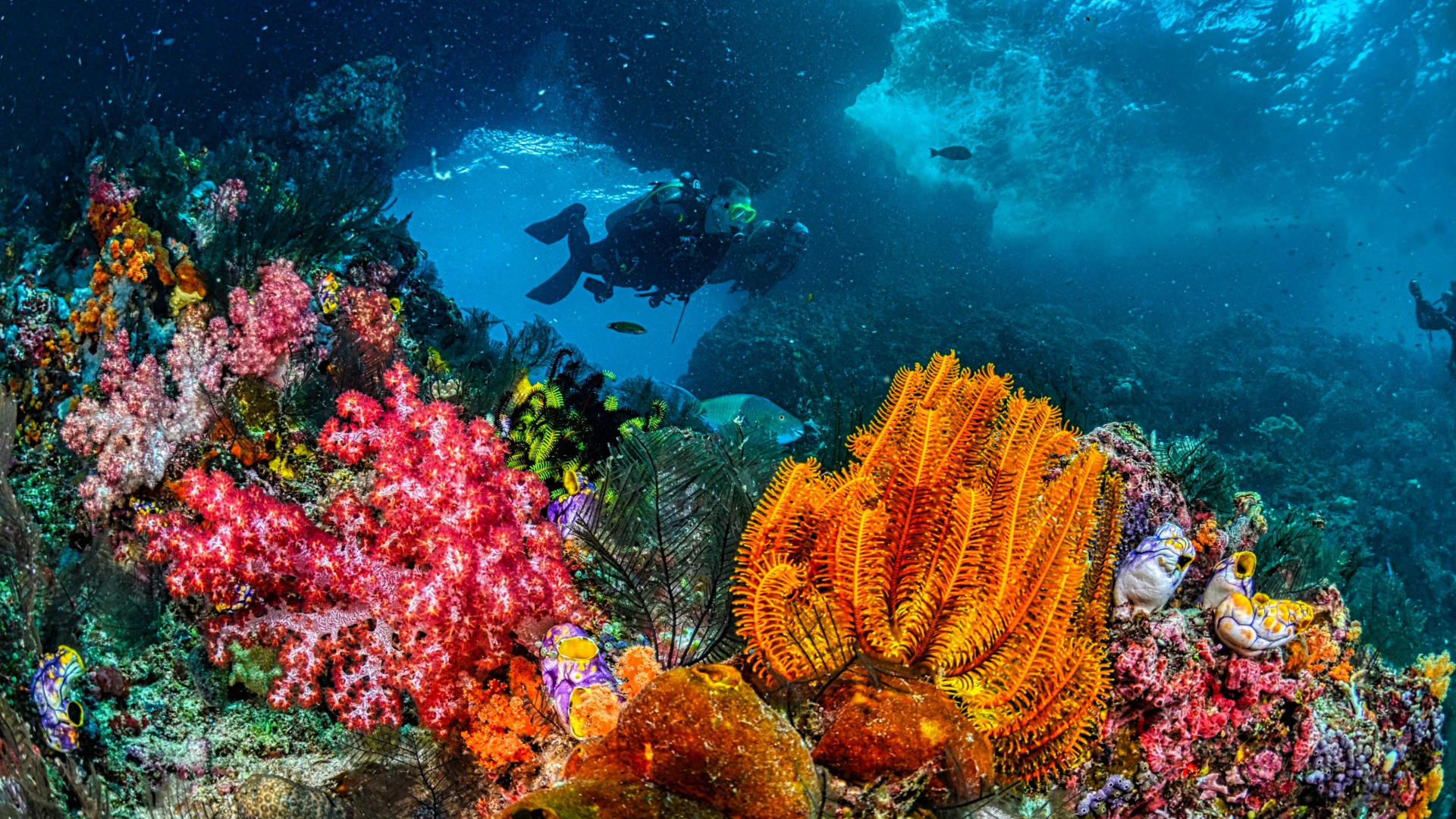
Water Temperature
Most Indonesian dive sites sit in warm waters of 27°C to 30°C for much of the year. A 3mm wetsuit is perfect for the majority of dives. The main exceptions are areas influenced by deep-water upwellings. Nusa Penida and the reefs off Candidasa can drop to 20°C or lower between July and October, and the southern sites of Komodo National Park also run cooler. Divers heading to these areas benefit from a 5mm suit and a hood.
Visibility
Visibility ranges from 10 metres to 30 metres and beyond, depending on location, season and tide. Open-water pinnacles and offshore islands typically offer the clearest conditions. Muck diving sites carry lower visibility by nature, since the black volcanic sand and nutrient-rich water that attract unusual critters also hold plankton and fine sediment.
Currents
Currents across Indonesia range from gentle drift to fast and unpredictable. Sites such as Castle Rock in Komodo and the islets off Candidasa experience strong currents that change with the tide and moon phase, and these suit advanced divers with solid buoyancy control and experience using a reef hook and surface marker buoy. Calmer areas such as the Gili Islands, Tulamben and parts of Bunaken suit first time divers and those completing certification courses.
The Best Time to Dive in Indonesia
Indonesia offers great diving year round, but conditions shift by region. Most of the western and central archipelago, including Bali, Lombok and Komodo, follows a dry season from roughly April to October and a rainy season from November to March. The rainy season usually brings short afternoon downpours rather than full days of rain, and many dive sites remain excellent through these months. Raja Ampat and parts of eastern Indonesia follow a different pattern, with calmer seas from October to April.
| Region | Best Months | Seasonal Highlights |
|---|---|---|
| Raja Ampat, West Papua | October to April | Calm seas, manta rays at cleaning stations |
| Komodo National Park | April to November (north); December to February (south for mantas) | Peak manta season in the south during the rainy season |
| Lembeh Strait, North Sulawesi | Year round | Critter activity year round; peak August to November |
| Bunaken, North Sulawesi | April to November | Clear water on the walls |
| Nusa Penida, Bali | Year round; July to October for mola mola | Manta rays year round, sunfish season mid-year |
| Tulamben and Amed, East Bali | Year round; April to November for calmest seas | USAT Liberty wreck, shore dives and night dives year round |
| Gili Islands, Lombok | Year round; April to October best | Sea turtles year round |
| Banda Sea | March to May; September to November | Liveaboard season, hammerhead sightings |
| Derawan Islands, Indonesian Borneo | April to October | Manta rays, sea turtles, jellyfish lake |
The Best Dive Sites in Indonesia
Raja Ampat, West Papua
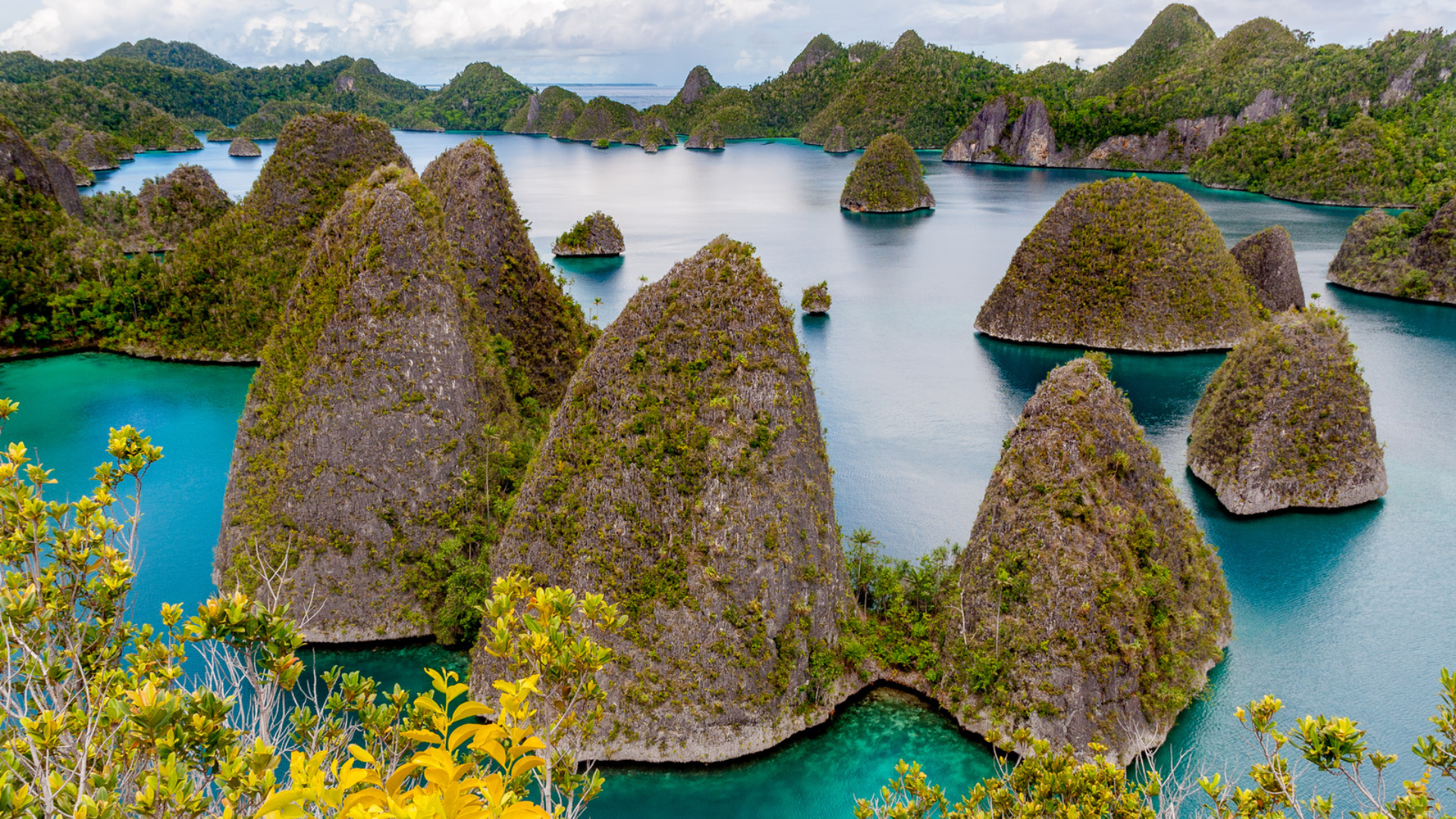
Raja Ampat lies off the western tip of New Guinea, in the region widely known as West Papua (administratively part of Southwest Papua province since 2022). The archipelago comprises around 1,500 islands, cays and shoals, and in 2023 it was designated a UNESCO Global Geopark for its geological and ecological value.
Cape Kri, in the Dampier Strait, holds the record for the highest number of fish species counted on a single dive: 374 species, recorded by ichthyologist Dr Gerald Allen in 2012. Divers here move through huge schools of fusiliers, trevally, batfish and sweetlips, with tasselled wobbegong sharks resting beneath ledges. Manta Sandy, a cleaning station nearby, draws reef manta rays that hover above the coral while cleaner wrasse pick parasites from their gills.
Further south, Misool offers dense soft coral gardens, sea fan forests that host pygmy seahorses, and seamounts where oceanic manta rays pass through. Raja Ampat also has its own endemic walking shark, a small epaulette shark that uses its fins to move across the reef floor at night. For underwater photographers and reef enthusiasts alike, Raja Ampat ranks among the top sites anywhere in the world.
Komodo National Park
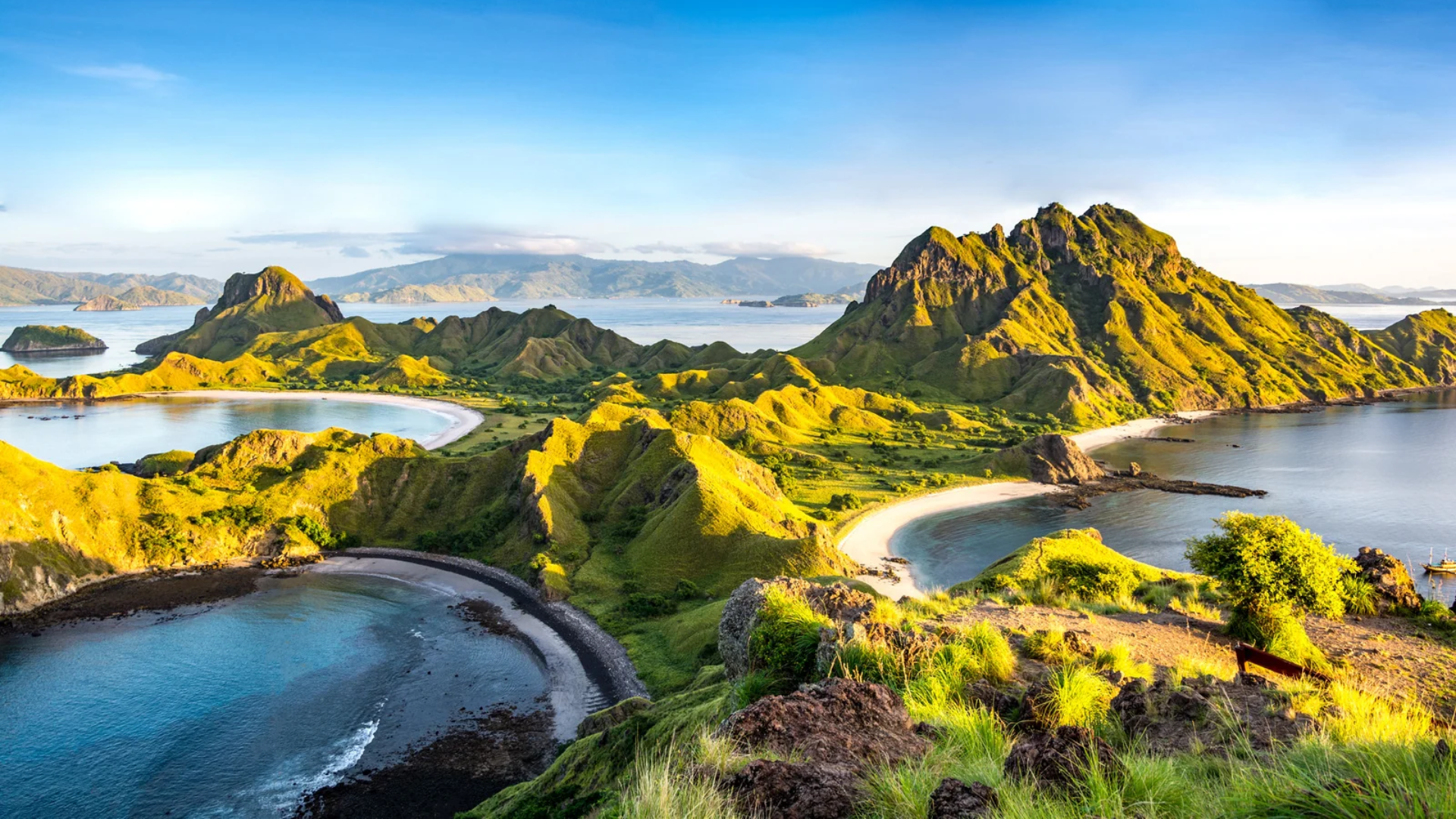
Komodo National Park, in the province of East Nusa Tenggara, was established in 1980 and inscribed as a UNESCO World Heritage Site in 1991. The park covers the islands of Komodo, Rinca and Padar along with many smaller islands, and the surrounding waters sit where cooler southern water meets the warmer northern seas. This meeting point produces some of the most exciting drift dives in Southeast Asia.
Castle Rock, in the north of the park, is a submerged pinnacle swept by currents that bring in giant trevally, dogtooth tuna, reef sharks and dense schools of fusiliers. Divers typically make a fast negative entry and hold position with a reef hook while the action unfolds. Neighbouring Crystal Rock offers similar conditions with clearer water.
Manta Point, also known as Karang Makassar, is a long drift over a rubble channel where reef manta rays gather to feed and clean. During the rainy season, the southern sites near Padar and Rinca Island host larger numbers of mantas in cooler, plankton-rich water.
Komodo dragons add a land-based highlight. Around 3,000 of these monitor lizards, which grow up to three metres, live across Komodo, Rinca and nearby islands. Many liveaboards schedule a ranger-guided walk on Rinca Island or Komodo Island during surface intervals, along with stops at pristine beaches such as Komodo's pink-sand shoreline.
Lembeh Strait, North Sulawesi
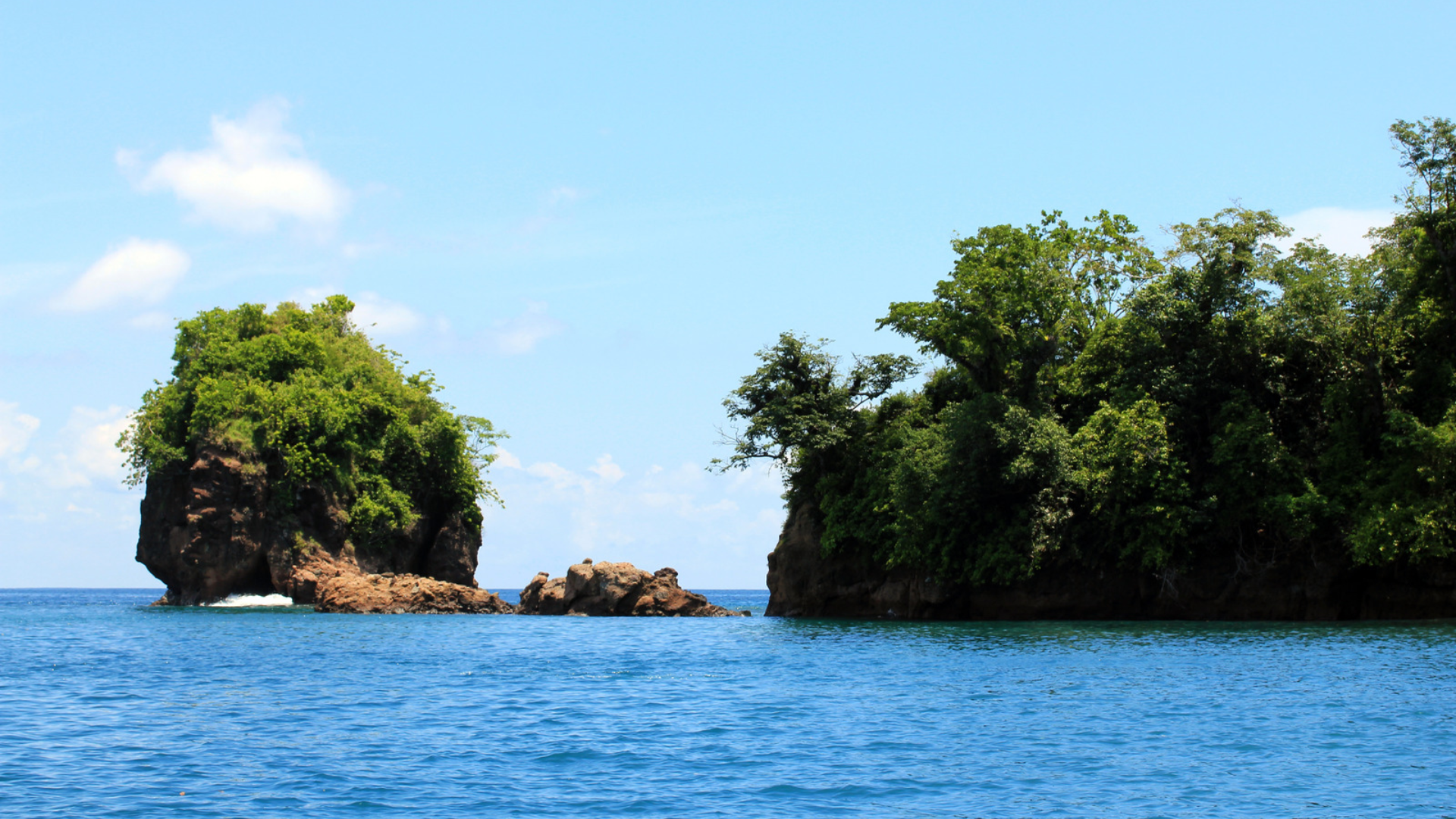
Lembeh Strait is a narrow channel roughly 16 kilometres long between the mainland of North Sulawesi and Lembeh Island. It is widely regarded as the birthplace of world class muck diving, and many divers refer to it as the critter capital of the world.
The seabed here is black volcanic sand scattered with rubble, sea grass and debris. At first glance, it looks bare. On closer inspection, it holds an extraordinary concentration of rare species: flamboyant cuttlefish, blue ring octopus, mimic octopus, hairy frogfish, ornate and robust ghost pipefish, pygmy seahorses, rhinopias scorpionfish and many species of nudibranch. Dive guides in Lembeh are trained to find animals only a few millimetres long, and the area draws underwater photographers who spend whole trips shooting macro subjects.
Night dives in Lembeh reveal bobtail squid, decorator crabs and the mating display of mandarin fish, which emerge from coral rubble at dusk. Conditions are generally calm, with mild currents and warm water year round, which makes Lembeh accessible to divers of most levels.
Bunaken National Park, North Sulawesi
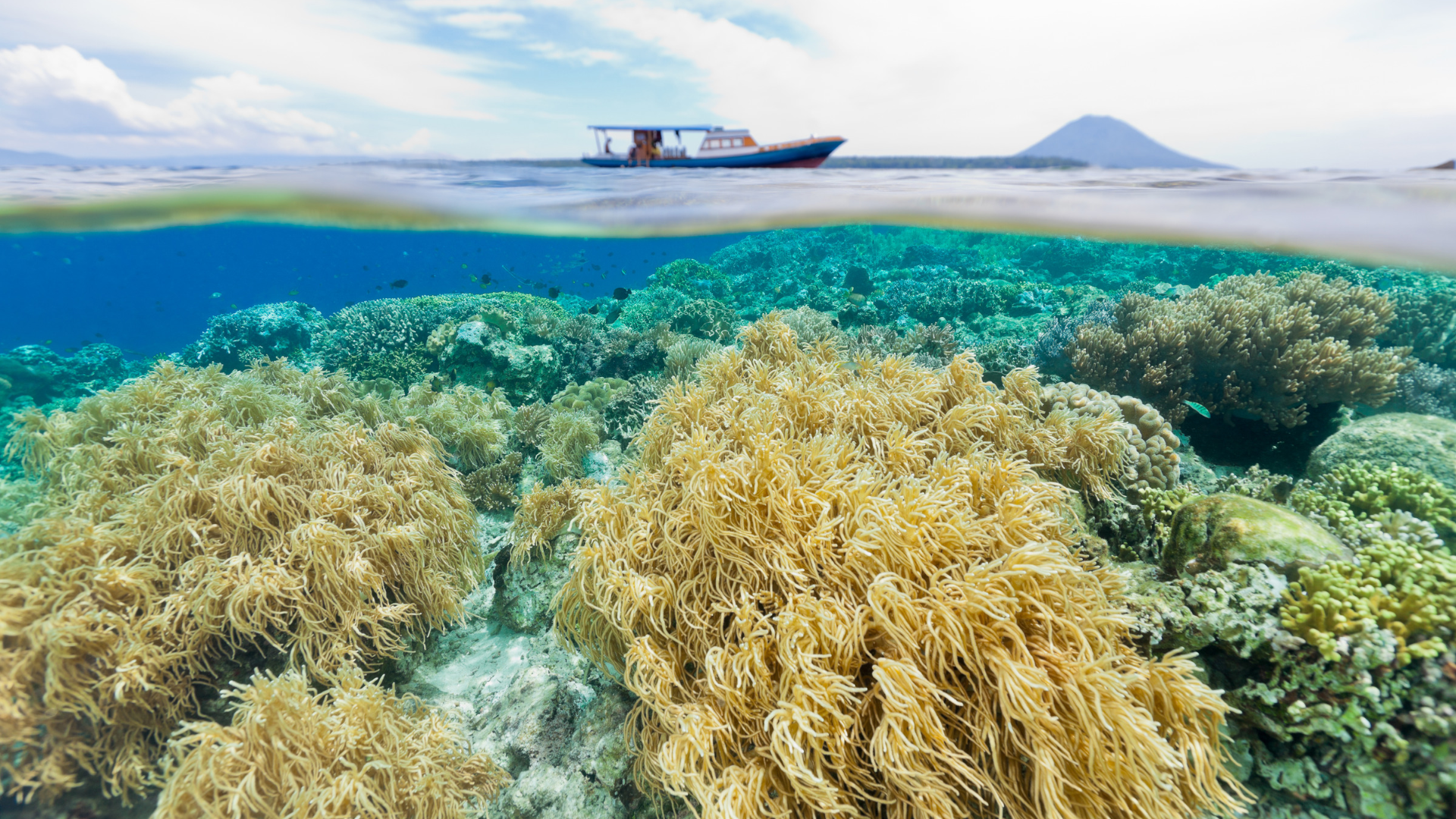
Bunaken National Park, established in 1991 off the coast of Manado, is one of Indonesia's first marine parks. Its reputation rests on wall dives: sheer reef faces covered in sponges, sea fans and hard corals that drop well beyond recreational depth.
Green and hawksbill sea turtles rest on ledges along the walls in large numbers, and schools of tropical fish move along the reef edge. Bunaken pairs well with Lembeh on a North Sulawesi dive trip, combining big-reef scenery with macro-focused muck diving.
Nusa Penida and Nusa Lembongan, Bali
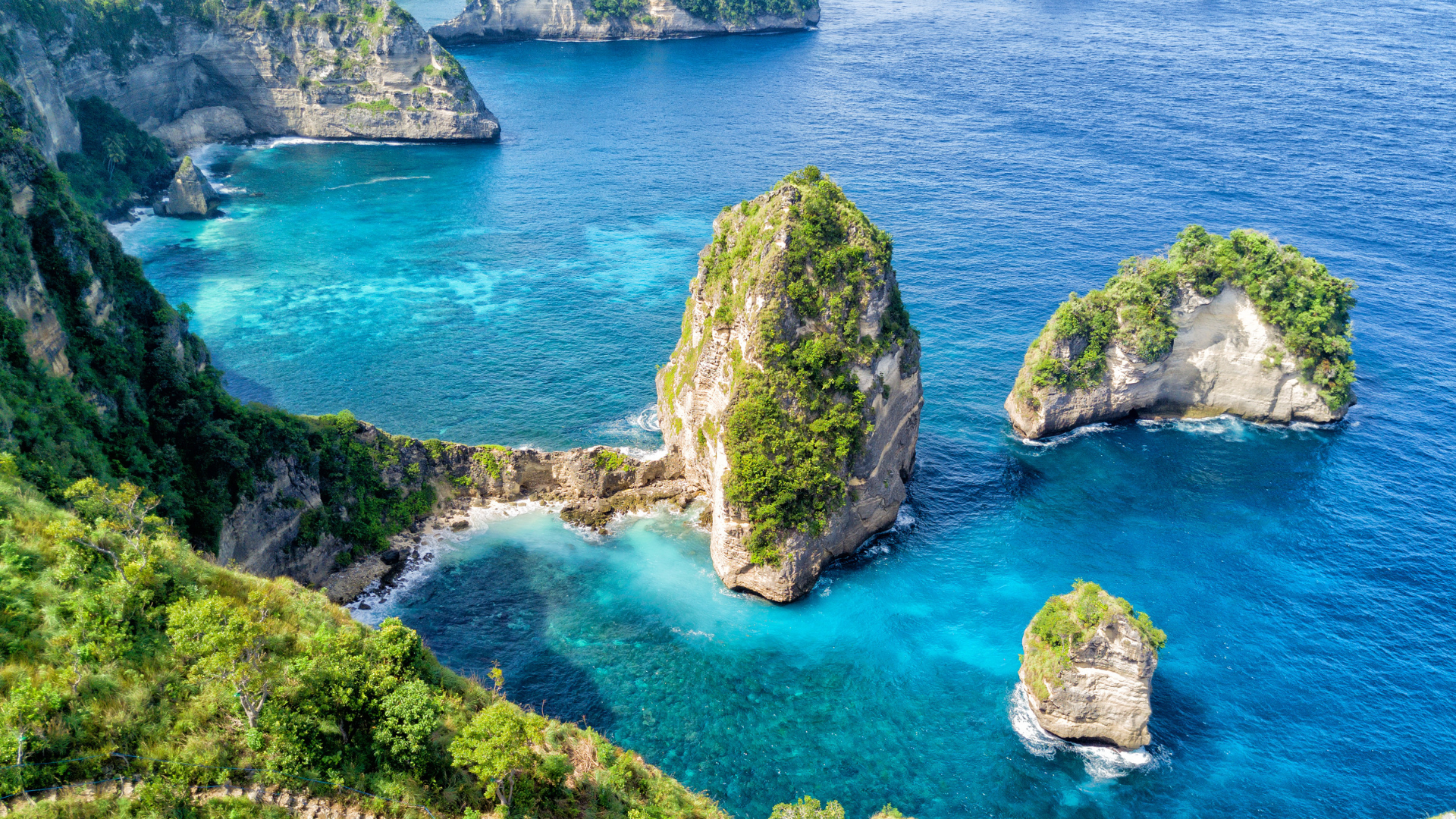
Nusa Penida and its smaller neighbour Nusa Lembongan sit off Bali's southeast coast, separated from the mainland by the Badung Strait. The waters here combine colorful reefs with strong currents and seasonal cold upwellings.
Manta Point, on the southern coast of Nusa Penida, is one of the most reliable sites in Indonesia for reef manta rays. The mantas visit a cleaning station close to the limestone cliffs year round, often in groups. Crystal Bay is the best-known site for oceanic sunfish (mola mola), which rise from deep water between July and October to be cleaned by reef fish. Drift dives along the channel between Nusa Penida and Nusa Lembongan cover long stretches of healthy reefs, and the conditions suit advanced divers.
Guests at The Seed can arrange guided diving and snorkelling through the concierge, with trips tailored to experience level, from introductory dives for first time divers to current dives around the Candidasa islets for experienced divers. Explore further ocean-based options on our diving & snorkeling page.
Bali's East Coast
Talumben
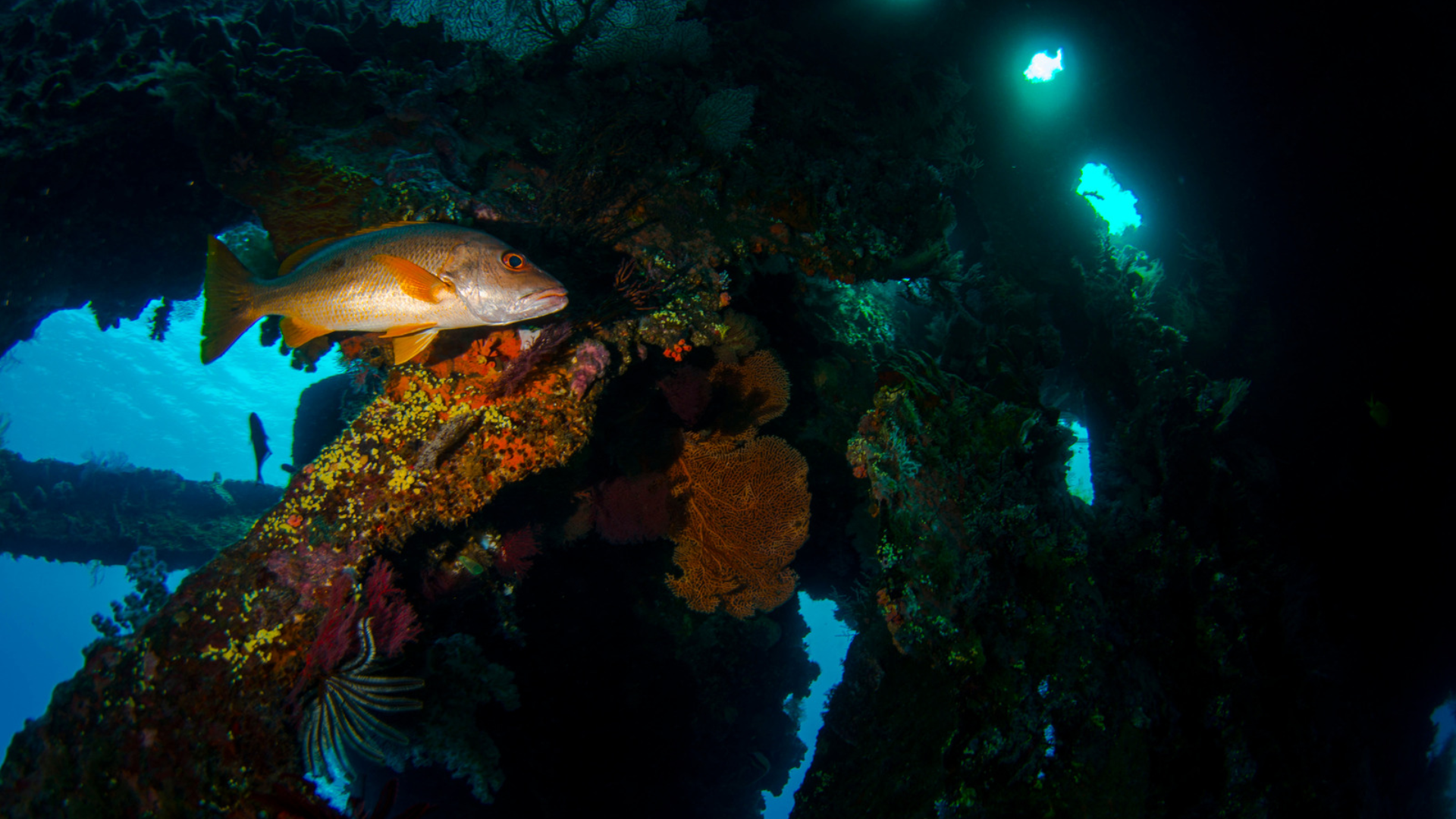
Tulamben is home to the USAT Liberty, a United States Army cargo ship torpedoed in January 1942 and beached on the shore. The 1963 eruption of Mount Agung shifted the wreck into the water, where it now lies between about 5 and 30 metres.
The Liberty is one of the most accessible wreck dives in the world: divers walk in from a black-stone beach and reach the hull within minutes. Its structure now carries dense coral growth, large schools of jacks, and macro subjects including pygmy seahorses and ghost pipefish. Tulamben is also a popular location for night dives and for first time divers completing their training.
Amed
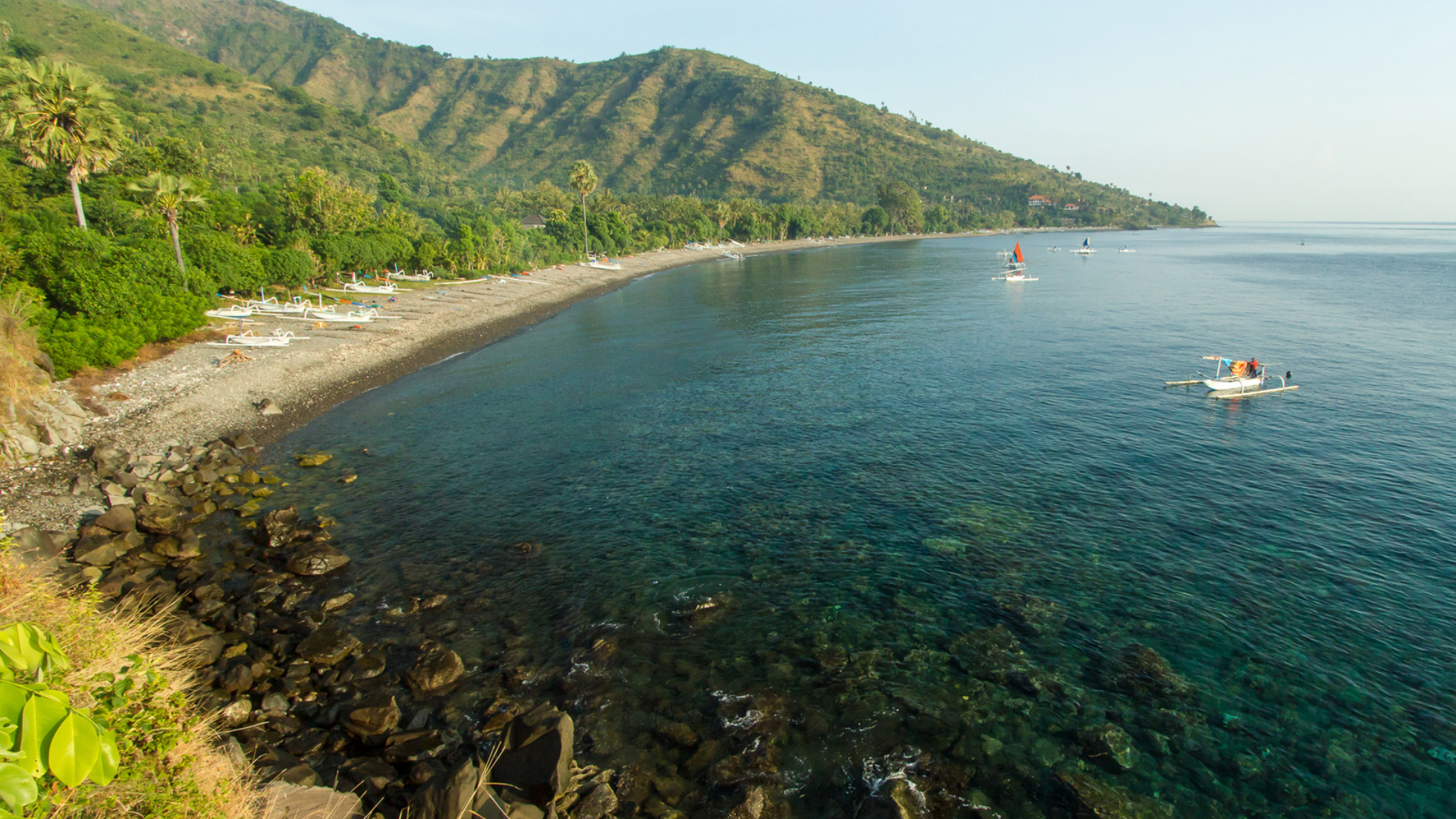
Amed offers a string of shore dives and short boat dives along a dry, rugged coastline, with coral slopes, a small shipwreck and calm conditions suitable for most levels.
Candidasa
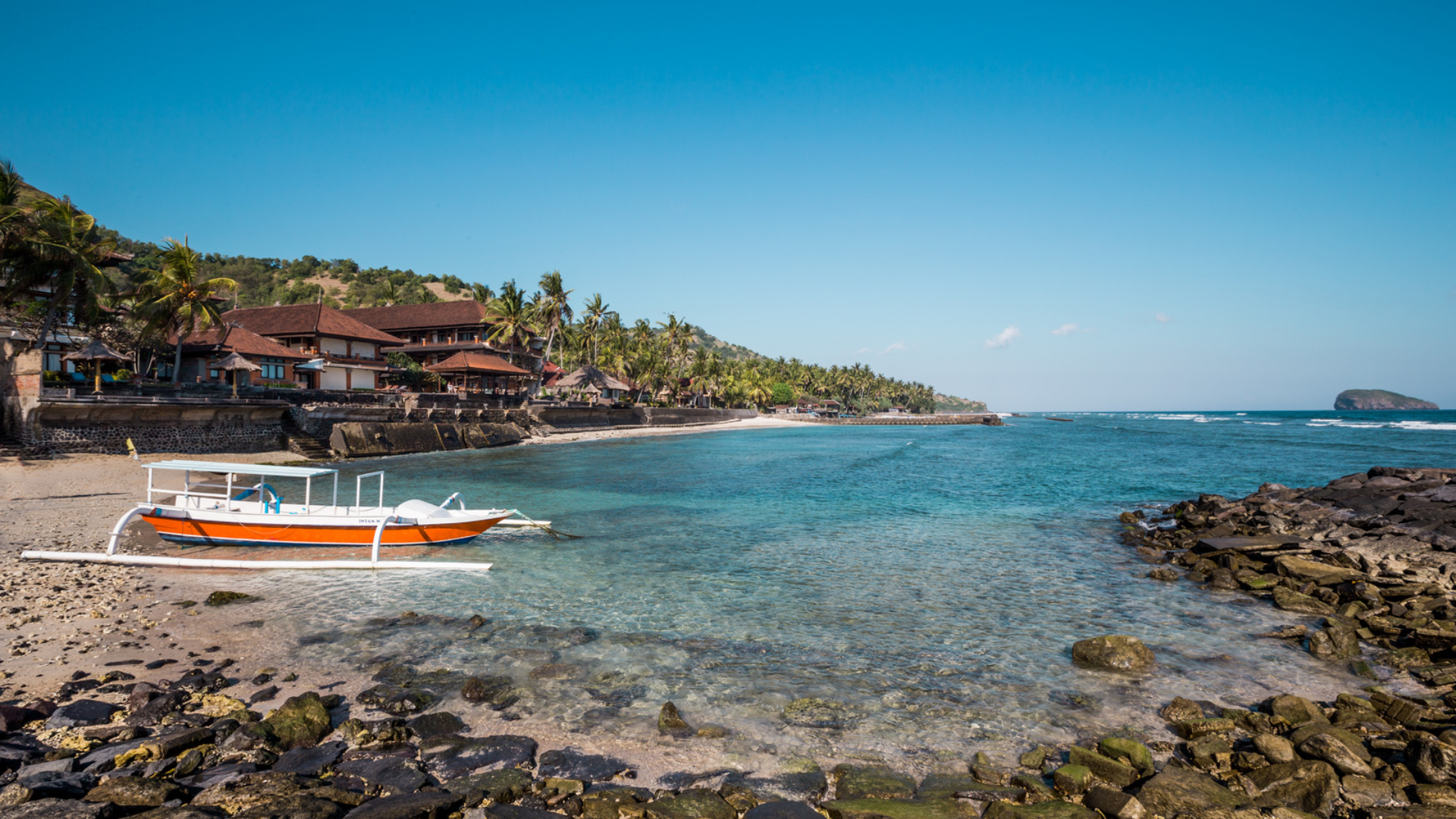
Candidasa sits further south on the east coast, facing the small rocky islets of Gili Mimpang, Gili Tepekong and Gili Biaha, around 10 to 20 minutes offshore by boat. These sites deliver deep walls, canyons and swim-throughs, with whitetip reef sharks resting in caves and on ledges.
Gili Mimpang carries the local name Shark Point, and Gili Biaha has its own Shark Cave. Between July and October, mola mola appear in the cooler water around these islets. Strong, tide-dependent currents make Candidasa a destination for experienced divers, and many local dive guides consider these islets their favorite dive site in Bali.
The Gili Islands, Lombok
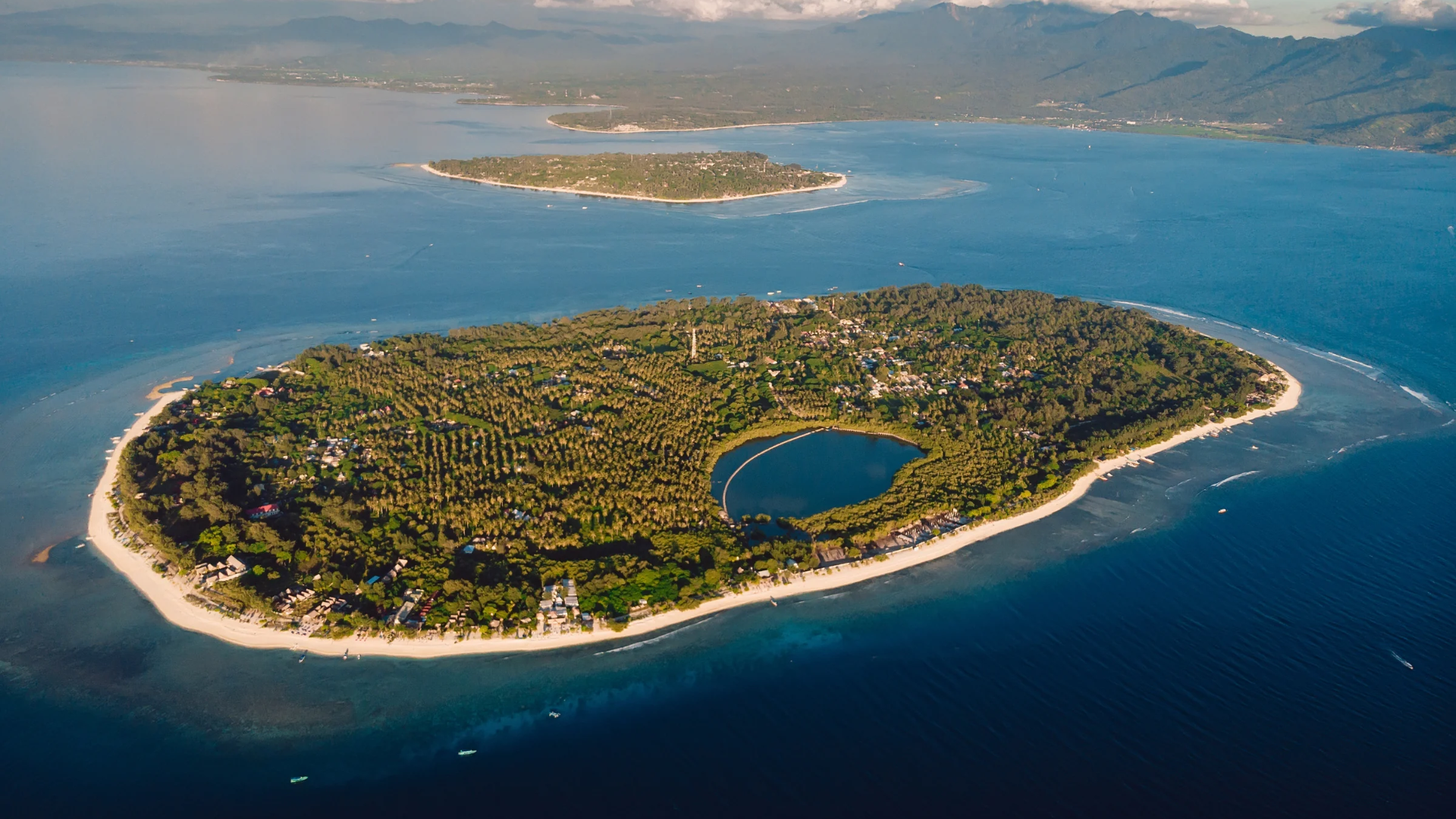
The Gili Islands sit off the northwest coast of Lombok: Gili Trawangan (known as Gili T), Gili Meno and Gili Air. Transport on all three runs on bicycles and horse-drawn carts, which keeps the islands quiet and gives them the feel of a tropical paradise.
The Gili Islands are one of the best places in Indonesia to see sea turtles. Green and hawksbill turtles feed on the reefs around all three islands, often in shallow water. Shark Point, off Gili Trawangan, offers regular sightings of whitetip and blacktip reef sharks. Off Gili Meno, the underwater sculpture installation known as Nest, created by sculptor Jason deCaires Taylor in 2017, features 48 life-size human figures that now host coral and fish. Gili Air offers gentler reefs suited to beginners and macro enthusiasts.
With calm conditions, warm water and a high concentration of dive shops offering certification courses, the Gili Islands are a strong choice for first time divers.
The Banda Sea
The Banda Sea lies in eastern Indonesia within the Maluku province. It reaches depths of more than 7,000 metres at the Weber Deep, and its isolated volcanic islands rise sharply from this deep water. Banda's reefs are known for exceptional coral cover, huge schools of fish, and seasonal sightings of scalloped hammerhead sharks around the outer sites. The volcanic island of Gunung Api hosts large numbers of banded sea snakes in the shallows.
Most divers reach the Banda Sea by liveaboard during two short seasons, roughly March to May and September to November, when sea conditions allow crossings.
Derawan Islands, Indonesian Borneo
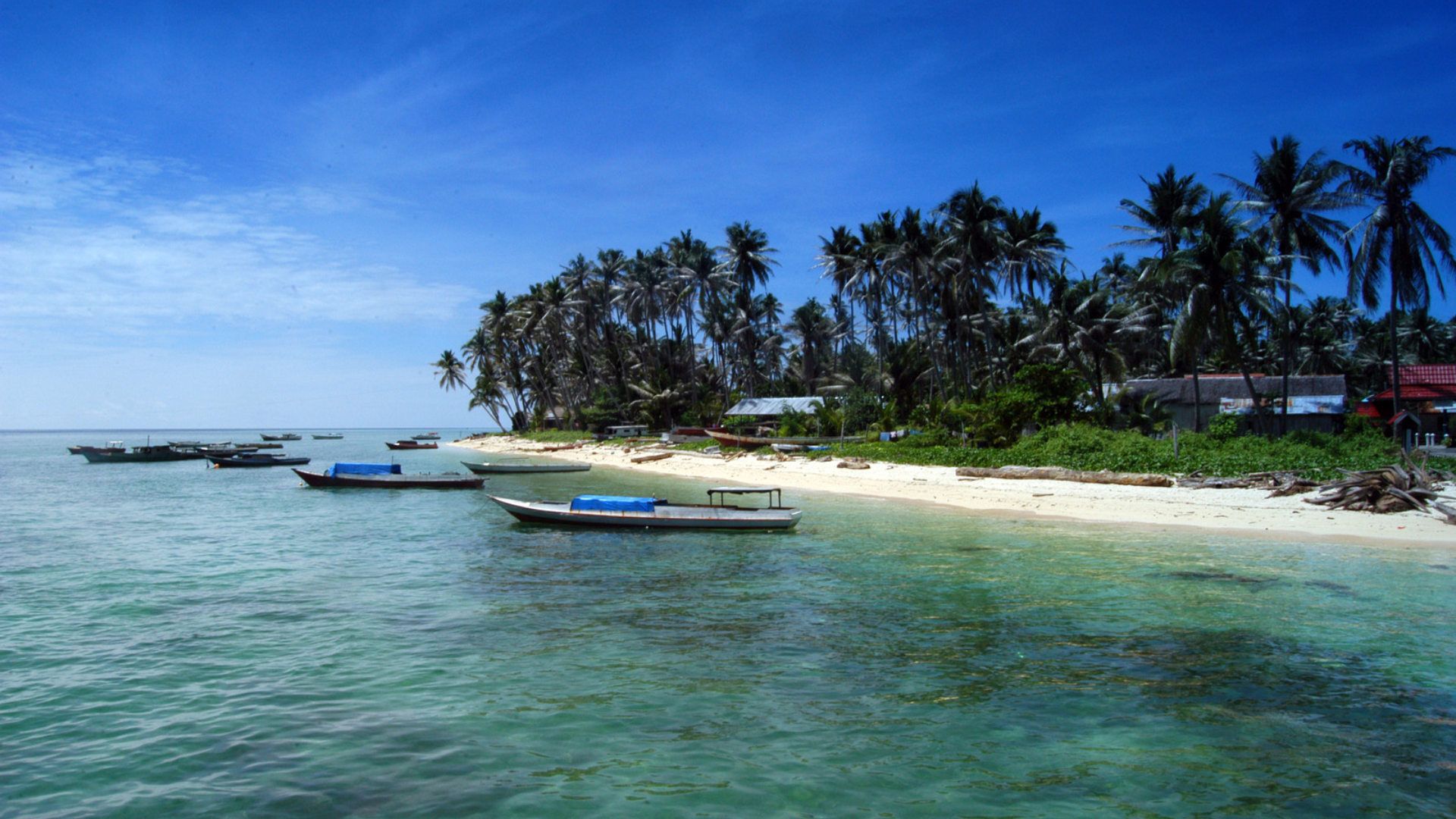
Off the coast of East Kalimantan, in Indonesian Borneo, the Derawan archipelago pairs beautiful corals and incredible marine life with experiences found in few other places. Sangalaki is known for reef manta rays, Maratua offers wall dives and channel drifts with barracuda and reef sharks, and Derawan Island is a nesting site for green sea turtles. Kakaban Island holds a landlocked marine lake inhabited by stingless jellyfish, where divers and snorkellers can swim among thousands of them. Whale sharks are also seen along the nearby mainland coast at Talisayan, where they gather around fishing platforms.
Marine Life to Look For
Manta Rays
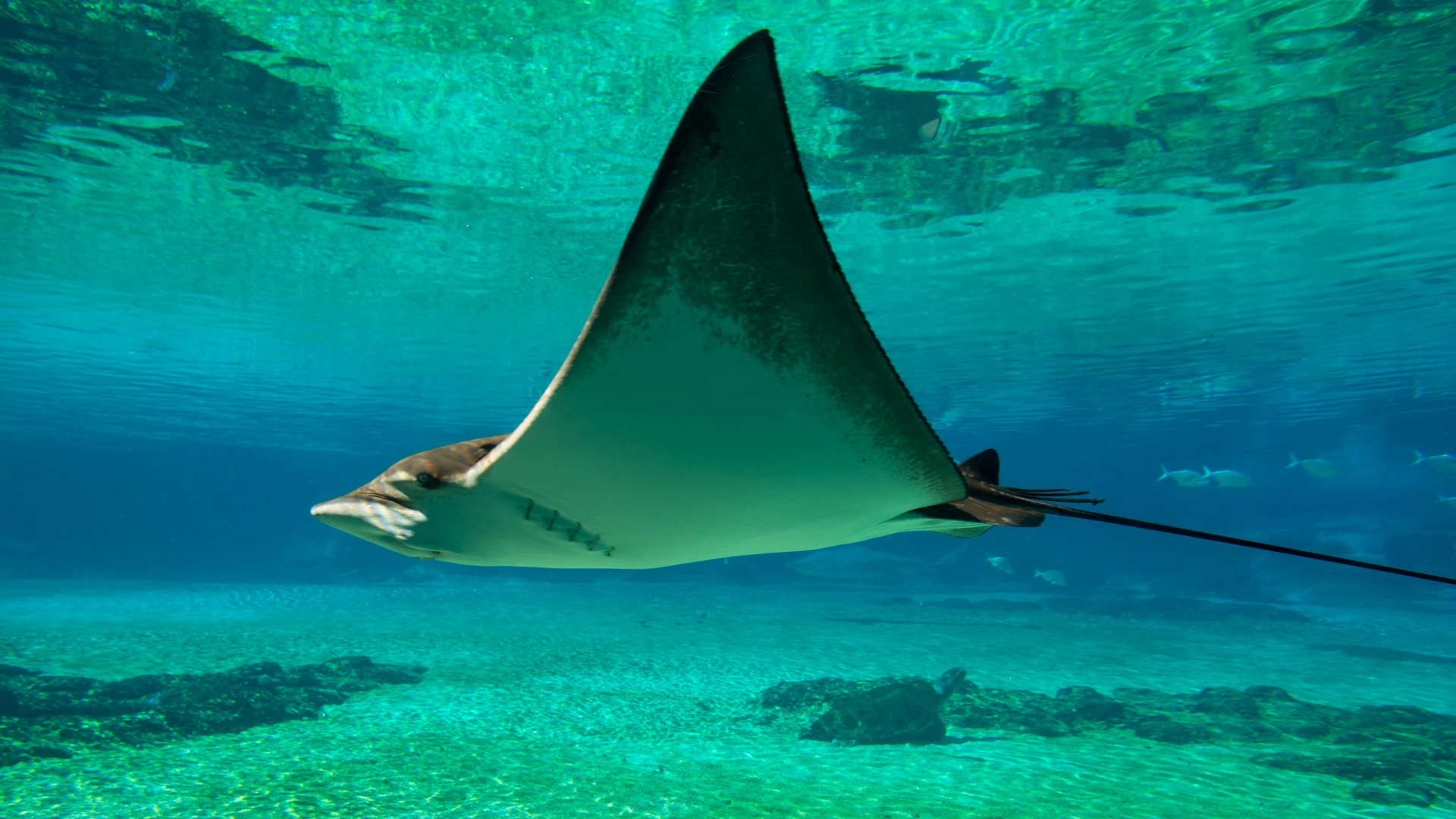
Indonesia hosts both reef manta rays and the larger oceanic manta rays. Reliable sightings occur at Nusa Penida's Manta Point, Komodo's Karang Makassar, Raja Ampat's Manta Sandy and Sangalaki in the Derawan Islands. In 2014, Indonesia declared its entire marine territory a manta ray sanctuary, protecting both species from fishing and trade.
Whale Sharks
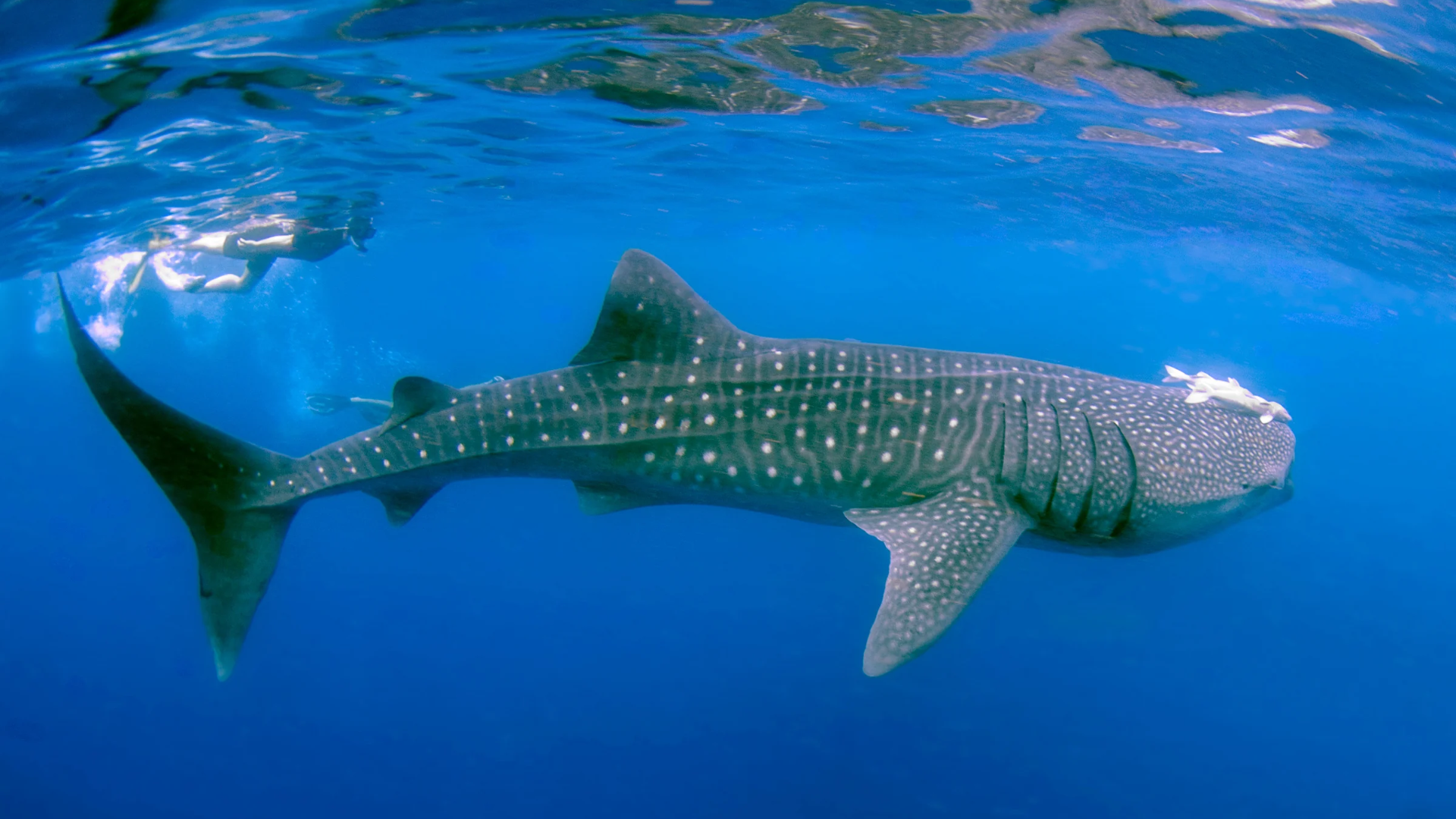
Whale sharks, the largest fish in the ocean, appear at several Indonesian locations where they feed around traditional bagan fishing platforms. The most consistent encounters occur in Cenderawasih Bay on the northern coast of Papua, at Talisayan in East Kalimantan, and at Botubarani in Gorontalo, Sulawesi.
Sharks
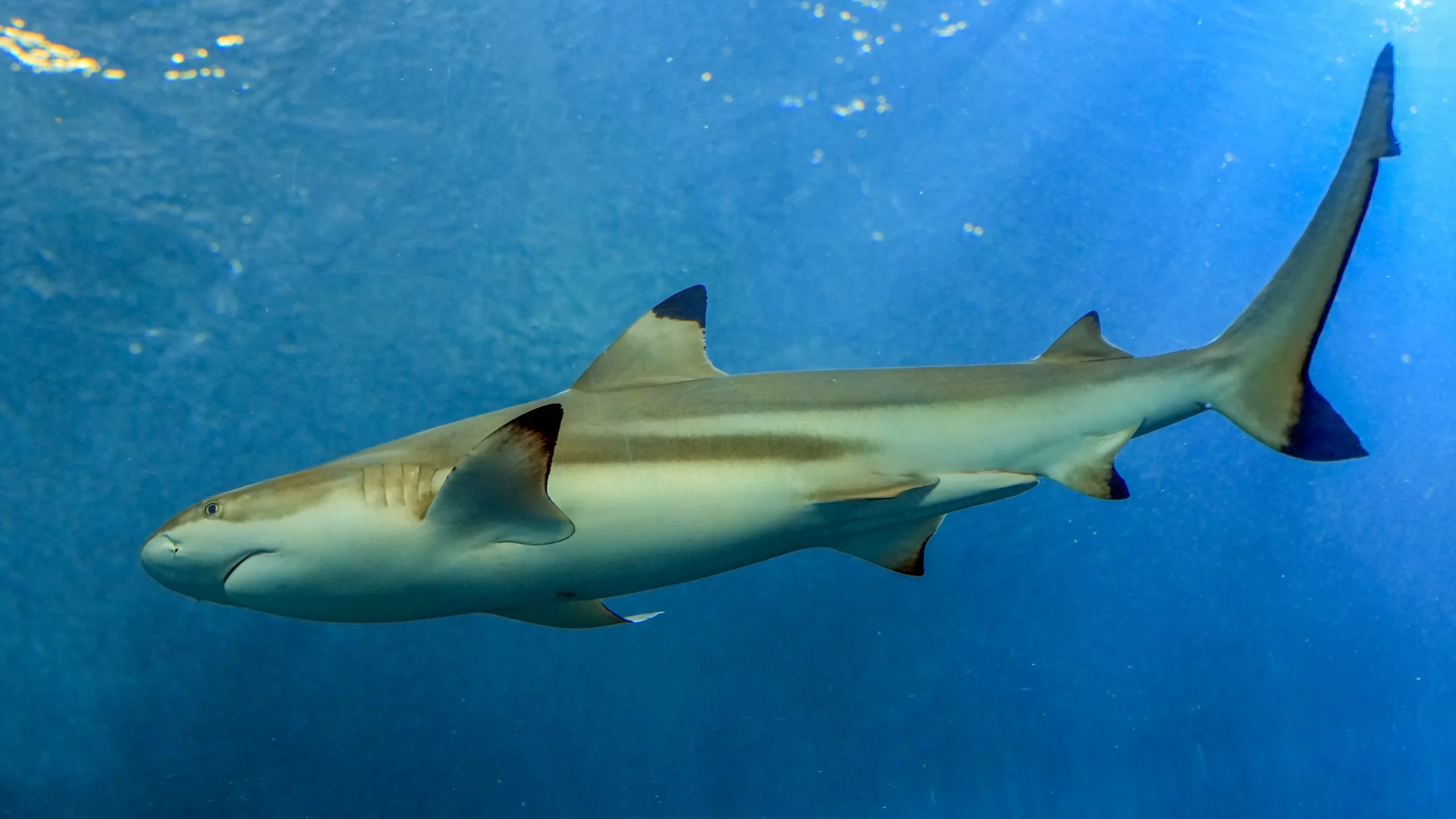
Whitetip and blacktip reef sharks are common across Indonesian dive sites, with high numbers in Komodo, the Candidasa islets and Shark Point off Gili Trawangan. Grey reef sharks patrol Komodo's current-swept points, scalloped hammerheads appear seasonally in the Banda Sea, and Raja Ampat hosts tasselled wobbegong sharks and walking epaulette sharks. Indonesia offers both the big stuff and the unusual species that make every dive different.
Sea Turtles
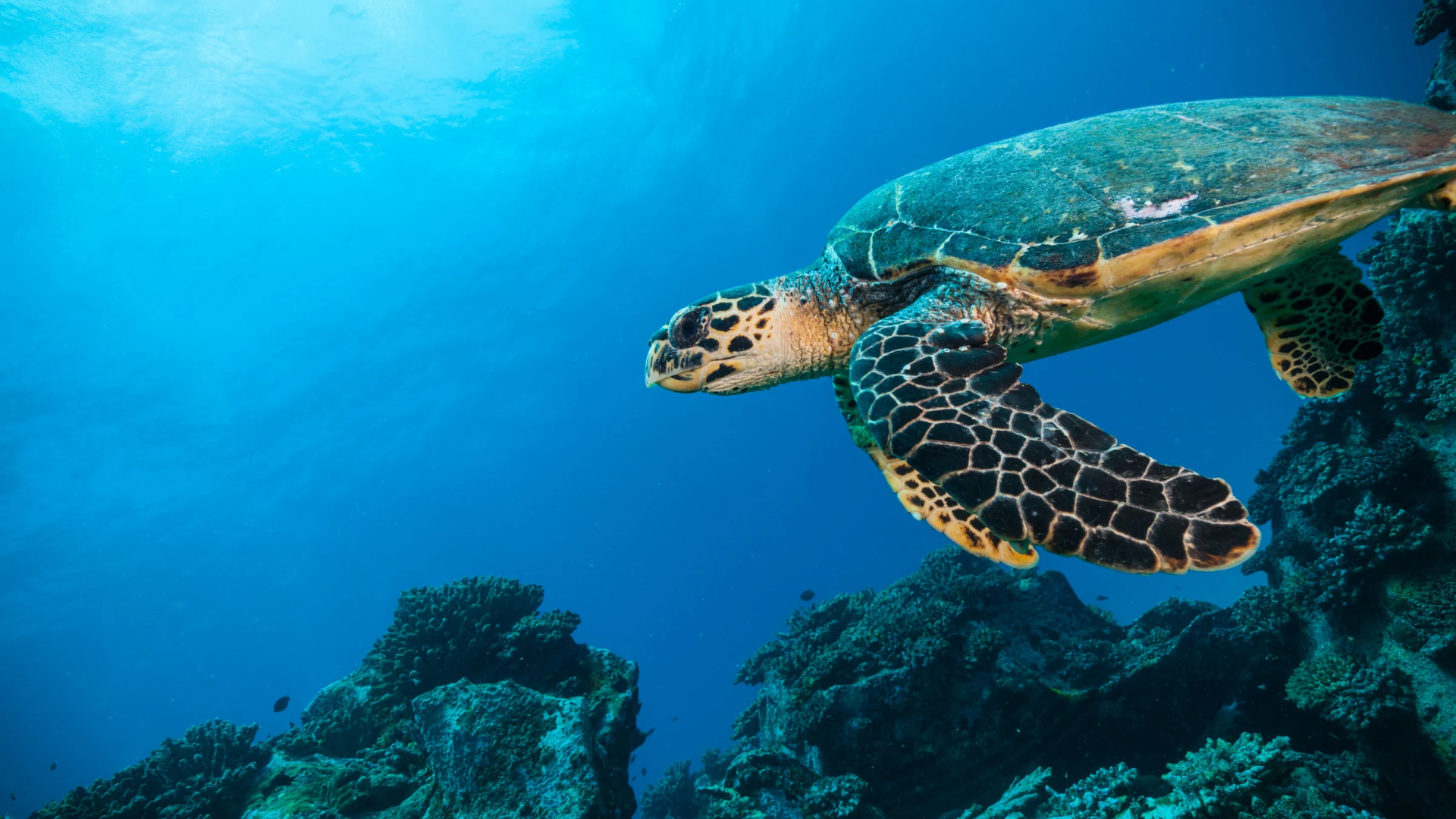
Green and hawksbill sea turtles are found across most Indonesian reefs. The Gili Islands, Bunaken and the Derawan archipelago offer the most consistent encounters, with turtles often resting on the reef or feeding in shallow water.
Macro Life
For many divers, Indonesia's smallest residents are the main attraction:
- Pygmy seahorses: The smallest members of the seahorse family. Adults usually measure under 2 centimetres. Each species spends its whole life on one type of sea fan or soft coral, and its body copies the colour and bumpy texture of that host. They’re so well camouflaged that divers rely on trained guides to find them, with Raja Ampat, Lembeh Strait and Tulamben among the most reliable spots.
- Mandarin fish: A small reef fish from the dragonet family, about 6 centimetres long, covered in swirling orange, green and electric-blue patterns. Mandarin fish hide in coral rubble during the day and come out at dusk, when pairs rise off the reef together to mate. Night dives in Lembeh, Ambon and Raja Ampat give the best chance of seeing this display.
- Blue ring octopus: A small, highly venomous octopus, roughly the size of a golf ball. Its skin is usually a muted brown-yellow, and it flashes bright blue rings as a warning when it feels threatened. Its venom contains tetrodotoxin, the same toxin found in pufferfish, so divers watch it from a respectful distance. It’s most often found on muck dives in Lembeh Strait.
- Flamboyant cuttlefish: A small cuttlefish, a relative of squid and octopus, that grows to about 8 centimetres. Unlike most cuttlefish, it walks across the sea floor on its arms and fins rather than swimming. It ripples bands of purple, yellow and white across its body to warn predators that its flesh is toxic. Lembeh Strait is the best-known place to see one.
- Ghost pipefish: A slender fish closely related to seahorses and pipefish. It drifts head-down beside sea fans, crinoids and seagrass, where its shape and colour blend in with its surroundings. Female ghost pipefish carry their eggs in a pouch formed by their joined pelvic fins until the eggs hatch. Ornate and robust ghost pipefish are common finds in Lembeh and on Bali’s east coast.
Things to Know Before Your Dive Trip
- Many of Indonesia's top sites, including Komodo, Nusa Penida and the Candidasa islets, call for Advanced Open Water certification and recent dive experience. First time divers can train in calmer locations such as the Gili Islands, Amed, Tulamben and Lembeh.
- Carry a surface marker buoy (SMB) on every dive and bring a reef hook for current-heavy areas. Listen closely to dive briefings, since conditions change with the tide.
- Komodo National Park, Raja Ampat, Bunaken and the Gili Islands all charge entry or conservation fees. Raja Ampat requires a marine park entry permit, issued as a tag and carried for the duration of the visit.
- Get specialist dive insurance covering hyperbaric treatment and evacuation is strongly recommended, especially for remote areas where the nearest recompression chamber may be some distance away.
- Standard guidelines recommend waiting at least 18 hours after multiple dives or multi-day diving before flying.
- Remote areas such as the Banda Sea, southern Komodo and Misool are best reached by liveaboard. Bali, the Gili Islands, Lembeh and Bunaken work well as land-based trips with day-boat diving.
- Look for operators with current certifications, well-maintained equipment, small group sizes and guides familiar with local currents. Ask about guide-to-diver ratios, particularly for current-heavy sites.
- Use reef-safe sunscreen, maintain good buoyancy, and keep hands off the coral and wildlife. Healthy reefs depend on low-impact diving.
- Many Indonesian dive areas pair diving with land-based highlights during surface intervals, from Komodo dragon walks to quiet pristine beaches and village visits.
Interesting Facts About Diving in Indonesia
Indonesia Has One of the Longest Coastlines in the World
With more than 17,000 islands, Indonesia has a coastline of over 54,000 kilometres, the second longest of any country after Canada. This gives the country thousands of potential dive spots, many of which remain largely unexplored.
One Dive at Cape Kri Set a World Record
In 2012, Dr Gerald Allen counted 374 fish species during a single 90-minute dive at Cape Kri in Raja Ampat. The count remains the highest number of fish species recorded on one dive.
Mandarin Fish Produce Rare Blue Colouring
Most blue colouring in animals comes from the way light reflects off structures in the skin. The mandarin fish is one of very few vertebrates known to produce blue through cellular pigment, which gives it its vivid electric-blue patterning.
Muck Diving Was Born in Indonesian Waters
Muck diving as a recognised style grew out of the dive community in North Sulawesi and neighbouring regions, where guides began showing divers the rare creatures living on seemingly empty sand. Lembeh Strait remains the benchmark for the style.
"Gili" Simply Means Small Island
In the Sasak and Balinese languages, "gili" means small island. This explains why the name appears on islands across the region, from the Gili Islands of Lombok to Gili Tepekong, Gili Mimpang and Gili Biaha off Bali's east coast.
A Banda Island Was Once Traded for Manhattan
Under the Treaty of Breda in 1667, the English ceded their claim to Run, a tiny nutmeg-producing island in the Banda Sea, to the Dutch, while the Dutch ceded New Amsterdam (now Manhattan) to the English. Today, the Banda Islands are better known for their reefs than their spices.
Indonesia Protects All Manta Rays in Its Waters
In 2014, Indonesia declared its entire Exclusive Economic Zone a manta ray sanctuary, covering more than six million square kilometres. The decision recognised that a living manta ray brings far greater long-term value through dive tourism than through fishing.
A Wreck Moved by a Volcano
The USAT Liberty in Tulamben sat on the beach for more than two decades until the 1963 eruption of Mount Agung pushed it into the sea. The volcano's lava and seismic activity created the shore dive that thousands of divers now enjoy each year.
Pygmy Seahorses Were Discovered by Accident
The first known pygmy seahorse was found in 1969 on a sea fan collected for a museum. Scientists noticed the tiny seahorse only after examining the fan in the laboratory, which shows how well this species blends into its host.
Common questions
What is the best time for scuba diving in Indonesia?
Scuba diving in Indonesia runs year round, with the best timing depending on region. Bali, Lombok and Komodo enjoy their calmest conditions during the dry season from April to November, Raja Ampat is best from October to April, and Lembeh Strait offers excellent muck diving in every month.
Where are the best dive sites in Indonesia?
The best dive sites in Indonesia include Cape Kri and Misool in Raja Ampat, Castle Rock and Manta Point in Komodo National Park, Lembeh Strait for muck diving, Bunaken for wall dives, Nusa Penida for manta rays and mola mola, and the USAT Liberty wreck at Tulamben on Bali's east coast.
Is diving in Indonesia suitable for beginners?
Diving in Indonesia suits beginners in several areas, particularly the Gili Islands, Amed, Tulamben and Lembeh, where calm conditions and many dive shops offer certification courses. Komodo, Nusa Penida and the Candidasa islets have strong currents and suit advanced divers.
Where can you see manta rays in Indonesia?
Manta rays appear reliably at Manta Point on Nusa Penida, Karang Makassar in Komodo National Park, Manta Sandy in Raja Ampat and Sangalaki in the Derawan Islands. Indonesia has protected manta rays across its entire marine territory since 2014.
What is muck diving and where is it best in Indonesia?
Muck diving is a slow, focused style of diving over sand, rubble and sea grass to find rare small creatures such as flamboyant cuttlefish, blue ring octopus and ghost pipefish. Lembeh Strait in North Sulawesi offers world class muck diving, with Tulamben, Padang Bai and Ambon also popular.
What water temperature should I expect when diving in Indonesia?
Most dive sites in Indonesia sit at 27°C to 30°C, and a 3mm wetsuit is sufficient for most divers. Nusa Penida, the Candidasa islets and southern Komodo can drop to 20°C or lower during seasonal upwellings, when a 5mm wetsuit is recommended.
Can you see whale sharks in Indonesia?
Whale sharks are seen in Indonesia at Cenderawasih Bay on the northern coast of Papua, Talisayan in East Kalimantan and Botubarani in Gorontalo, Sulawesi. They gather around traditional bagan fishing platforms, which makes encounters more consistent at these locations.
Is there good diving near Candidasa on Bali's east coast?
Candidasa offers some of the most dynamic diving in Bali, with Gili Mimpang, Gili Tepekong and Gili Biaha a short boat ride offshore. These islets feature walls, canyons, reef sharks and seasonal mola mola, and their currents suit experienced divers. Tulamben and Amed are within driving distance for shore dives.
Choose your dates, see the live rate and book your villa in a few minutes.
Book Now
Plan your vacation
Family holidays, reunions, and quiet time together, by the sea in Candidasa.
Learn more →
Host your retreat
A venue for facilitators, with a full hospitality team behind every session.
Learn more →