- Candidasa is a quiet seaside town on Bali’s east coast, about 62 kilometres from Ngurah Rai Airport.
- The town faces east across the Lombok Strait, with Mount Agung rising behind it.
- Its name comes from Pura Candidasa, a hillside temple honouring Hariti, the goddess of fertility.
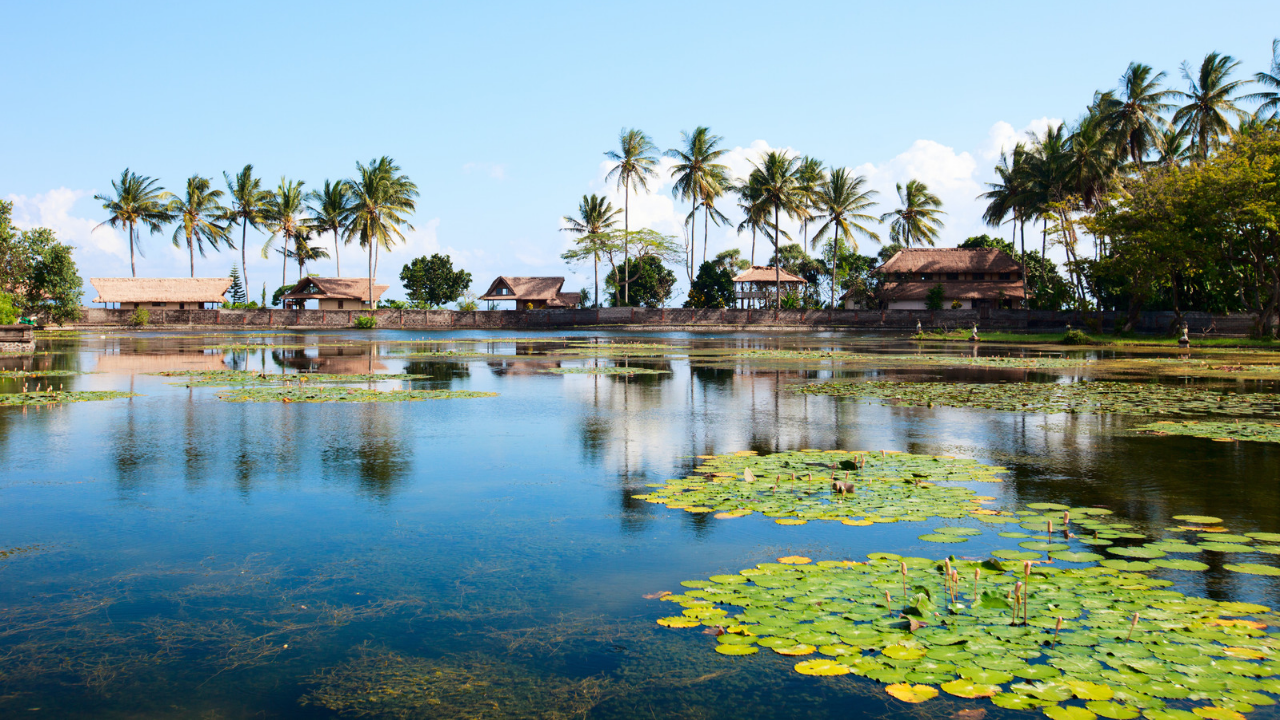
- The Lotus Lagoon is the town’s central landmark, best seen between sunrise and mid-morning.
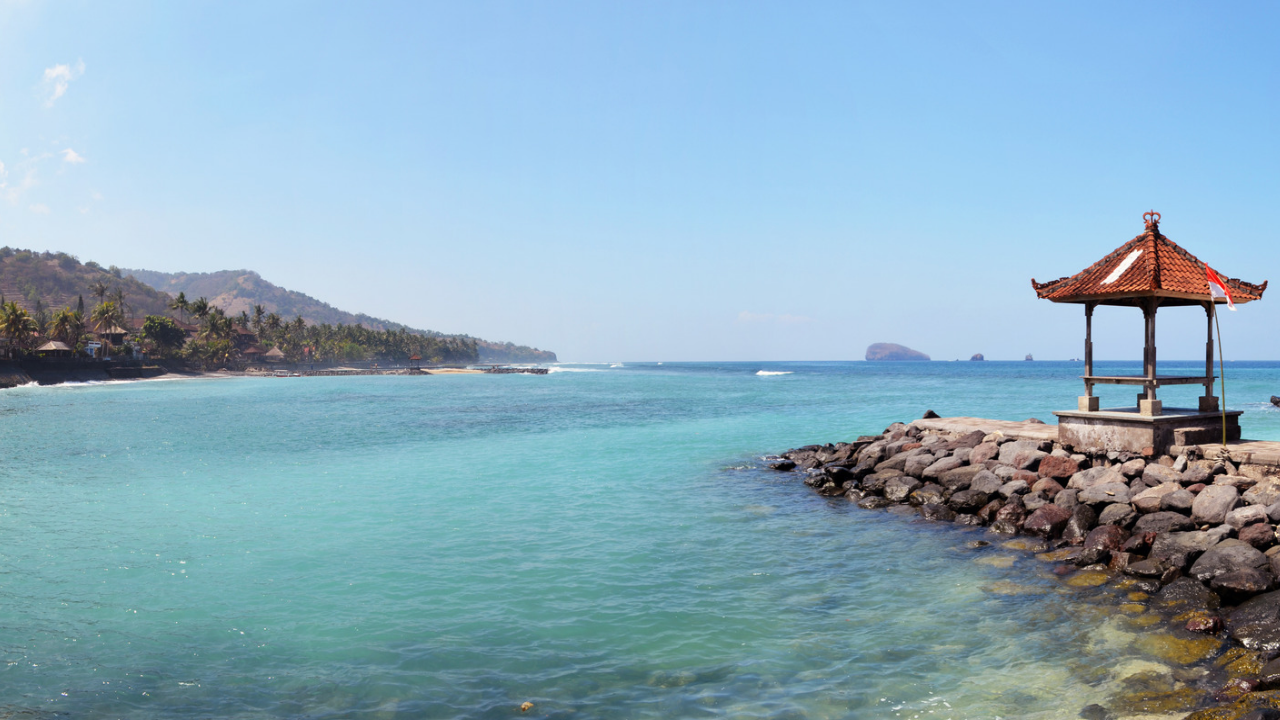
- Breakwaters built in the 1990s shape the beach into calm coves suited to swimming and kayaking.
- Virgin Beach, about 15 minutes away, is the area’s best-known white sand beach.
- Gili Mimpang, Gili Tepekong and Gili Biaha offer some of East Bali’s best-known dive sites.
- Tenganan, a Bali Aga village over 1,000 years old, is known for its double-ikat geringsing cloth.
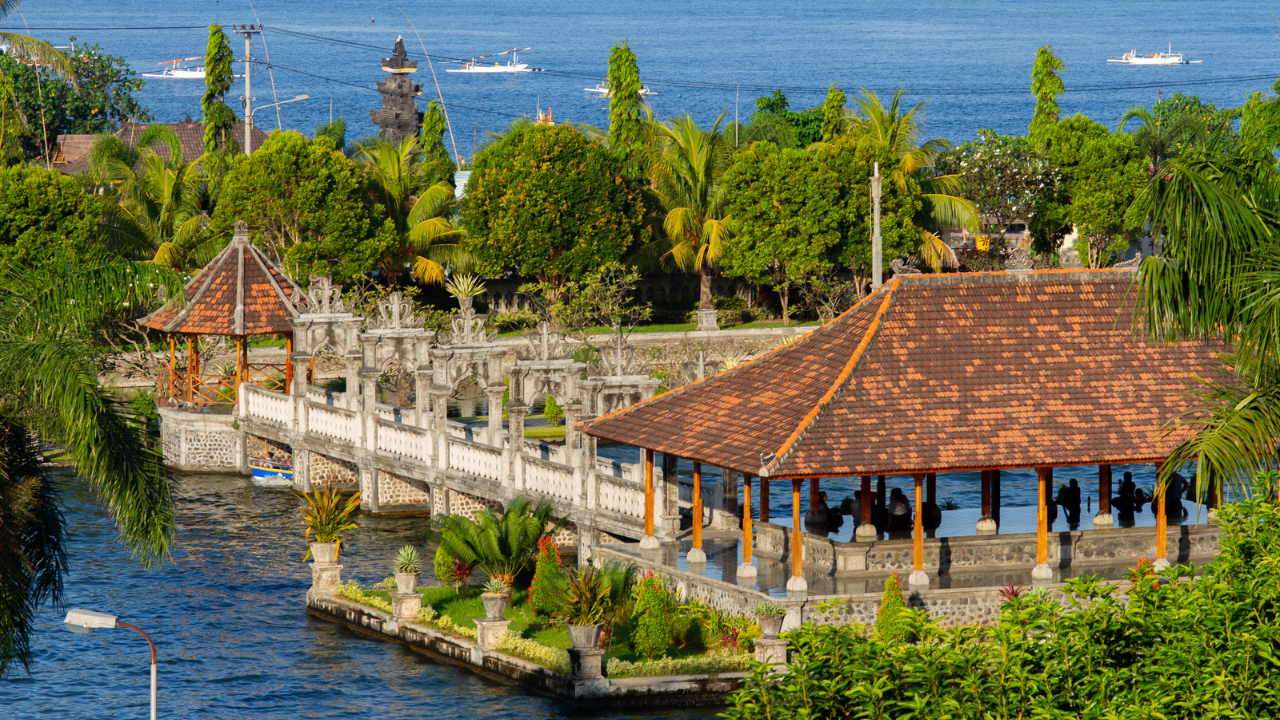
- Tirta Gangga, Taman Ujung and Puri Agung Karangasem trace the history of the Karangasem kingdom.
- The dry season, from April to October, brings the calmest seas and clearest water for diving.
- A private driver is the easiest way to reach attractions across Karangasem Regency.
Candidasa Bali is a seaside town on the island's east coast, set in Karangasem Regency between the lower slopes of Mount Agung and the open water of the Lombok Strait. The town runs along a single main coastal road, with fishing boats pulled up on the sand, temple gates set into the hillside, and a lagoon of lotus flowers at its centre. Offshore, three rocky islets mark some of the best-known dive sites in East Bali.
Most tourists base themselves in the south of the island, which keeps Candidasa a quiet town with a slower pace and easy access to the cultural heart of Karangasem. Within an hour's drive sit royal water palaces, a pre-Hindu village, white sand beaches, and the volcano that shapes the landscape of the entire region. This guide covers the history of Candidasa, what sets it apart, and how to spend time in the town and the surrounding area.
Where Is Candidasa?
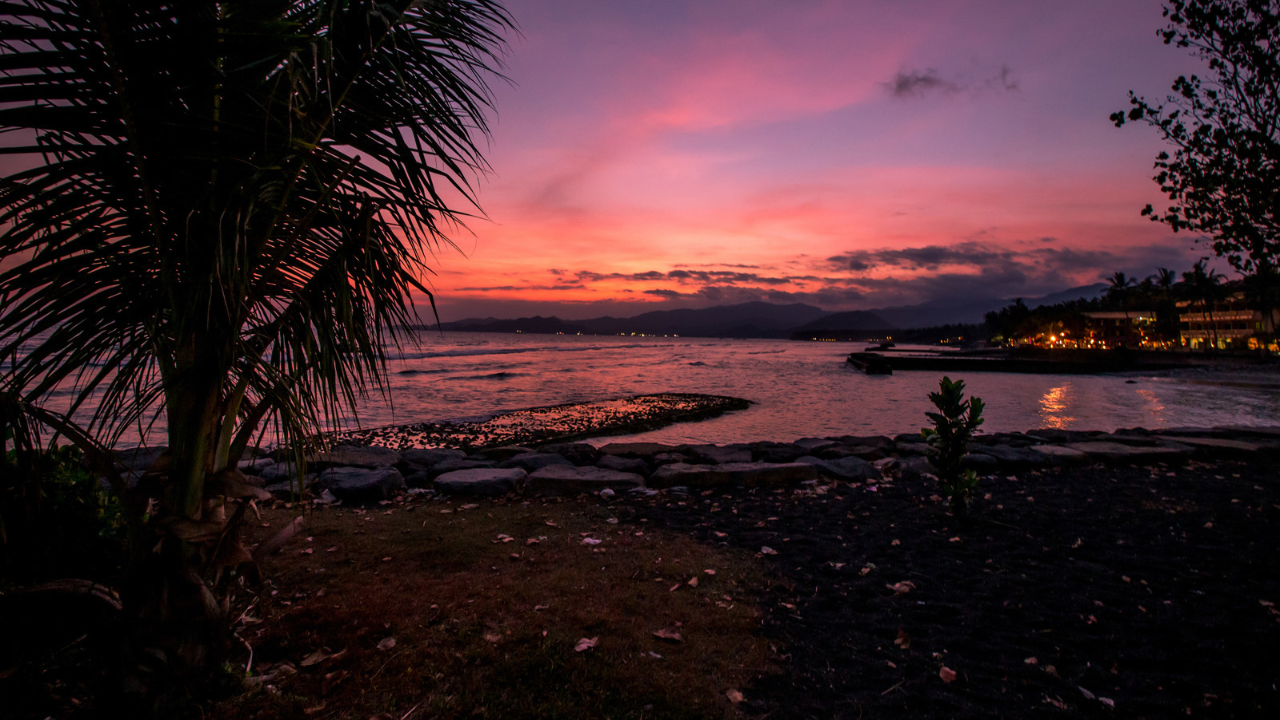
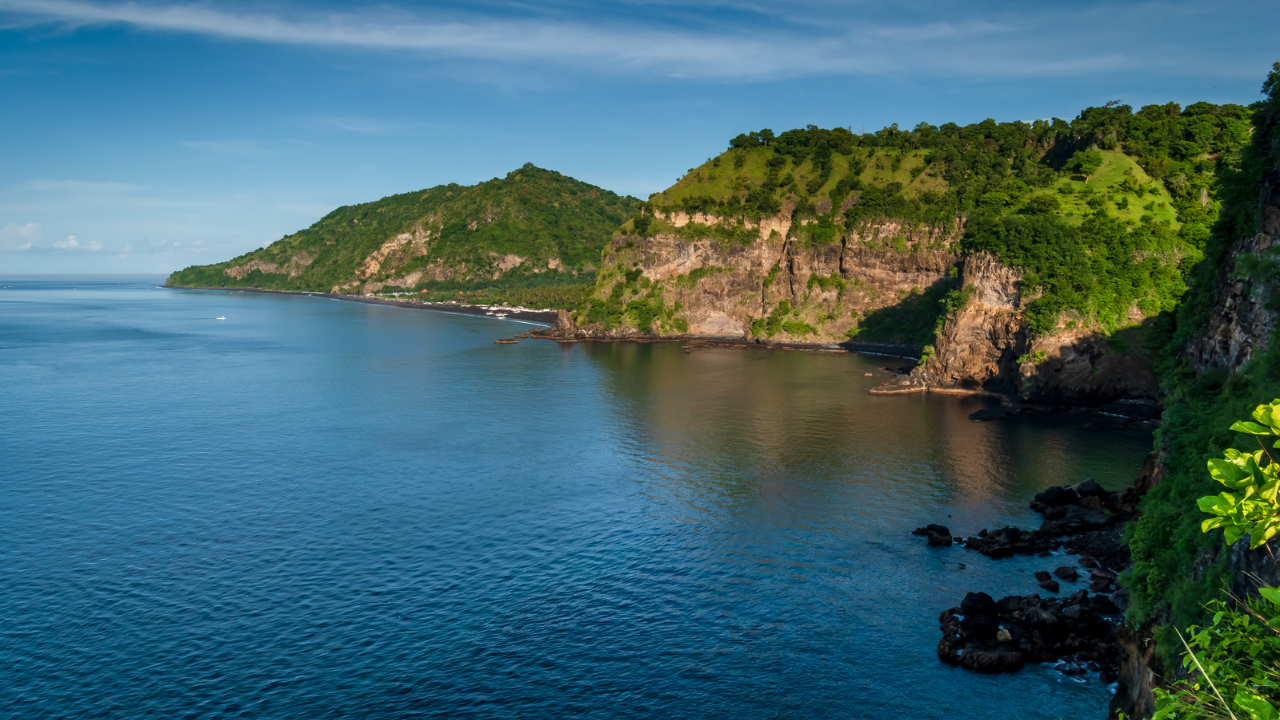
Candidasa sits on the east coast of Bali, roughly 62 kilometres from Ngurah Rai International Airport. The drive heads east from the south of the island, following the coast through Klungkung and into Karangasem Regency, and the final stretch runs along the shoreline with the sea on one side and green hills on the other.
The town faces east across the bay toward the Lombok Strait, the deep channel separating Bali from Lombok. On clear mornings, the outline of Lombok and its own volcano, Mount Rinjani, sits on the horizon. Behind the town, Mount Agung rises to just over 3,000 metres, the highest point on the island and the most sacred mountain in Balinese Hinduism.
Padang Bai, the ferry harbour for boats to Lombok, lies about 13 kilometres southwest. To the northeast, the road continues toward Amlapura, the regency capital, and the water palaces built by the last kings of Karangasem. That position makes Candidasa a natural base for exploring the east of the island.
The History of Candidasa
The Town of Ten Children
The name Candidasa carries two accounts. One traces it to cili dasa, meaning "ten children." The other reads it as candi dasa, meaning "ten temples." Both lead back to Pura Candidasa, the temple complex built into the hillside above the main road.
The temple honours Hariti, a fertility goddess with roots in the Buddhist traditions that once spread across Java and Bali. In Bali she is known as Men Brayut, the mother of many children. Local legend tells of a goddess who longed for children; her tears fell as rain, and she went on to bear ten children. A statue of Hariti surrounded by small figures stands in a niche at the base of the hill, and couples still come to the temple to pray for children. The lower shrine sits beside the lagoon, a small temple courtyard a stone's throw from the water, while a long flight of steps climbs to the upper complex.
Written records place a settlement at Candidasa as early as the 12th century. For most of its history it was a fishing village on the shore of a sheltered bay, with rice fields and coconut groves running up toward the hills.
The Reef, The Boom & The Breakwaters
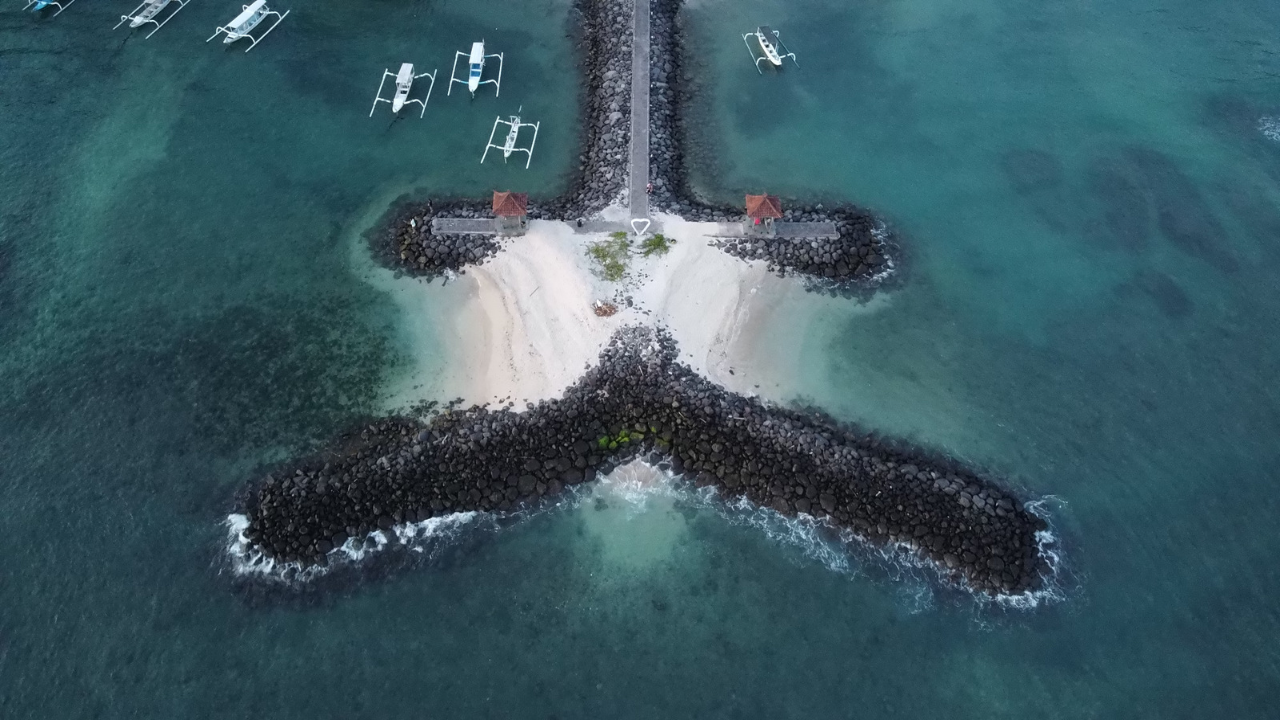
Candidasa was discovered by tourists in the 1960s. It began to draw visitors in the 1970s, and tourism development across the area accelerated through the 1980s. Hotels, bungalows and restaurants were built along the shore, and much of the lime used for construction came from the offshore reef. With the reef mined, the coastline lost its natural barrier, and waves cut into the beach.
During the 1990s, local hotel owners built a series of T-shaped breakwaters, known locally as groynes, along the shore. These concrete and stone structures now define the shape of the Candidasa beach, creating a string of calm pockets of water with small stretches of sand between them. Coral restoration projects have since set up a hard coral nursery off Candidasa, and the coastline around the town is part of a wider effort to rebuild the reef.
That history explains the character of the town today. Development slowed after the boom years, and Candidasa settled into a sleepy town rather than a resort strip. For visitors, the result is a stretch of coast with a strong local identity and quiet beaches within a short drive.
The Kingdom of Karangasem
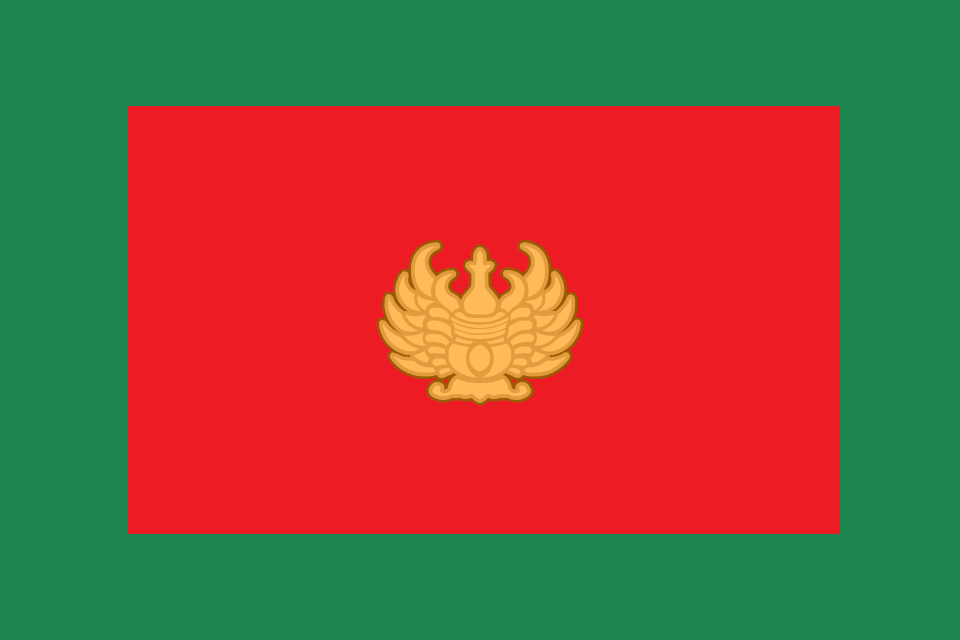
Image source: Wikipedia
Candidasa sits within the former kingdom of Karangasem, established in the 17th century and once among the most powerful on the island. At its height, Karangasem's rulers held parts of Lombok across the strait. The royal palace, Puri Agung Karangasem, still stands in Amlapura, and the last kings left behind two water palaces, Tirta Gangga and Taman Ujung, that remain among the most visited landmarks in East Bali.
The Lotus Lagoon and the Main Strip
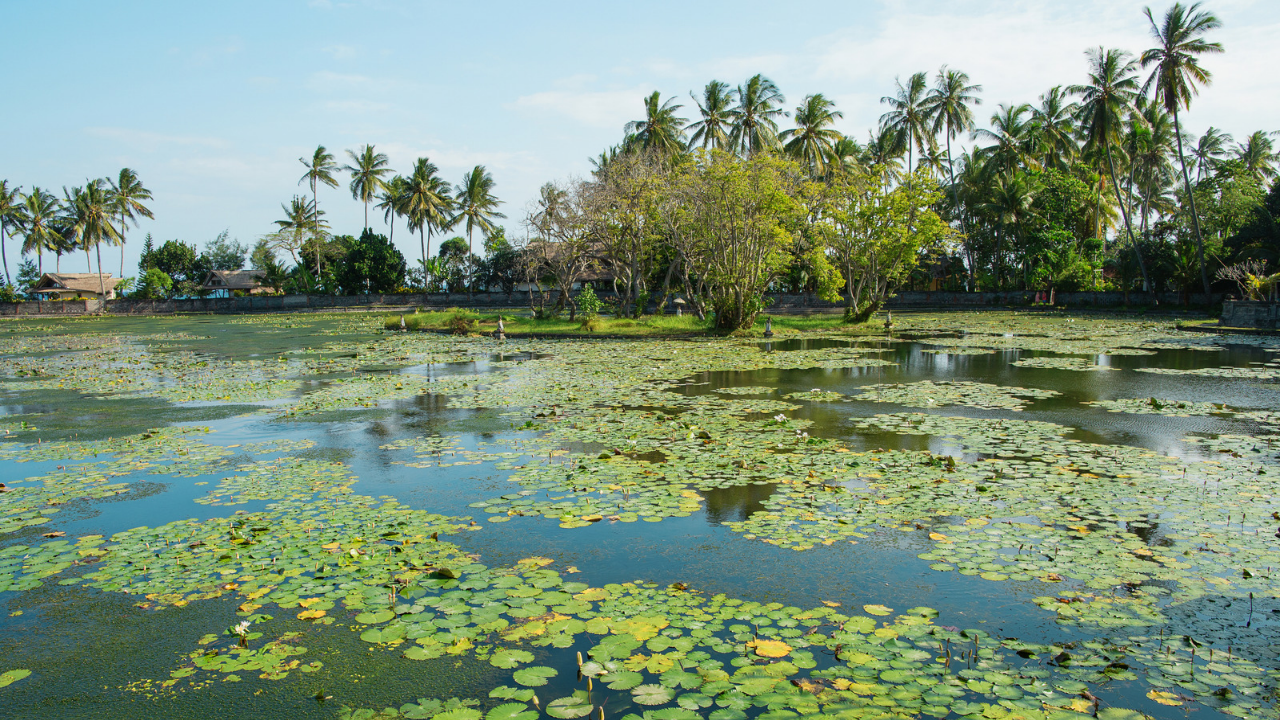
The Lotus Lagoon is the landmark at the centre of Candidasa. It sits beside Jalan Raya Candidasa, the main coastal road through town, directly across from the stairway that leads up to Pura Candidasa. The temple’s lower shrine stands at the lagoon’s edge, so the water and the temple read as a single site from the road.
Lotus Lagoon is a popular attraction in Candidasa. Lotus and water lilies cover most of the surface. The flowers open in the early morning and begin to close as the day heats up, so the best time to visit is between sunrise and mid-morning. This is when the lagoon becomes a popular spot for photographs, where the blooms are fully open, the water is still, and on clear days Pura Candidasa and the green hillside behind it are reflected in the lagoon.
In Balinese Hinduism, the lotus represents purity and divine order, and it is the symbol behind the padmasana, the lotus throne found in temples across the island. Its presence beside a temple dedicated to Hariti ties the lagoon to the religious life of the town. Visitors who arrive during a temple ceremony will see offerings carried along the lagoon’s edge and up the temple steps.
Candidasa Beaches and the Coast Around It
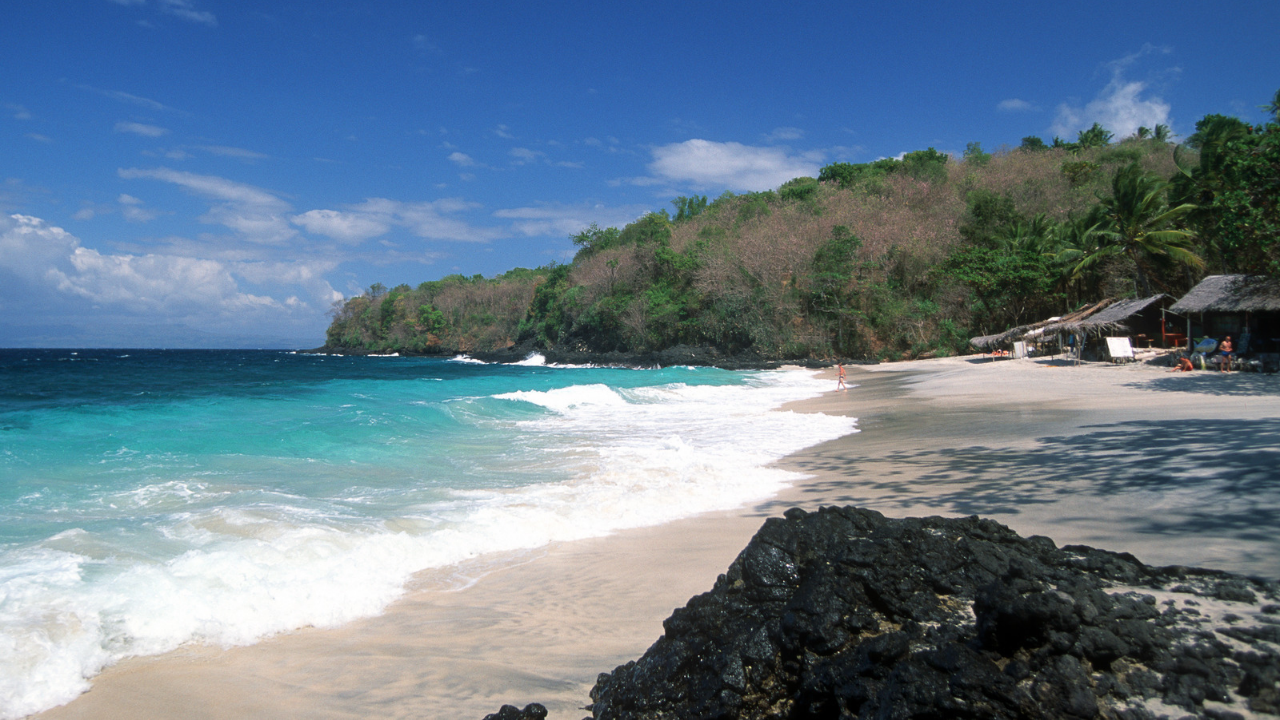
The Candidasa beach itself is a series of small sandy coves held in place by the breakwaters. The water inside these pockets stays calm through most of the year, which suits swimming and kayaking. For a full beach day on soft sand, visitors head to the bays north and south of town, all within a short drive.
Virgin Beach (Pantai Pasir Putih)
Virgin Beach, known locally as Pantai Pasir Putih ("white sand beach"), sits near the village of Perasi, about 15 minutes northeast of Candidasa. The final approach runs down a rough, unpaved track, which keeps visitor numbers lower than at the island's more accessible beaches. Virgin Beach is the most famous white sand beach in Candidasa.
The beach is a long curve of pale sand backed by coconut palms, with a row of warungs serving grilled fish, fresh coconuts and cold drinks. Sun loungers and umbrellas line the sand, and the water is calm enough for swimming on most days. It ranks among the favourite beaches in East Bali for a relaxing day of swimming, reading and lunch by the water.
Our concierge arranges a Virgin Beach day trip for guests at the Seed. Find more information on our local discoveries page.
Blue Lagoon, Padang Bai
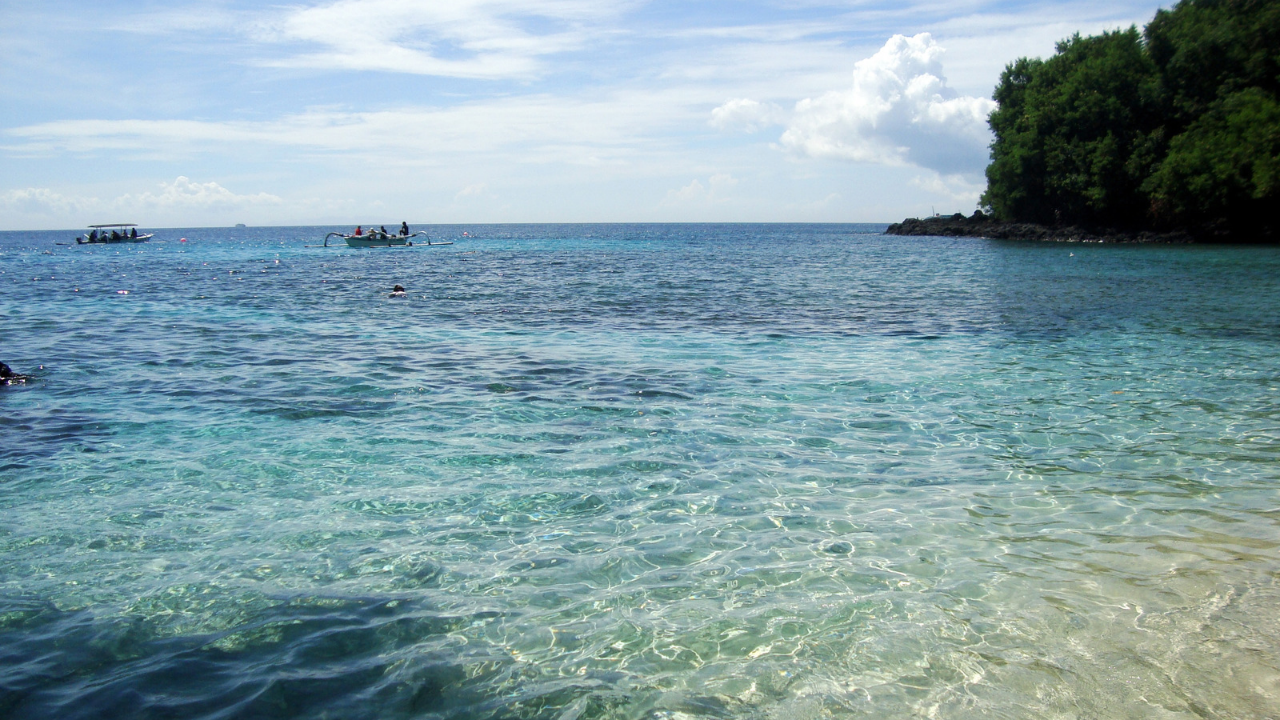
Blue Lagoon is a small bay about 1.5 kilometres northeast of Padangbai port, with a 60-metre stretch of white sand and clear, sheltered water. The reef begins a few metres from shore, which makes it one of the most popular snorkelling spots in East Bali. Reef fish, cuttlefish, moray eels and turtles are common, and divers take short boat rides to a site of the same name just offshore. The best conditions run from April to October, during the dry season.
Bias Tugel Beach
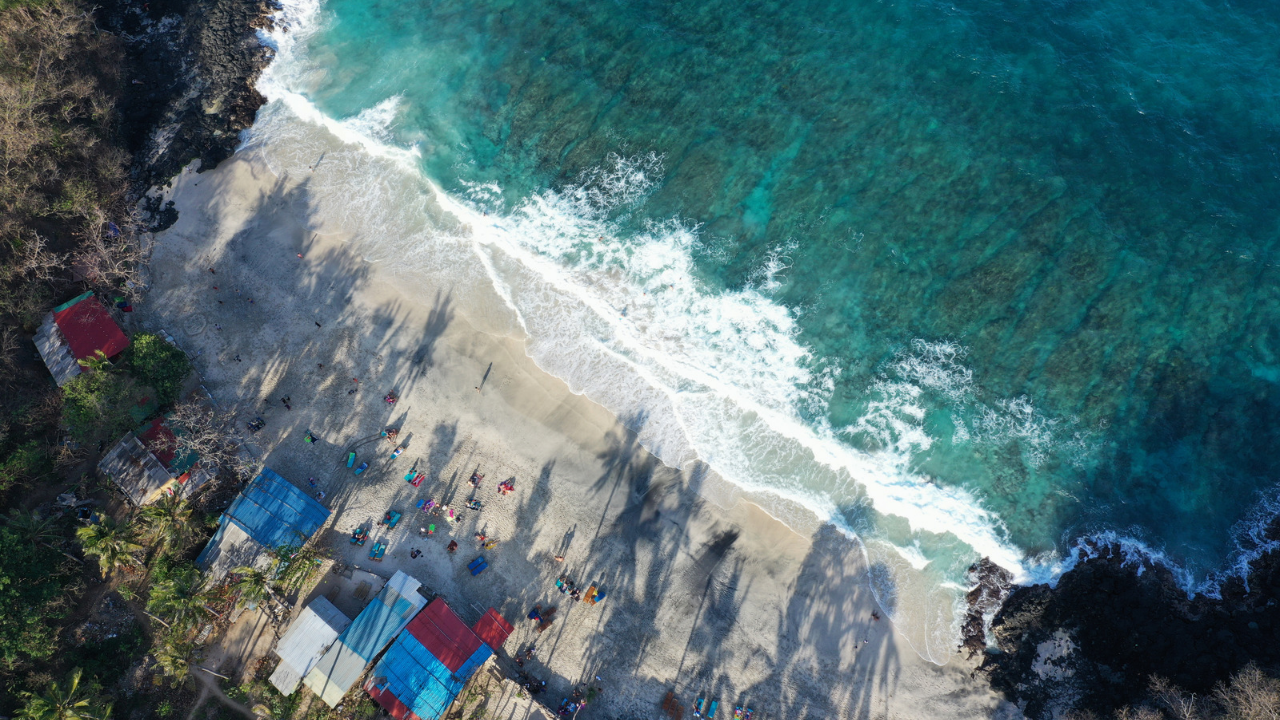
Bias Tugel Beach sits on the other side of Padang Bai, a short walk southwest of the port over a small headland. The beach is a sandy beach roughly 130 metres long, set between two hills, with calm, blue water for most of the year. Bias Tugel Beach requires a short trail of about 80 steps. Its far eastern end has the best swimming and snorkelling. Warungs and beach loungers make it a great spot to spend an afternoon after a morning on the reef.
Diving and Snorkelling Around Candidasa
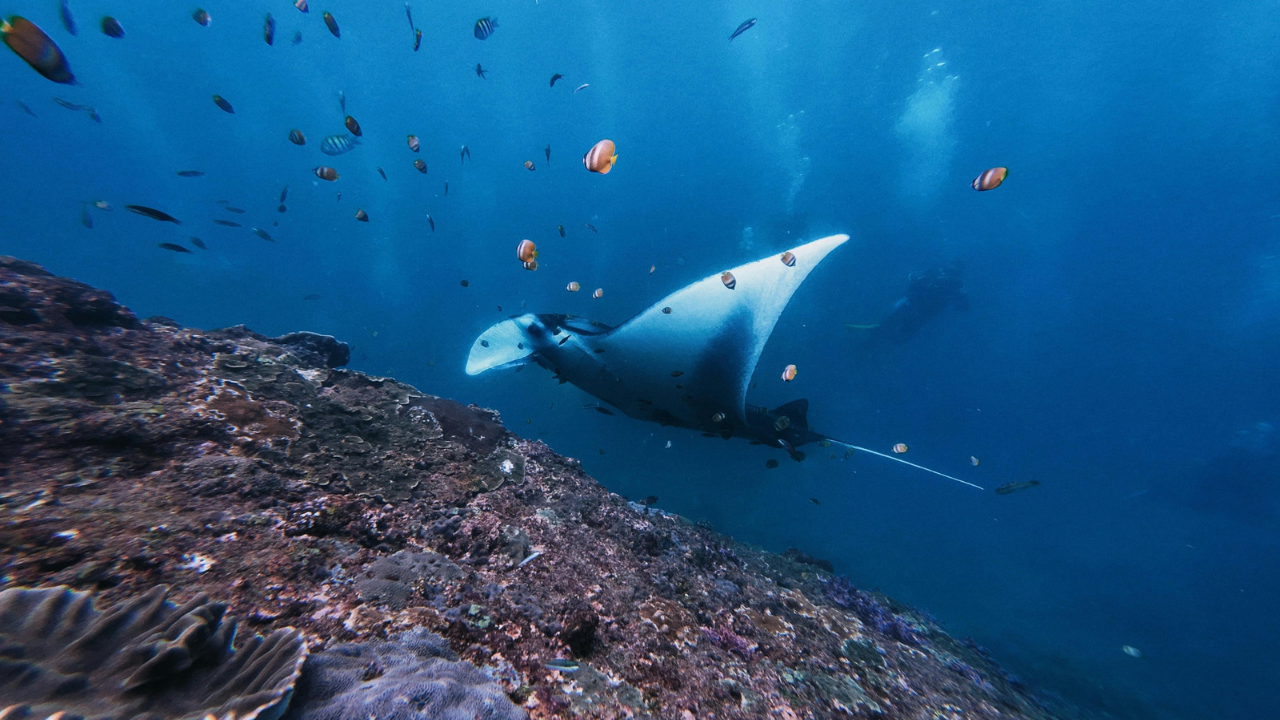
Candidasa sits beside some of the best-known dive sites on the east coast. It is a gateway for diving and snorkeling activities around the Gili Islands. Three islets lie in Amuk Bay, just off the town, and each offers a different kind of dive. The waters here meet the currents of the Lombok Strait, which bring nutrients, clear visibility and large marine life. Conditions also call for experience: currents at the outer sites are strong, and dive guides choose sites each day based on the tide.
- Gili Mimpang: Also called Batu Tiga, or "three rocks," Gili Mimpang is a short boat ride from shore. It is known for whitetip reef sharks, along with turtles, cuttlefish and schools of reef fish. Wobbegong sharks and coral cat sharks appear on occasion.
- Gili Tepekong: The largest islet in the bay, Gili Tepekong holds a dive known as The Canyon, with steep walls, swim-throughs and strong currents. Reef sharks, barracuda and large schools of sweetlips and jacks frequent the site, and mola mola appear seasonally. This site suits advanced divers.
- Gili Biaha: About four kilometres from Tepekong, Gili Biaha is known for its Shark Cave, where whitetip reef sharks rest in a cavern divers can swim into. A steep wall surrounds the islet and turns into a slope on its northern side.
- Padang Bai: The reefs around the Padang Bai headland offer good diving for all levels, from the Blue Lagoon to the jetty, where muck divers find frogfish, octopus and nudibranchs.
- Nusa Penida: Across the Badung Strait, Nusa Penida is reached by boat from the east coast. Its Manta Point is one of the most reliable sites in Indonesia to see manta rays, which gather at cleaning stations below the cliffs.
Guests at The Seed can arrange guided diving and snorkelling trips to the islets and the reefs around Padang Bai.
Tenganan Village and the Local Culture of East Bali
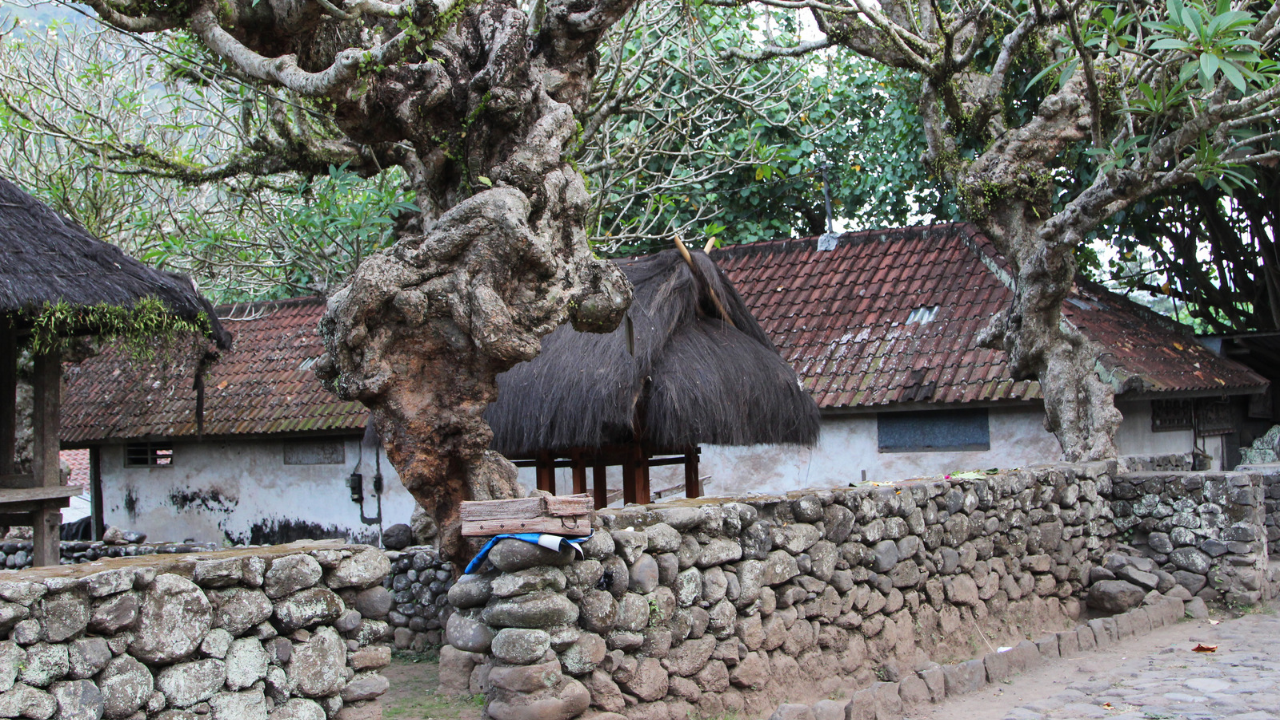
Tenganan Pegringsingan village sits a few kilometres inland from the coast, inside a walled compound of stone lanes and long rows of family houses. It is one of the oldest villages on Bali, with the village being over 1,000 years old and home to a Bali Aga community, the island's original inhabitants, whose customs, land ownership and village governance predate the Hindu kingdoms.
The village is known for geringsing, a double-ikat textile in which both the warp and weft threads are dyed before weaving. The process takes months, and only a handful of places in the world produce it. Weavers work in open-fronted homes along the main lanes, and visitors can watch the process and buy cloth directly from the families who make it. Tenganan also holds an annual ritual combat with pandanus leaves, the Perang Pandan, as part of a month-long festival in the middle of the year.
A guided walk explains the village layout, the social rules that govern community life, and the meaning of the textiles. Our Tenganan village tour includes a local guide and covers the history of the community in detail.
Day Trips From Candidasa Bali
Tirta Gangga Water Palace
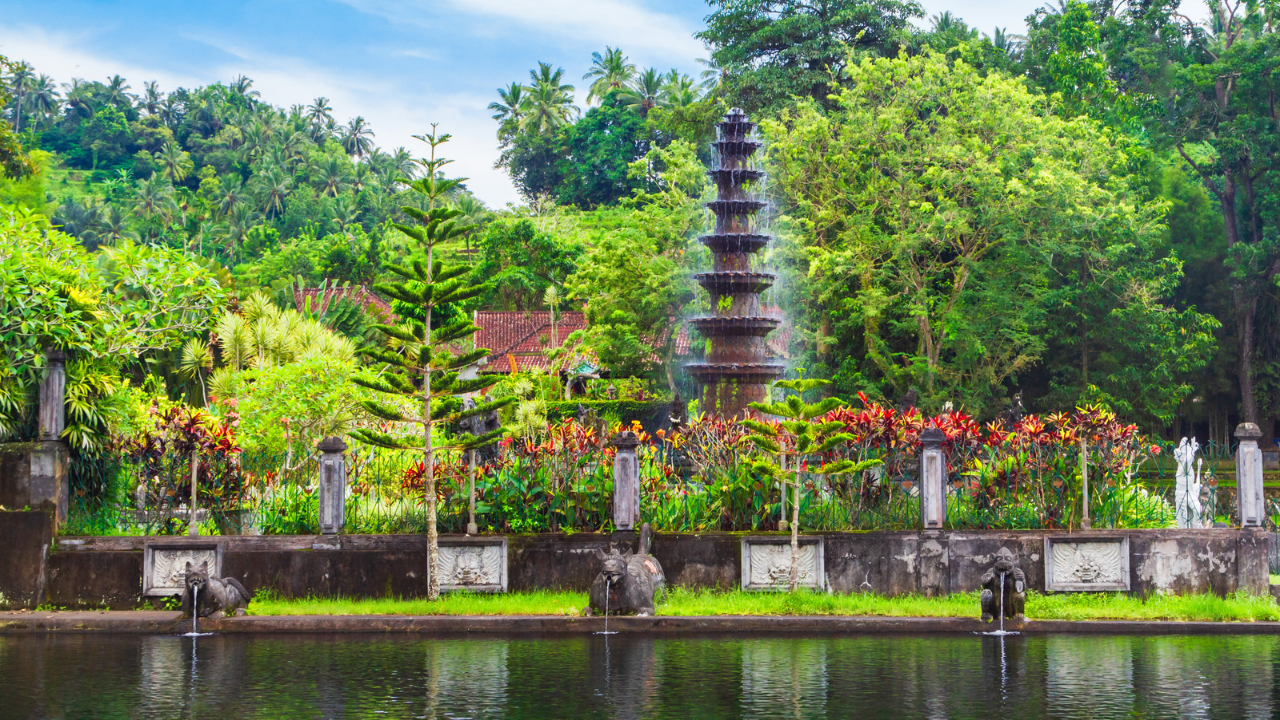
Tirta Gangga was built in 1948 by Anak Agung Anglurah Ketut Karangasem, the last king of Karangasem, on the site of a sacred spring. The name means "water of the Ganges." The garden spreads across terraces of ornamental ponds, statues and fountains, including an 11-tiered fountain at its centre. Stepping stones cross the main pond, where large koi fish gather around visitors. Visitors can feed koi fish. Much of the complex was destroyed in the 1963 eruption of Mount Agung and later rebuilt. The spring water is still used in temple ceremonies.
Taman Ujung Water Palace
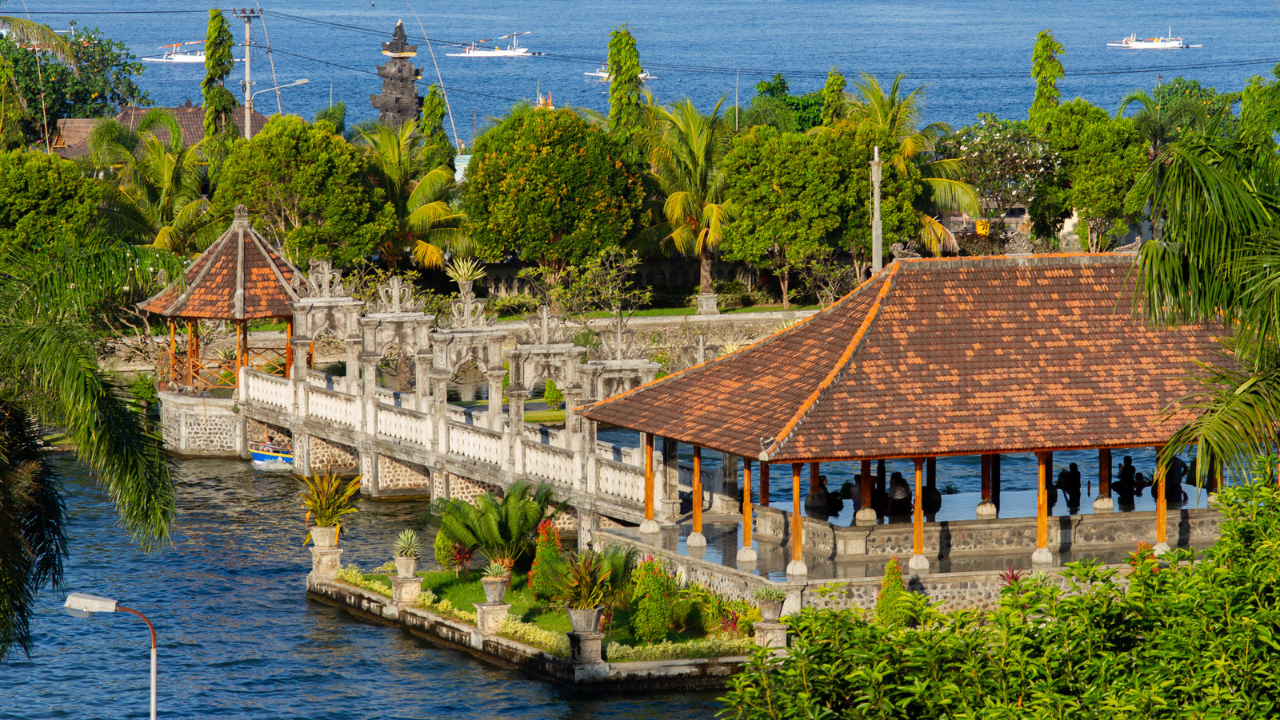
Taman Ujung sits southeast of Amlapura, closer to the sea. It was built in the early 20th century by the royal family of Karangasem on a larger scale than Tirta Gangga, with long causeways crossing open pools and pavilions looking north to Mount Agung. Earthquake and eruption damage required extensive restoration. Together, the two water palaces show how the kings of Karangasem used water, architecture and landscape to express royal status.
Puri Agung Karangasem
Puri Agung Karangasem is the royal palace of the former kingdom of Karangasem, in the centre of Amlapura, about 20 minutes northeast of Candidasa. It dates from the late 19th century, when Karangasem was one of the most powerful kingdoms on Bali. The same royal line went on to build the water palaces at Tirta Gangga and Taman Ujung. Descendants of the royal family still live in parts of the compound, and the palace hosts royal ceremonies and family events.
The palace was built during the period when Karangasem’s rulers were working with the Dutch colonial administration, and its architecture reflects that. Balinese, Chinese and European styles sit side by side throughout the complex.
Pura Lempuyang
Pura Lempuyang is a complex of seven temples on the slopes of Mount Lempuyang, about 12 kilometres north of Amlapura. The temples follow a pilgrimage path that climbs from the base of the mountain to its summit.
The highest temple, Pura Lempuyang Luhur, sits at about 1,060 metres. It is one of the Sad Kahyangan Jagad, the six sanctuaries of the world that protect Bali, and it guards the east. It is dedicated to Iswara, the Hindu deity associated with the east and with the colour white. Inscriptions connected to the site date back to the late 10th century, and worship on the mountain is believed to predate most of Bali’s Hindu temples.
Guests at The Seed can arrange tours to various attractions through our concierge team. Each trip runs with a private driver. Learn more about the full range of tours and experiences on our Local Discoveries page.
Food and Dining in Candidasa
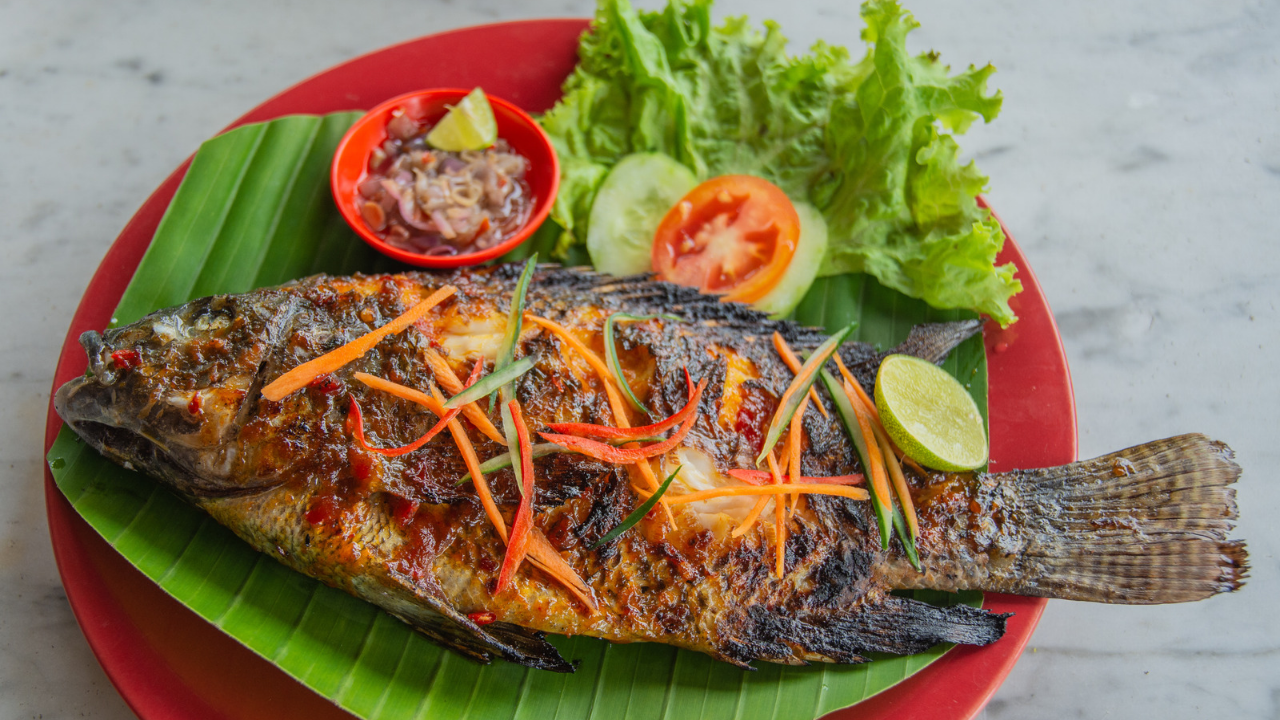
Food in Candidasa follows the sea and the season. Candidasa offers mostly Indonesian cuisine with some Western options. Local fishermen bring in tuna, mahi-mahi, snapper and squid each morning, and most of the catch goes straight to the warungs and restaurants along the main strip. Ikan bakar, whole fish grilled over coconut husk and served with rice, sambal matah and water spinach, is the standard order at beachside tables across the town.
Karangasem cooking draws on the same base of spice pastes, known as base genep, used across Bali, with dishes such as sate lilit, minced fish or meat wrapped around lemongrass stalks and grilled, and lawar, a mix of finely chopped vegetables, grated coconut and spices. Nasi campur, a plate of rice with small portions of several dishes, offers a simple way to sample the range in one meal.
Salt is part of the local food story too. Along the black-sand coast southwest of Padang Bai, the village of Kusamba still produces sea salt by hand, spreading ocean water across the sand, drying it in the sun and filtering it through wooden troughs. The salt appears in kitchens across East Bali.
For dinner, the restaurants on the main strip open onto the coastal road, with menus that run from Balinese classics to seafood and Western dishes. Guests at The Seed eat at Bloom Kitchen on the estate, where menus are built around each group, with fresh fish and regional produce from the surrounding area.
Candidasa Practical Information
- Candidasa is about 62 kilometres from Ngurah Rai International Airport. Travel time depends on traffic through the south of the island, and a private transfer is the most direct option.
- The town is walkable along the main strip. For beaches, dive centres and cultural sites in the surrounding area, a private driver offers the most flexibility.
- The dry season runs from April to October, with calmer sea conditions and clearer water for diving and snorkelling. July, August and the weeks around the new year are the busiest periods.
- Padangbai port runs ferries to Lombok and fast boats to Nusa Penida and the Gili Islands, making it simple to add an island trip.
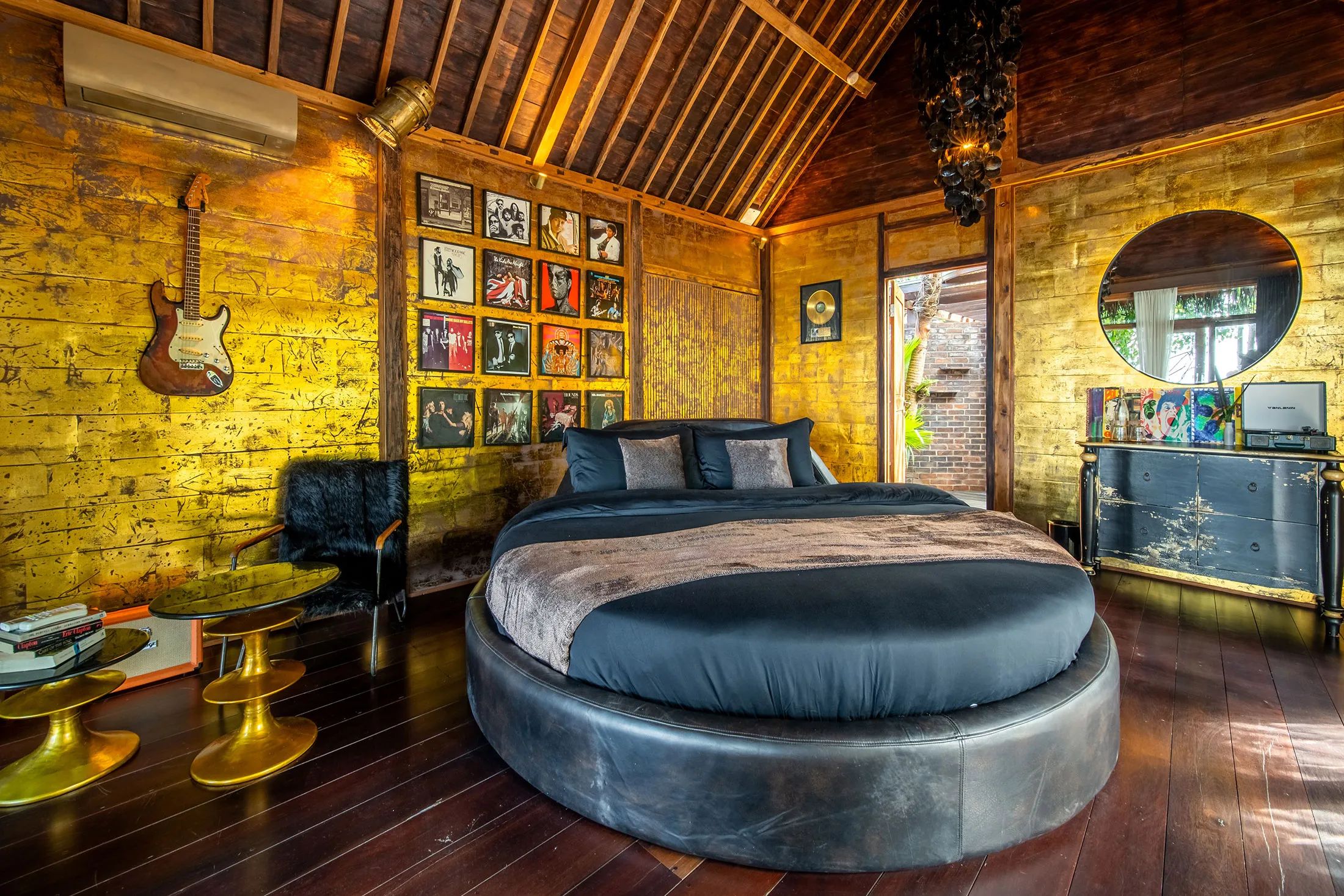
- Accommodation ranges from guesthouses on the main strip to private villas and resorts along the coast. After a day on the water, a beachfront base with a comfy bed and a pool overlooking the sea makes Candidasa the perfect place to slow down.
Candidasa Travel FAQ
How far is Candidasa from Denpasar Airport?
Candidasa is about 90 minutes by car from Ngurah Rai International Airport in Denpasar, a distance of roughly 62 kilometres. Travel time depends on traffic through the south of the island. Guests at The Seed have their airport transfers arranged as part of their stay.
What is the best way to get around Candidasa?
Most tourists rent scooters to get around Candidasa and reach nearby beaches. Taxi services are available but limited, so it is best to arrange transport in advance rather than relying on finding a taxi on the street. The main strip is walkable for restaurants, shops and the Lotus Lagoon.
Do I need a private driver to visit attractions near Candidasa?
A private driver is the recommended way to visit the attractions around Candidasa. Sites such as Tirta Gangga, Taman Ujung, Puri Agung Karangasem and Pura Lempuyang are spread across Karangasem Regency, and a driver can combine several of them in one day. Entrance fees, temple donations and guides are usually paid at extra cost on the day. The Seed’s concierge team arranges day trips with a private driver for guests.
What kind of accommodation is available in Candidasa?
Accommodation in Candidasa ranges from simple bungalows to luxury villas, and most properties have ocean views across the bay toward the Lombok Strait. Guesthouses and small hotels line the main strip. Larger properties, such as Candi Beach Resort, sit along the quieter coast to the west in Mendira and Sengkidu. Private estates such as The Seed offer beachfront villas with direct access to the sand.
What was Candidasa before it became a tourist destination?
Candidasa was originally a fishing village on a sheltered bay, with records of a settlement dating back to the 12th century. Tourism grew from the 1970s onward. Local fishermen still launch their jukung outriggers from the sand each morning, and their catch supplies the town’s warungs and restaurants.
Is Candidasa a surfing destination?
Candidasa is known for calm water rather than surf. The reef and the breakwaters along the shore keep the bay sheltered, which suits swimming, snorkelling, kayaking and paddleboarding. For guests who want to learn to surf, The Seed arranges surf coaching at a break about 20 minutes away.
Can you watch the sunset in Candidasa?
Candidasa faces east, so the sun rises over the Lombok Strait each morning. In the evening, sunset light falls across Mount Agung and the hills behind the town. The view is best from the beach or from higher ground along the coastal road.
What should I wear when visiting temples near Candidasa?
A t shirt that covers the shoulders, worn with a sarong and a sash, meets the dress code at temples across East Bali. Many temples rent sarongs at the entrance, and the shops on the main strip in Candidasa sell them too.
Why is Candidasa a great place to stay in East Bali?
Candidasa is a great place to stay for travellers who want natural beauty, local culture and easy access to the east of the island. Among our favourite things about the area are the offshore dive sites, the white sand at Virgin Beach, and Tenganan village, all within a short drive of the town.
Tell us what you have in mind and we will come back with what the estate can hold.
Plan your vacation
Family holidays, reunions, and quiet time together, by the sea in Candidasa.
Learn more →
Host your retreat
A venue for facilitators, with a full hospitality team behind every session.
Learn more →