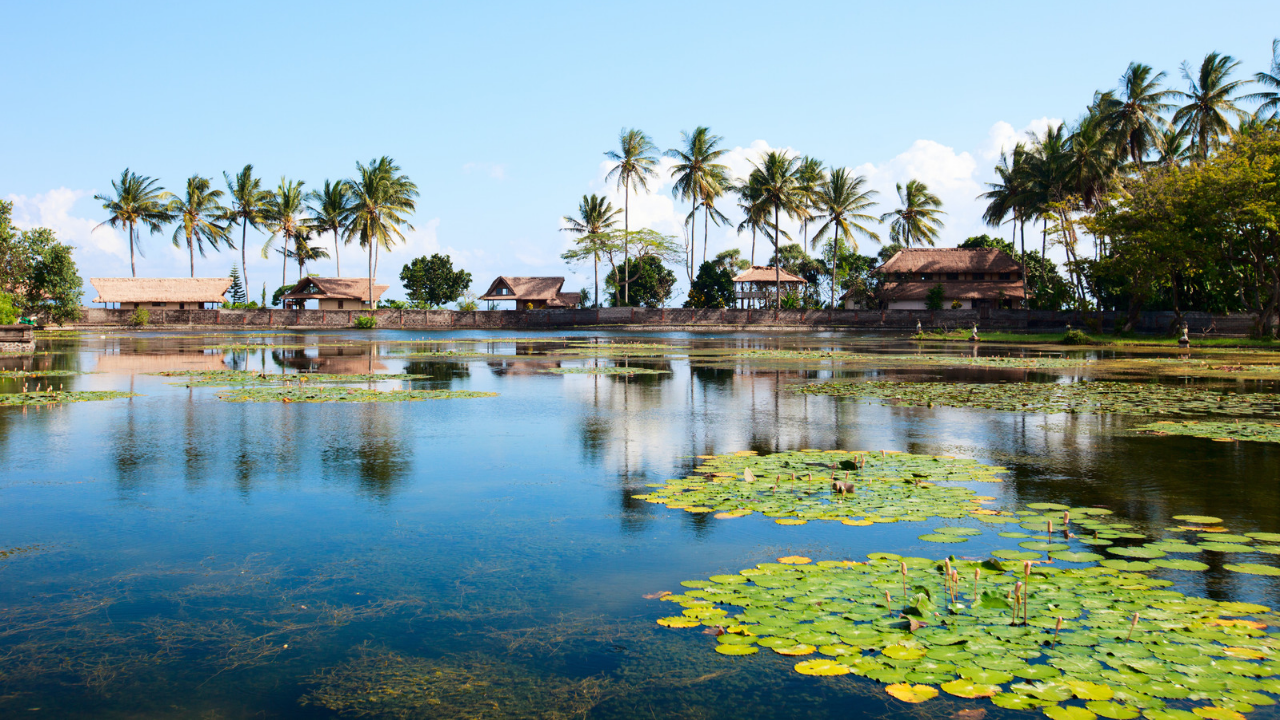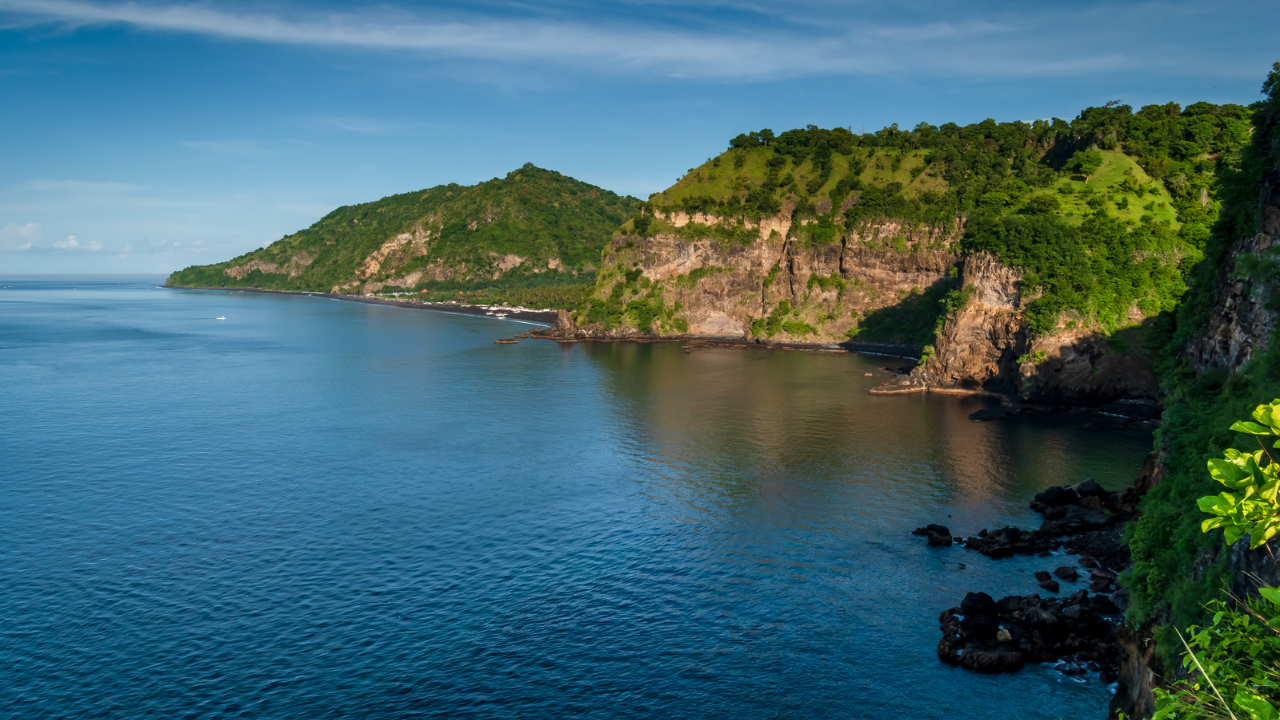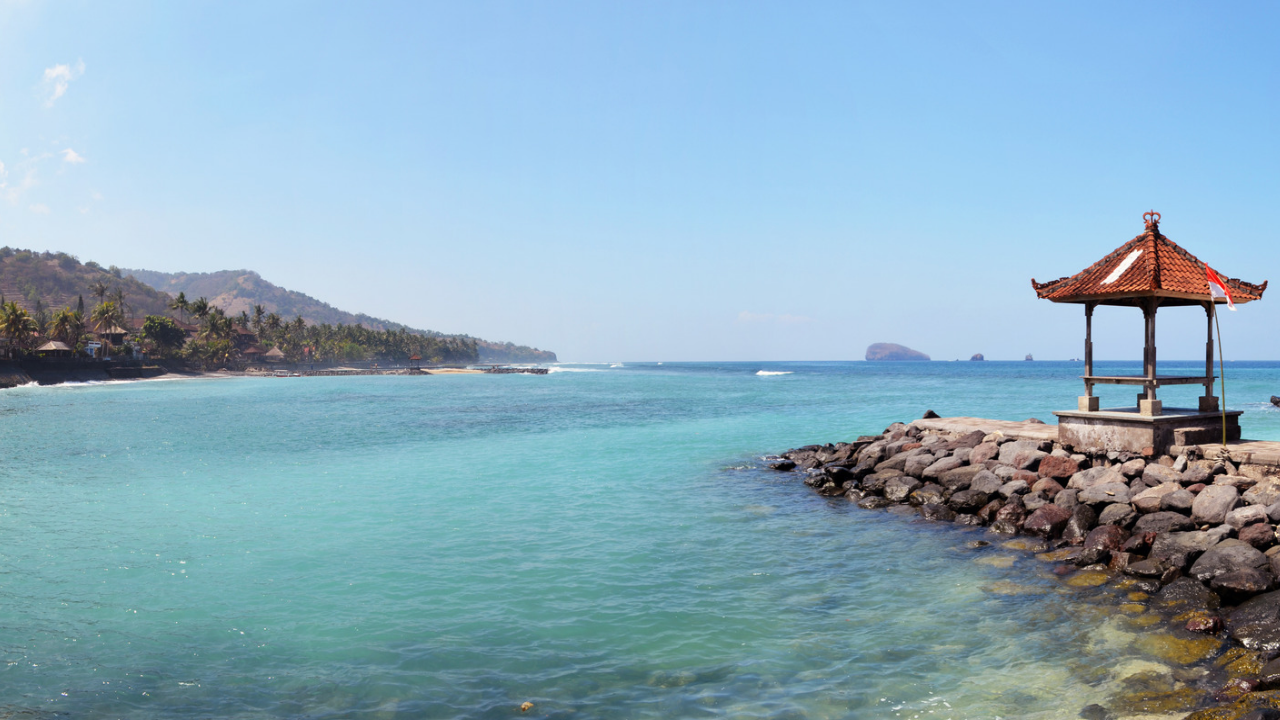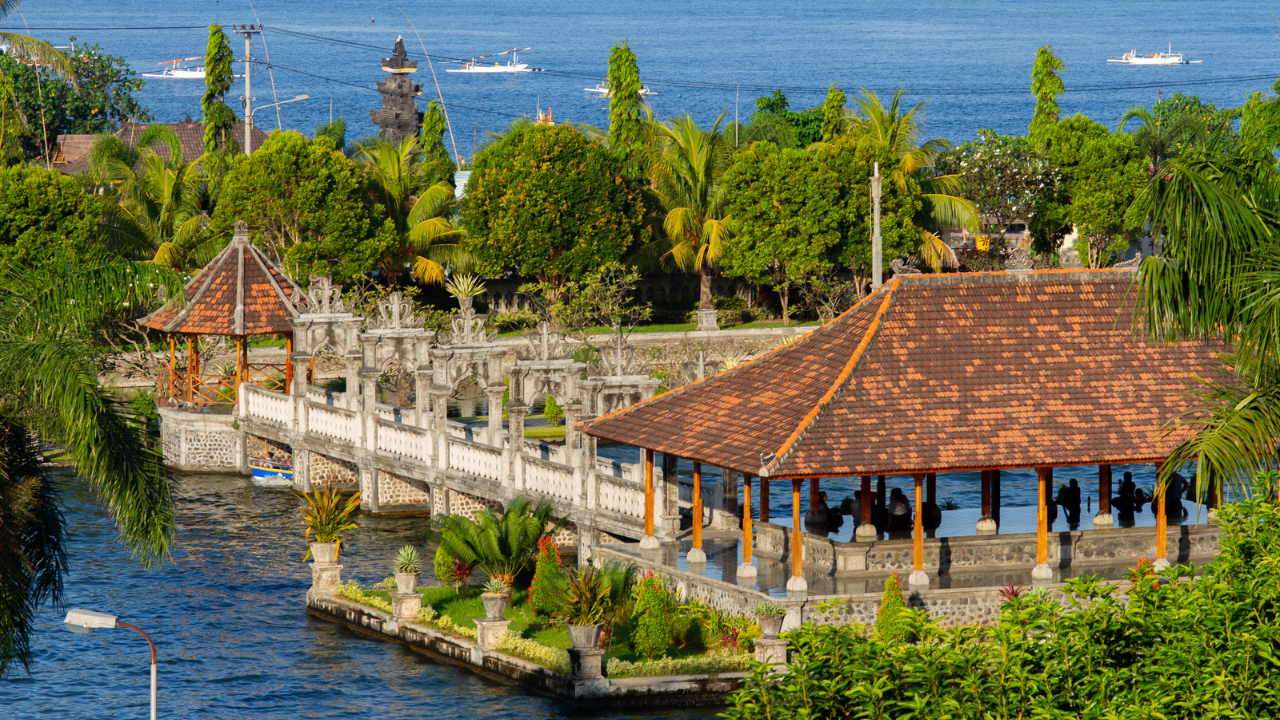
- Taman Ujung is a former royal water palace in East Bali, built between 1909 and 1921 for the last king of Karangasem.
- The palace grew out of the Dirah pool, a 1901 site used to punish people accused of black magic.
- Dutch, Chinese and Balinese architects designed it together, blending Balinese and European styles.
- The main pool symbolises the ocean of milk, with the Gili Bale representing Mount Mandara Giri.
- The 1963 Mount Agung eruption destroyed most of the palace, and it was restored between 1998 and 2001.
- The Bale Kapal is the only original building, with views across the entire complex.
- Tirta Gangga, built later by the same king, is a 20-minute drive away and pairs well with Taman Ujung.
- Visit early in the morning during the dry season, from April to September.
- Entrance is 100,000 IDR for adults and 50,000 IDR for children, paid in cash.
- The Seed’s concierge team arranges private tours of Taman Ujung and nearby sites.
Taman Ujung is a former royal palace and water garden on the eastern shoreline of Bali, built between 1909 and 1921 for the last king of Karangasem. Officially named Taman Soekasada Ujung, and also known as Sukasada Park or the Ujung Water Palace, the complex spreads across more than 10 hectares of terraced gardens, large pools and pavilions on a coastal hillside south-east of Amlapura, the regency capital. Its name translates as "Garden at the End" or "Garden at the Edge", a fitting description for a palace set where the land of Karangasem Regency meets the sea, with Mount Agung rising inland and Mount Lempuyang to the north-east.
Taman Ujung at a glance
- Official name: Taman Soekasada Ujung (also Sukasada Park, Ujung Water Palace)
- Location: Tumbu village, Karangasem Regency, East Bali, approximately 5 km south-east of Amlapura
- Built: 1909–1921, around an earlier pool dating to 1901
- Built by: I Gusti Bagus Jelantik, last king of Karangasem
- Architects: Van Den Hentz (Dutch), Loto Ang (Chinese) and Balinese undagi (traditional architects)
- Key structures: Gili Bale (island pavilion), Bale Kapal, Bale Bundar, Bale Bengong, Dirah pool
- Restored: 1998–2001, following damage from the 1963 eruption of Mount Agung and later earthquakes
- Sister site: Tirta Gangga, built later by the same king
The Origins of Taman Ujung
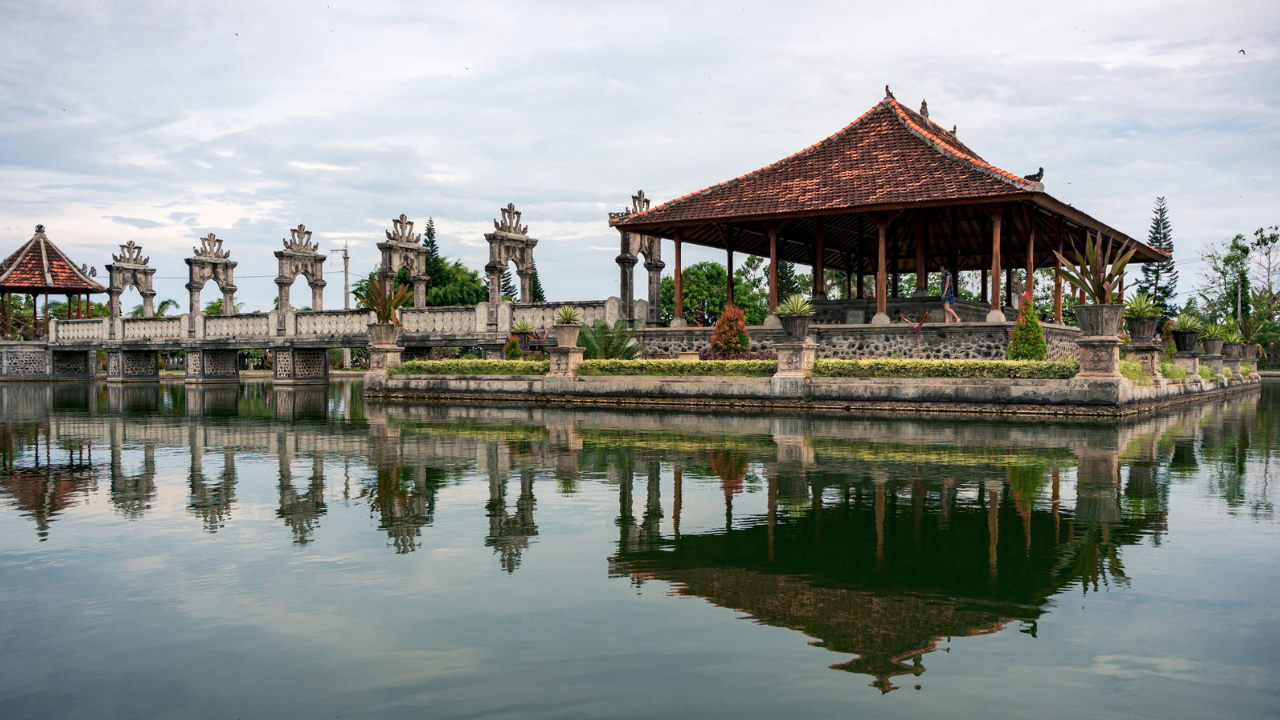
The Dirah Pool & Its Black Magic History
The story of Taman Ujung begins with a single pool. In 1901, the previous ruler of the Karangasem kingdom built the Kolam Dirah, or Dirah pool, in the south-east corner of what is now the palace complex. The pool served as a site for purification and punishment of people accused of practising black magic, known in Bali as pangiwa, and of those believed to be leyak, the shape-shifting figures of Balinese folklore. The pool takes its name from Calon Arang, the widow-witch of Dirah whose legend remains one of the most performed stories in Balinese dance-drama.
The Last King of Karangasem
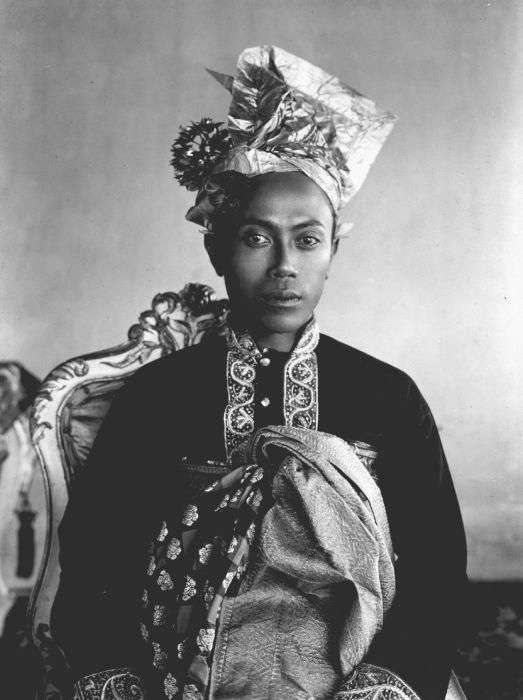
Image Source: Wikipedia
The palace that grew around the Dirah pool belongs to I Gusti Bagus Jelantik, who ruled under the title Anak Agung Agung Anglurah Ketut Karangasem. He reigned from 1908 to 1950 and is widely recognised as the last king of Karangasem to hold the role in its traditional form. Contemporary accounts describe him as well educated, well travelled and a capable architect in his own right, with a strong personal interest in design and building.
Bagus Jelantik ruled through a period of extraordinary change. When he came to the throne, the Dutch colonial administration already held authority over Bali, and the king governed under that arrangement. His reign then carried the Karangasem kingdom through World War II, the Japanese occupation of the Dutch East Indies, and the birth of an independent Indonesia, each of which reshaped the role of Bali's royal houses. Taman Ujung reflects those decades of contact with the wider world more directly than any other royal site on the island.
Construction, 1909 to 1921
Construction began in 1909, when the king commissioned an expansion of the Dirah pool into a royal retreat. He brought together Dutch architect Van Den Hentz, Chinese architect Loto Ang and Balinese undagi to design it, and he personally supervised the work across roughly 12 years. Two further large ponds were added beside the Dirah pool, together with resting pavilions, a meditation pavilion for the king and the central island pavilion. The entire complex was completed in 1921.
In 1937, the palace was formally inaugurated with a marble stele carrying an inscription in two scripts, Latin and Balinese, and in two languages, Malay and Balinese. The bilingual inscription is itself a small record of the cultural crossroads the king occupied.
A Royal Palace Built to Host Guests
Taman Ujung served two purposes. It was a place of rest, relaxation and meditation for the royal family, and it was a stage for diplomacy, where the king could host guests and impress visiting dignitaries. Its guest list during the palace's peak years included the King of Siam, the Governor-General of the Dutch East Indies, and the Sultans of both Surakarta (Solo) and Yogyakarta. Guests were received in the open pavilions, served food and drink from the royal kitchens, and walked the gardens across its bridges. The palace's reputation reached far enough that the Dutch gave it the name Waterpaleis, the "water palace", a name that remains in use today.
Destruction & Restoration
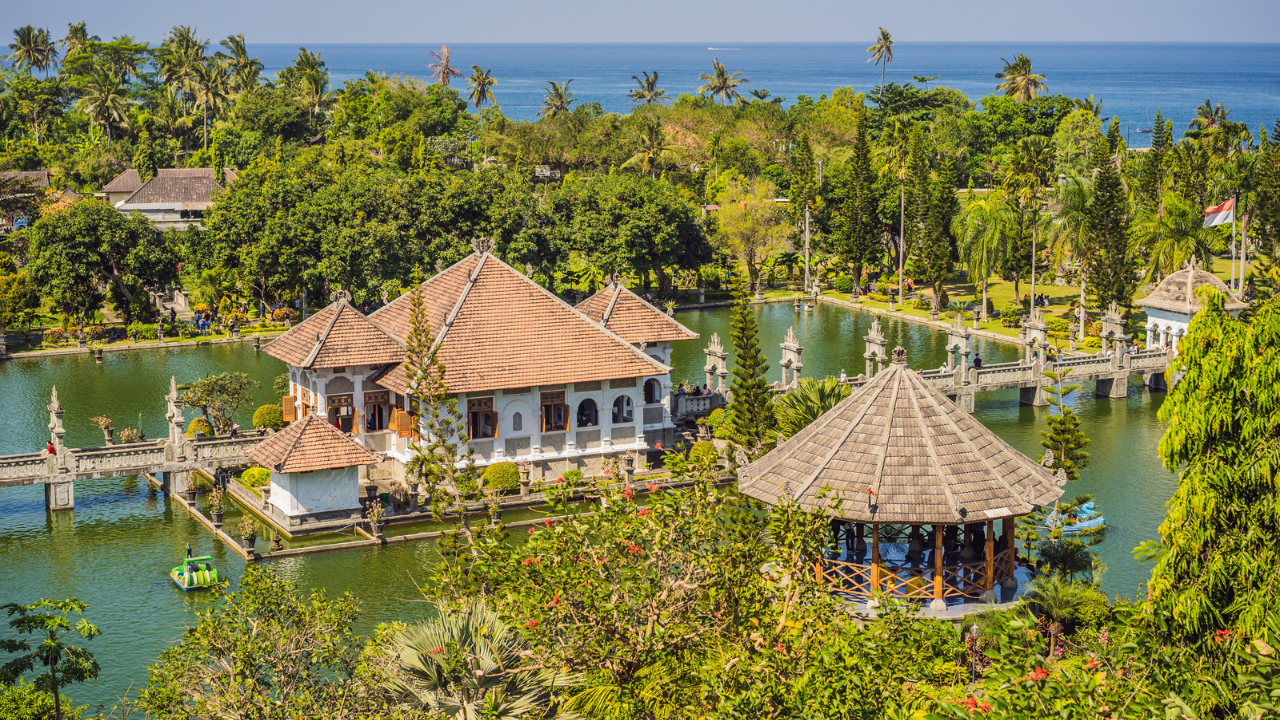
The palace's golden period was short. The 1963 eruption of Mount Agung, one of the most destructive volcanic events in Bali's recorded history, devastated the complex, and earthquakes through the 1970s damaged much of what remained. The site was left largely abandoned for decades, its pools silting up and its pavilions reduced to ruins.
Restoration efforts began in 1998 and were completed in 2001, rebuilding the main pools, bridges and pavilions to their original layout. Only one original building survives in its early form, the Bale Kapal, the hilltop pavilion on the western edge of the grounds. Its weathered columns and arches stand in contrast to the restored white structures below, and many visitors find it the most atmospheric part of the site for exactly that reason. Today the park is owned by the Karangasem royal family, and the restored palace operates as one of the established Bali attractions of the eastern regencies.
The Symbolism of Taman Ujung
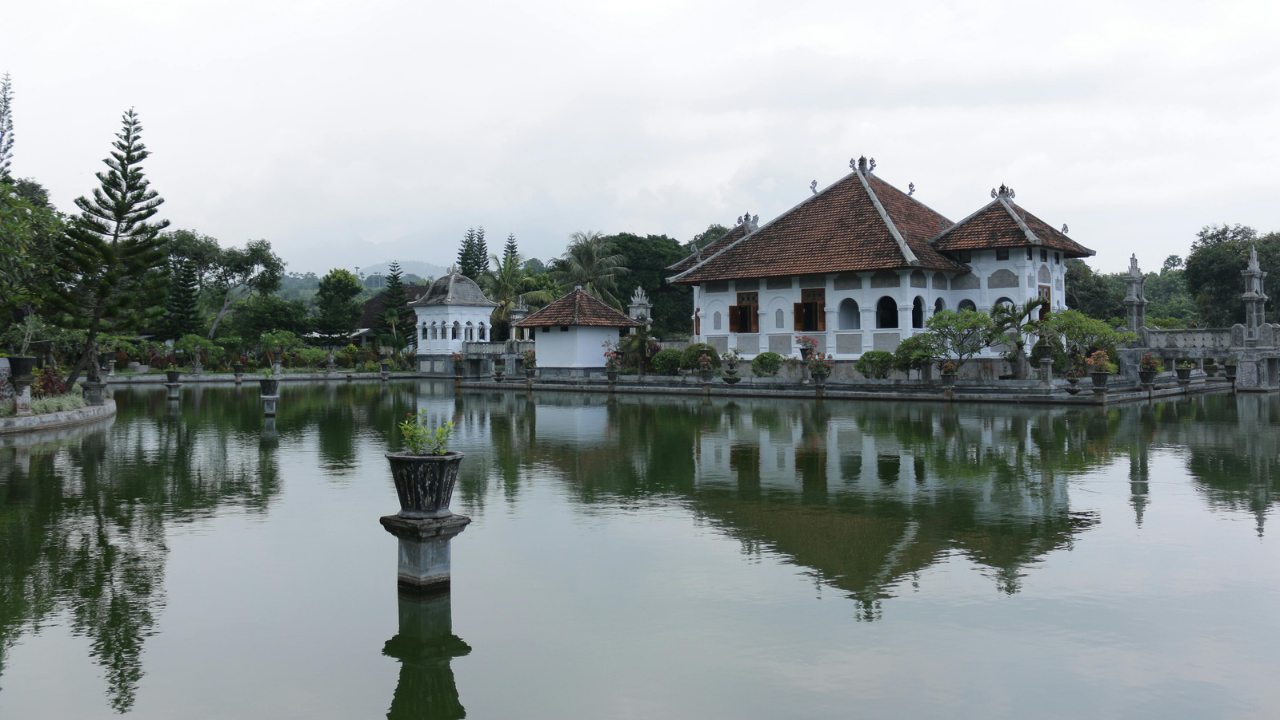
Taman Ujung draws on European form, yet its layout follows Balinese Hindu cosmology. The main pool represents Ksirarnawa, the ocean of milk from Hindu mythology. The Gili Bale, the island pavilion at its centre, represents Mount Mandara Giri, the mountain the gods used to churn that ocean in order to obtain amerta, the elixir of immortality. Read this way, the king's central pavilion becomes a symbolic axis of the cosmos, set at the heart of sacred water.
The broader site follows the same logic. Water in Balinese Hinduism carries purifying power, which is why the island's temples, springs and royal gardens are so often built around it. The progression across the grounds, from the low pools near the sea up to the Bale Kapal on the hill, also echoes the Balinese orientation of space, where higher ground toward the mountains carries greater sanctity than ground toward the sea.
"Ujung" means end or edge, and the garden sits on the eastern edge of the Karangasem kingdom, facing the sea and the island of Lombok beyond.
Interesting facts about Taman Ujung
It Is Roughly Ten Times the Size of Tirta Gangga
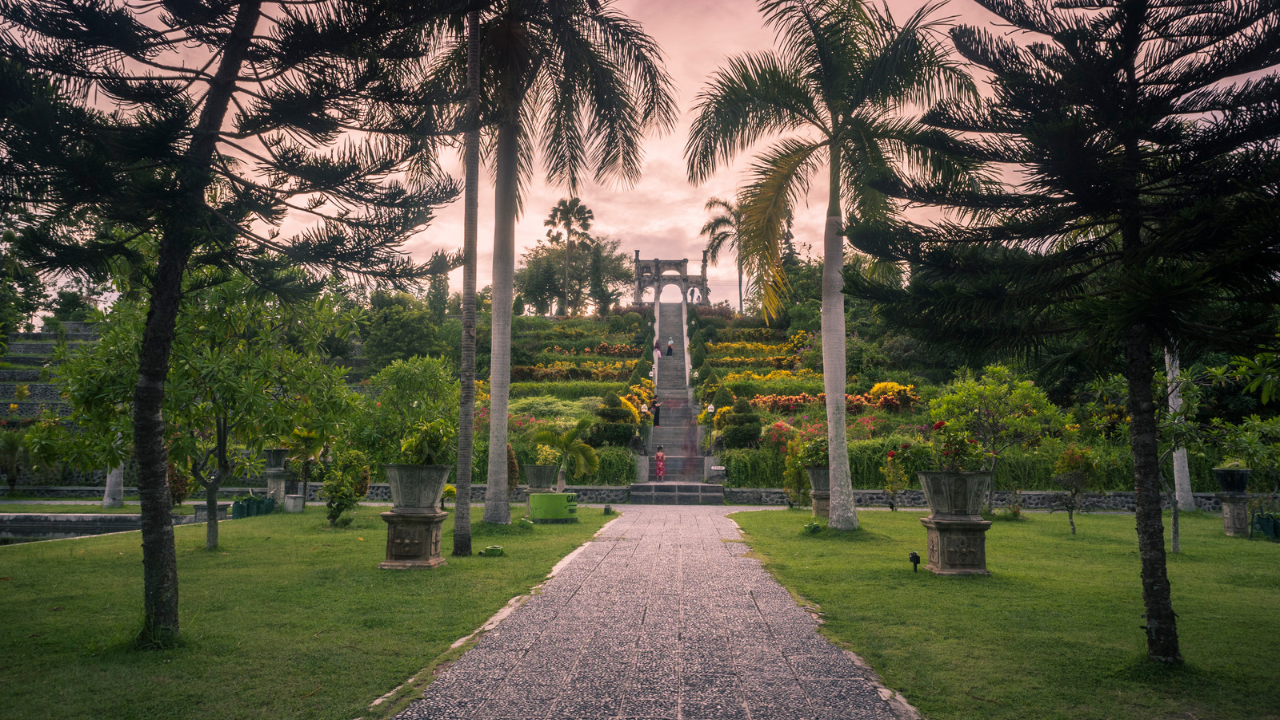
Tirta Gangga covers around 1.2 hectares, while Taman Ujung spans more than 10 hectares of gardens, pools and pavilions. That scale shapes the whole visit. Long bridges, open lawns and terraced paths spread visitors across the grounds, so even on busier days there are quiet corners by the water and shaded spots in the gardens.
Only the Bale Kapal Is Original
The 1963 eruption of Mount Agung and the earthquakes of the 1970s left the palace in ruins. Every other major structure on the site was rebuilt during the 1998–2001 restoration. The Bale Kapal survived in its early form and still shows its weathered columns and arches.
It Once Had a Nursery
The palace was built as a family retreat as well as a diplomatic venue. Accounts describe rooms on the western side set aside for the king’s children, alongside spaces for the king’s wives and attendants. Historical photographs in the Gili Bale show the king with his three wives and the wider royal family.
There Is a Temple Within the Grounds
Pura Manikan sits inside the park and has its own holy water spring. It remains an active religious site, and local worshippers use it for prayers and ceremonies alongside the visitors walking the gardens. On ceremony days, offerings and temple dress add a living cultural layer to the historic palace setting.
It Was an Early Showcase for Concrete in Bali
Taman Ujung made extensive use of concrete, then a new building technology on the island. Builders cast it into decorative moulds carrying Balinese motifs. The same technique appears at Puri Agung Karangasem, the royal family’s main palace in Amlapura, which links the two sites as part of one royal building programme.
The Bale Kapal Climb Has Around 100 Steps
A steep staircase on the western side of the grounds leads up to the Bale Kapal, the palace’s former main entrance. It is the most demanding part of the visit, and it gives the widest view with the full layout of the pools and bridges, Ujung beach and its coconut groves, Mount Lempuyang, and the sea beyond.
A Guide Through The Palace Grounds
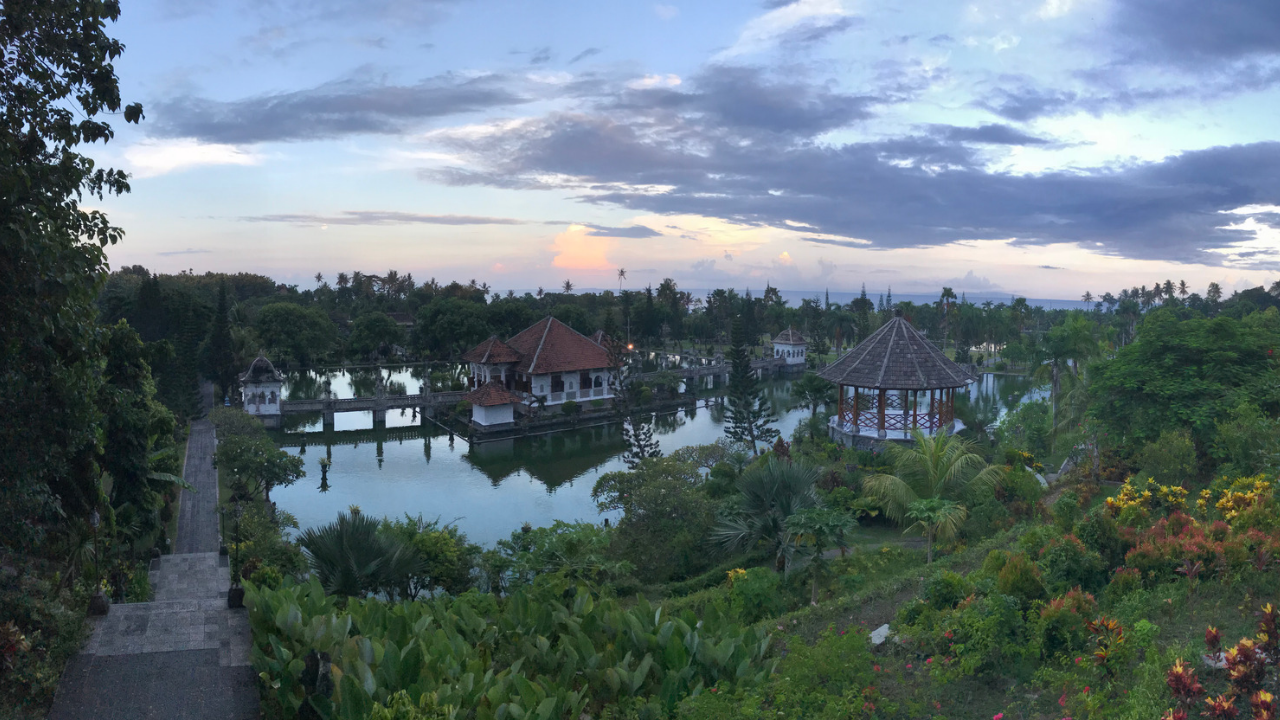
Allow one to two hours to walk the grounds at your own pace. The route below follows the natural flow of the site from the entrance to the hilltop.
- The entrance: The entrance sits on Jalan Taman Ujung, just off the Karangasem–Seraya road. A stone bridge draped in pink bougainvillea leads into the grounds, opening onto the first views across the water. It is one of the most photographed points in the park, best seen early in the day when the light is soft and the paths are quiet.
- The main pool and Gili Bale: The largest of the various large pools anchors the Taman Ujung complex. The Gili Bale stands at its centre, connected to the banks by long bridges, each with its own small pavilion. Walking out across the bridge gives a full sense of the palace's scale, with the white pavilion reflected in the water on calm mornings and Mount Agung visible inland on clear days. Step inside the Gili Bale to see the photographic archive of the royal family, which gives context to everything else on the site. Small pedal boats are available for hire on the pools for anyone who wants to see the pavilion from the water.
- Bale Bundar: From the south-facing windows of the Gili Bale, look toward Bale Bundar, a raised, round pavilion set on terraced walls at the edge of the main pool. It was built as a meditation pavilion for the king, and it offers one of the best elevated views back across the water to the island pavilion.
- Bale Bengong and the second pool: The second pool holds Bale Bengong, a large open-air pavilion with its roof carried on a single pillar. This is where the king received and entertained guests, and its open design follows traditional Balinese pavilion architecture more closely than the Gili Bale.
- The Dirah pool: In the south-east corner sits the Dirah pool, the smallest of the three and the oldest part of the complex. It is quieter than the main pool and easily passed by, yet it holds the most unusual part of the palace's history, linking the site to the black magic trials of the early 1900s.
- Bale Kapal: On the western side of the palace grounds, a steep flight of around 100 steps climbs to the Bale Kapal, the former main entrance to the palace. The climb is the most demanding part of the visit, especially in the midday heat, and also the most rewarding. From the top, the view takes in the entire complex: the pools, the bridges and the island pavilion below, coconut groves and Ujung beach to the south, Mount Lempuyang beyond, and the sea stretching toward Lombok. The weathered arches and columns of the pavilion frame the view, and this is the point where the full design of the water gardens makes sense.
- Pura Manikan: Pura Manikan, the temple within the grounds, is an active religious site with a holy water spring. Visitors should observe the dress code here and give space to anyone attending prayers or ceremonies.
Taman Ujung and Tirta Gangga - Sister Sites
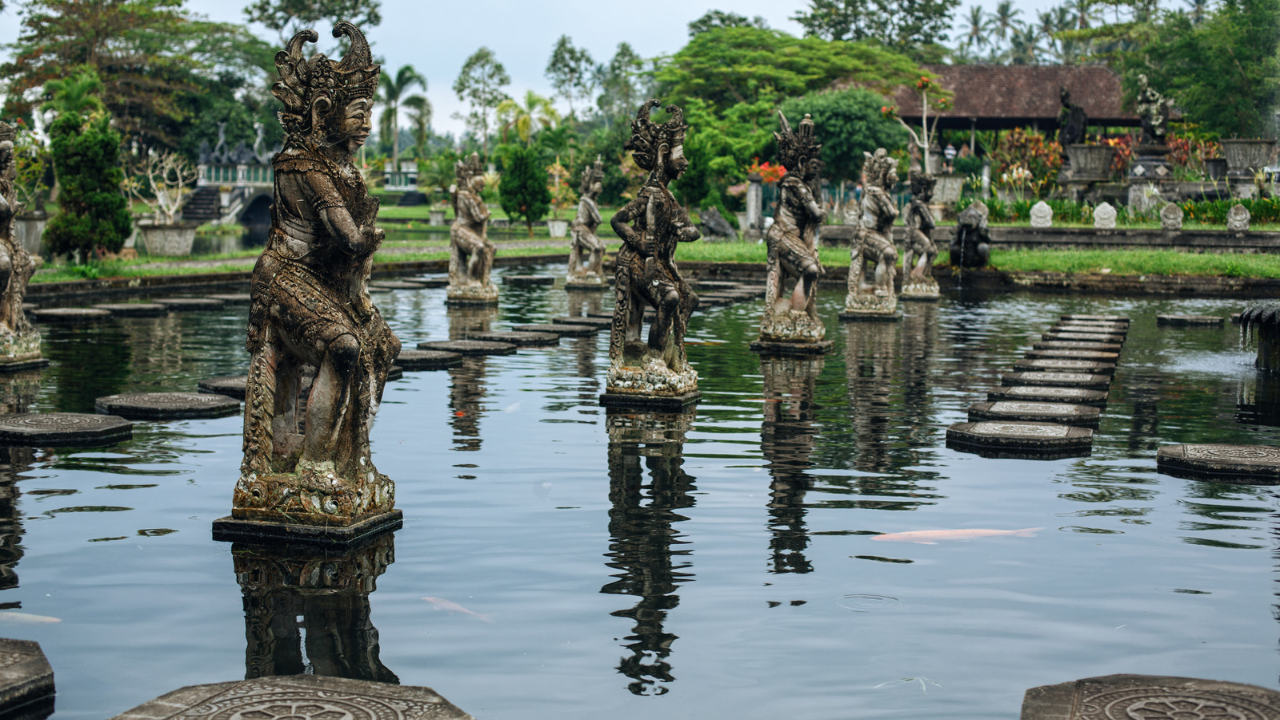
Taman Ujung has a sister site roughly 20 minutes inland. Tirta Gangga, whose name means "water from the Ganges", was built in the late 1940s by the same king, Anak Agung Agung Anglurah Ketut Karangasem, as a royal water garden for bathing and spiritual practice.
The two water palaces make a natural pair, and each offers something the other lacks. Taman Ujung is larger, more open and more architectural, built around wide pools, long bridges and the panoramic Bale Kapal. Tirta Gangga is compact and intricate, known for its tiered fountain, carved statues, stepping stones that cross its largest pool, and ponds filled with koi fish. Visiting both in a single day shows two sides of the late king's vision: one a palace for diplomacy and display, the other a garden for water and ritual.
Things to know before visiting Taman Ujung
Best Time to Visit
Arrive early in the morning, when the palace opens and before tour groups arrive from the south. Morning light suits the reflections on the main pool, and the climb to the Bale Kapal is far more comfortable before the midday heat. The late afternoon is the second-best window, with lower sun across the gardens and softer light on the pavilions. The early afternoon is the hottest and busiest part of the day.
Seasonally, the dry months between April and October bring the most reliable weather for exploring East Bali. The shoulder period at the end of the wet season, from February into early April, brings greener gardens and fewer visitors.
Opening Hours and Last Entry
Taman Ujung opens daily from early morning into the early evening, with published hours of 7am to 7pm. Confirm the last entry time before you travel, particularly on ceremony days, when local schedules can shift.
Entrance Fee
The entrance fee is paid at the gate, with separate rates for international adults, children and domestic visitors. Parking carries a small additional charge, and flying a drone requires a separate permit fee. Bring cash in Indonesian rupiah, as card payment and ATMs are limited around the palace.
Dress Code
Taman Ujung is a public park, so the dress code is relaxed compared with Bali's major temples. Modest clothing that covers shoulders and knees is respectful throughout the grounds and is required at Pura Manikan, where a sarong and sash are appropriate. Comfortable shoes with grip help on the Bale Kapal steps. Bring a hat, water and sunscreen, as shade across the open pools is limited.
Getting there
Public transport across eastern Bali runs on limited routes and timetables, so most visitors travel with a private driver. A driver allows you to set your own schedule, wait out the midday heat, and combine Taman Ujung with nearby sites in a single day. From Bali's southern resort areas, the drive east is a long journey of around three hours each way. From Candidasa, Taman Ujung sits roughly 40 minutes away by car, which makes an early start far more realistic.
How Long To Stay
Plan one to two hours for the palace itself. Visitors who climb to the Bale Kapal, step inside the Gili Bale and walk the full circuit of the pools should allow the longer end of that range.
Taman Ujung is one of many cultural sites within reach of The Seed in Bali. Our Local Discoveries page covers the full range of experiences the concierge team can arrange, including water palace tours day trips across Karangasem.
Frequently Asked Questions
Is Taman Ujung worth visiting?
Taman Ujung is worth visiting for its royal history, its blend of different architectural styles, and the stunning scenery across its pools and gardens. Built between 1909 and 1921 for the last king of Karangasem, the former royal palace combines Balinese design with European architecture across more than 10 hectares. It is one of East Bali’s most significant historic landmarks, and it draws fewer crowds than many of the island’s better-known sites.
What makes the Taman Ujung water palace unique?
The Taman Ujung water palace is unique for the way it fuses Balinese, Dutch and Chinese design influences. The king worked with a Dutch architect, a Chinese architect and Balinese master builders. Together they produced closed pavilions with Dutch colonial white façades, Balinese carved ornaments, and gardens laid out in the manner of a European botanical garden.
What architectural styles can you see at Taman Ujung?
The architectural styles at Taman Ujung blend traditional Balinese design with European architecture from the Dutch colonial period. Look for elegant bridges with European style arches crossing the main pool, the white-walled Gili Bale at its centre, karang bentala crown ornaments along the rooflines, and decorative concrete moulds carrying Balinese motifs.
What is the best time of year to visit Taman Ujung?
The best months to visit Taman Ujung are during the dry season, from April to September. Clear skies and lower rainfall suit walking the open grounds and climbing to the Bale Kapal. Within the day, early morning brings the softest light and the fewest visitors, with the late afternoon as a good second option.
How much is the entrance fee for Taman Ujung?
The entrance fee for Taman Ujung is 100,000 IDR per person, and children pay 50,000 IDR. Parking costs between 2,000 and 5,000 IDR depending on the vehicle. Payment at the gate is in cash, so bring rupiah with you.
Can you combine Taman Ujung with Lempuyang Temple and Virgin Beach?
Taman Ujung combines easily with Lempuyang Temple and Virgin Beach in a single day. A practical route starts at Lempuyang Temple at sunrise, which is about 30 minutes from the palace. It continues to Taman Ujung and nearby Tirta Gangga, and it closes with a swim and a late lunch at Virgin Beach. The concierge team at The Seed arranges this full itinerary with a private driver.
Tell us what you have in mind and we will come back with what the estate can hold.
Plan your vacation
Family holidays, reunions, and quiet time together, by the sea in Candidasa.
Learn more →
Host your retreat
A venue for facilitators, with a full hospitality team behind every session.
Learn more →