- Nyepi is the Balinese New Year, when the entire island falls silent for 24 hours.
- Nyepi traces back to the Saka calendar, which began in India in 78 AD.
- Nyepi falls the day after the dark moon, usually in March.
- Melasti and Bhuta Yajna rituals purify the island before the silence.
- Ogoh-ogoh effigies are paraded and ceremonially burned on the night before Nyepi.
- Balinese Hindus abstain from fire, work, travel and entertainment on Nyepi.
- Even the airport shuts, while hospitals remain open.
- Pecalang, the local village guards, make sure everyone stays indoors.
- On Ngembak Geni, the day after Nyepi, families visit each other to start the new year fresh.
Nyepi is the Balinese New Year, a sacred Hindu holiday observed as a 24-hour day of silence across the entire island of Bali. From 6am to 6am the following day, the island comes to a complete standstill, where roads go empty, lights go out, businesses close, and even the airport shuts. Balinese families stay inside their compounds for fasting and meditation, and visitors are asked to remain indoors with them.
Most new year celebrations around the world begin with fireworks, music and crowds in the streets. Bali's day of silence begins with stillness. It is a day of self-reflection, spiritual cleansing and renewal, marking a fresh start for the year ahead. The silence is the finale of a sequence of religious rituals that begins days earlier at the shoreline and peaks the night before with the ogoh ogoh parades.
This guide covers the history of Nyepi, the meaning behind each ritual, the four prohibitions observed on the day, interesting facts, and Nyepi dates for the next ten years.
What Is Nyepi Day?
The word Nyepi comes from the Balinese sepi, meaning quiet or silent. Nyepi day marks the first day of the new year in the Saka calendar, the lunisolar calendar Balinese Hindus use to set major religious observances.
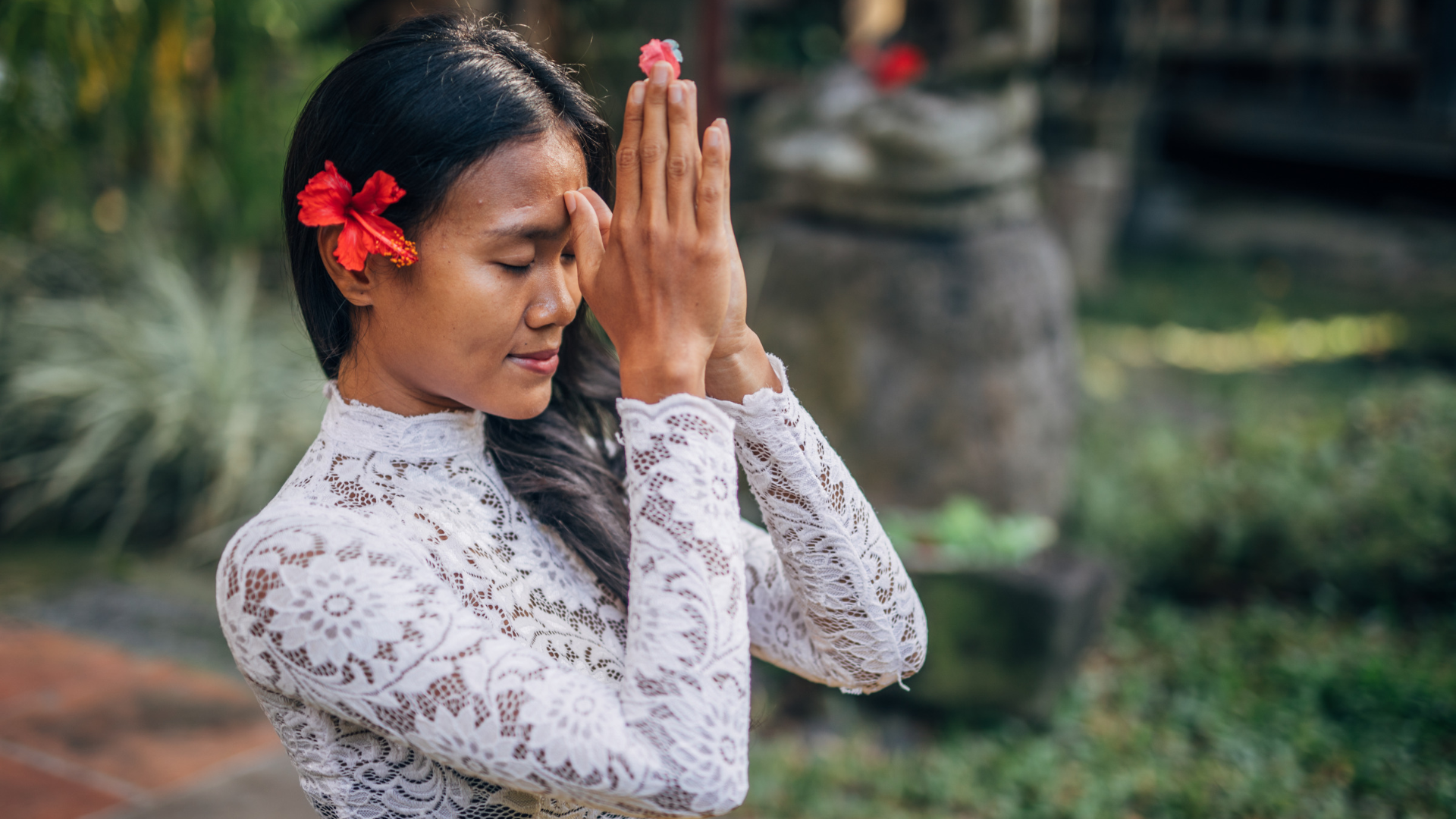
The day carries a clear spiritual purpose. Balinese Hindu teaching holds that the year's end is a time to restore balance between people, nature and the divine, the same principle at the heart of Tri Hita Karana. The days before Nyepi drive out negative energy and malevolent spirits through noise, fire and offerings. The day itself is for turning inward and includes a full 24 hours of silence observed for introspection, prayer and positive intentions for the year ahead.
Nyepi is also a national public holiday across Indonesia. In Bali, where the majority of residents are Hindu, it shapes the rhythm of the entire island, and its rules apply to everyone on Bali, regardless of faith.
The History of Nyepi and the Saka Calendar
Nyepi's roots reach back nearly two thousand years to India. The Saka era began in 78 AD, traditionally linked to the coronation of King Kanishka I of the Kushan Empire. According to the traditional account, a long period of conflict among rival groups in northern India came to a close under his rule, and the new calendar era came to symbolise tolerance and reconciliation rather than victory.
The Saka calendar travelled to the Indonesian archipelago with Hindu priests and traders. Javanese and Balinese tradition credits a priest named Aji Saka with introducing it, landing in Central Java around 456 AD. From Java, the calendar and the rituals around its new year moved east to Bali, where they took on a distinctly Balinese form.
Because the Saka era began in 78 AD, the Saka year runs roughly 78 years behind the Gregorian year. Nyepi in March 2027 marks the beginning of Saka year 1949.
The holiday shares its origins with Hindu new year festivals still observed in India, such as Ugadi, which also follow the Saka reckoning. The dates differ because each region uses its own version of the calendar.
Nyepi became a national public holiday in Indonesia in 1983 through a presidential decree. That same decision shaped one of its most recognisable traditions, covered below in the section on ogoh ogoh.
How the Balinese Calendar Sets the Date
Balinese life runs on two calendars at once. The Pawukon calendar is a 210-day cycle that sets temple anniversaries and holidays such as Galungan and Kuningan. The Saka calendar follows the moon, with each month moving from full moon (purnama) to dark moon (tilem).
Nyepi falls on the day after Tilem Kesanga, the dark moon of the ninth month. The following day opens the tenth month, Kedasa, and with it the new year. Because the lunar months shift against the Gregorian calendar, Nyepi moves each year, usually landing in March and occasionally in early April, close to the spring equinox of the northern hemisphere, the point the Indian Saka tradition associates with renewal.
The Indonesian government confirms the exact date each year through a joint ministerial decree on national holidays. For 2027, that decree sets Nyepi on Monday 8 March.
The Rituals Before Nyepi
The day of silence is the final stage of a ceremonial sequence that runs over several days. Each stage has its own purpose, and together they move from purification, to confronting negative forces, to stillness, to reconnection.
Melasti: Purification at the Water's Edge
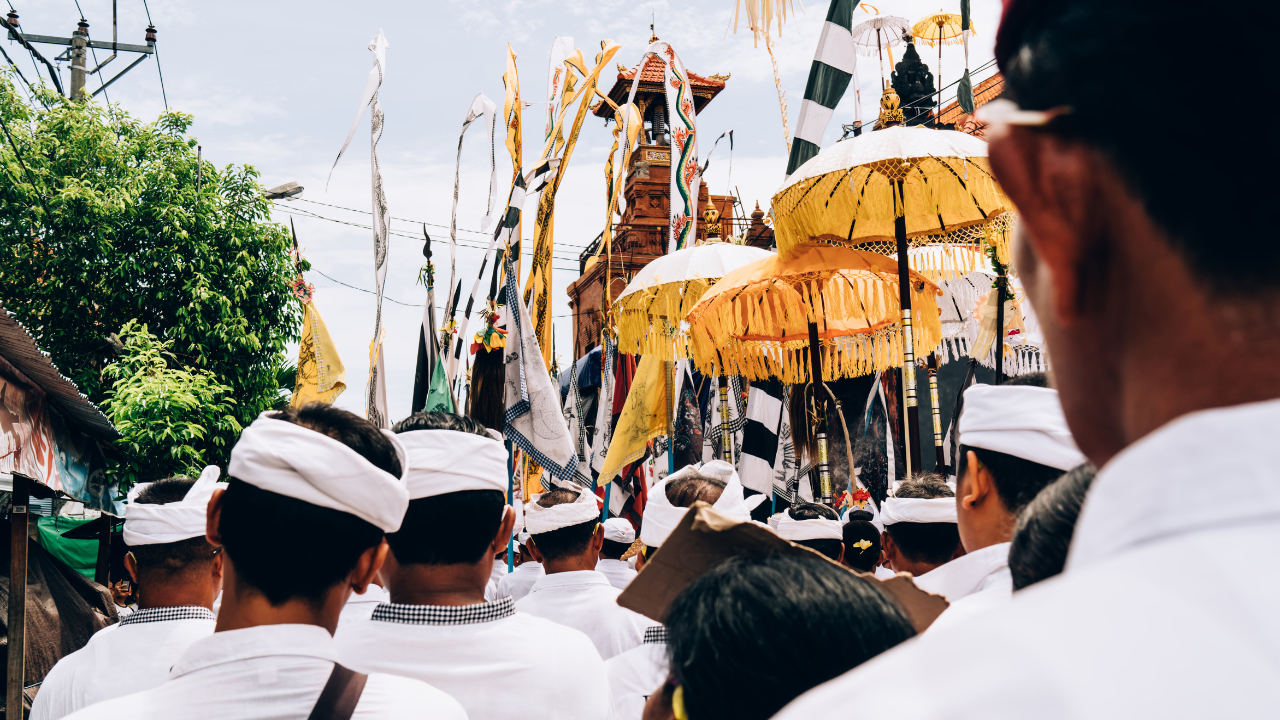
Two to three days before Nyepi, villages across Bali perform the melasti ritual. Communities form long processions with a white walk of devotees dressed in white, carrying offerings and the sacred objects of their village temples to the sea, a lake or a sacred spring.
These sacred objects include pratima (statues and symbols of deities), barong figures, umbrellas and banners. At the water, priests bless them, and the water itself is understood as a source of spiritual cleansing with the ocean as a symbol of life and of the force that washes away impurity. Villagers pray at the shoreline, collect holy water, and carry the purified objects back to their temples. In coastal regencies such as Karangasem, the procession to the beach is one of the most striking sights of the year, with hundreds of people in white moving along the sand under tall ceremonial umbrellas.
Tawur Kesanga: The Bhuta Yajna Ritual
On the day before Nyepi, coinciding with the dark moon, Balinese Hindus perform Tawur Kesanga, a bhuta yajna ritual. Bhuta yajna refers to offerings made to the bhuta kala, the lower forces and elemental spirits that Balinese cosmology holds responsible for disorder and imbalance.
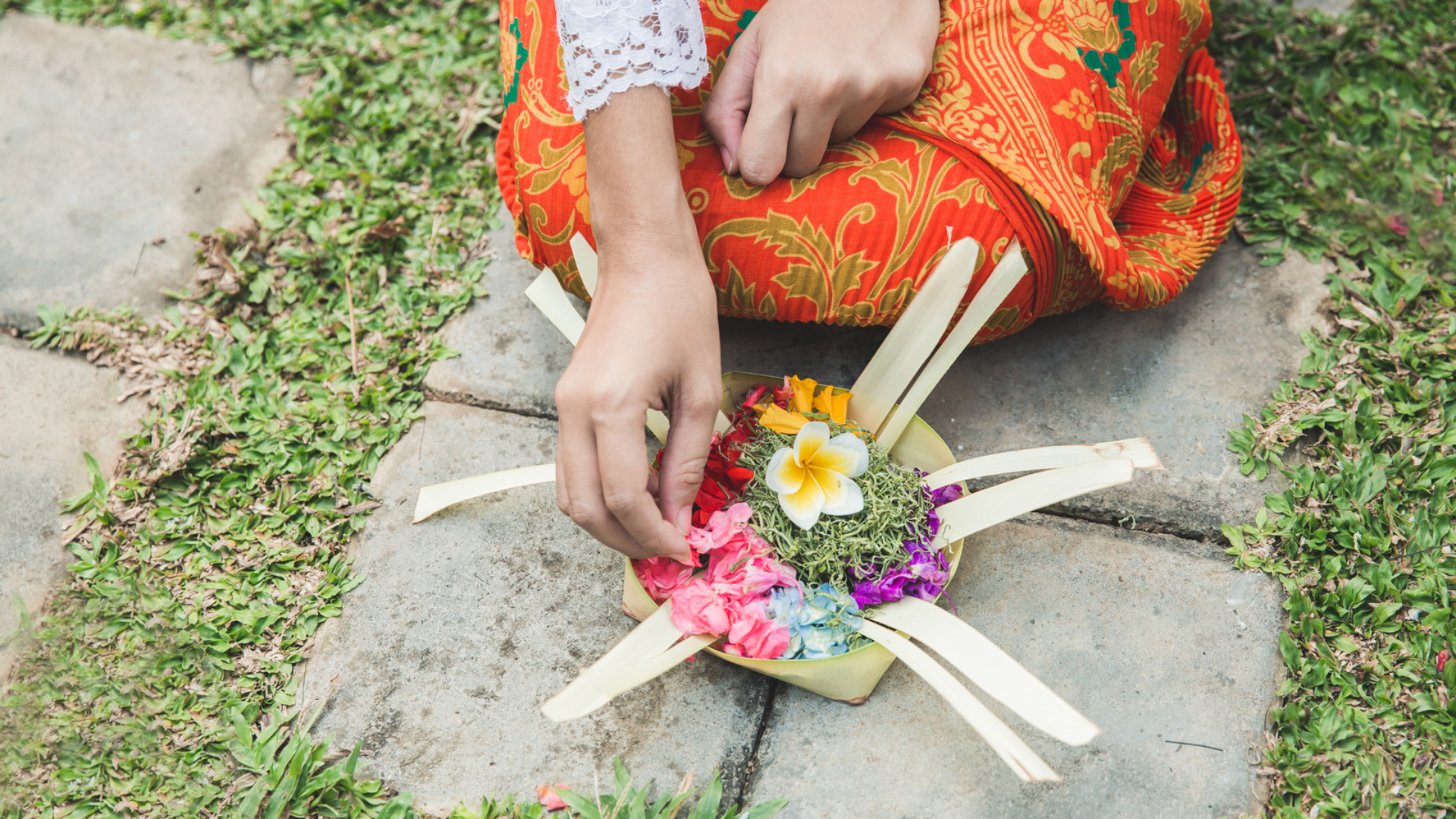
The aim is restoration of harmony between people, nature and the spiritual world. Large caru offerings are laid at crossroads, which are understood as gathering points for unsettled energy. The main provincial ceremony, Tawur Agung Kesanga, takes place in Denpasar at Puputan Badung field, with smaller versions held at regency, village and household level. At home, families perform a mecaru rite carrying the same meaning on a smaller scale.
Pengerupukan: Driving Out the Spirits
As evening falls on the day before Nyepi, the mood shifts from ceremony to noise. During Pengerupukan, families walk around their compounds with flaming torches, scatter rice, burn incense, and strike pots, pans and the kulkul, a traditional bamboo or wooden bell. The goal is to drive evil spirits out of homes and villages.
The logic behind the noise connects directly to the silence that follows. Once the spirits are chased away, the island goes quiet. Any evil spirits returning to Bali find it dark, still and apparently empty, and move on.
The Ogoh-Ogoh Parades
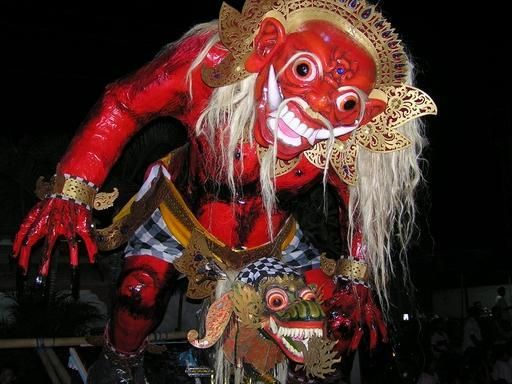
Image source: Wikipedia
Pengerupukan night is the night of the ogoh ogoh parades, the most famous visual part of Nyepi.
Ogoh-ogoh are large effigies representing the bhuta kala, demons, giants and mythological creatures with bulging eyes, fangs and wild hair. The name is commonly traced to the Balinese ogah-ogah, meaning something shaken. Each figure is built by a banjar, the neighbourhood community unit, often over several weeks. Teams of young men construct a frame from bamboo and wood, then shape and paint the body, traditionally with paper and natural materials. Some reach several metres in height.
At dusk, the ogoh ogoh parade moves through the streets. Teams carry each effigy on a bamboo platform, spinning it at crossroads to confuse and disorient the spirits it represents. Gamelan orchestras, cymbals and drums play alongside, and the streets fill with families, friends and onlookers. At the end of the night, many ogoh-ogoh are ceremonially burned, the fire symbolising the destruction of negative forces before the new year begins.
The parades are a relatively recent addition to Nyepi. Effigies of this kind existed in Balinese ritual life earlier, but processions on the eve of Nyepi became widespread after 1983, when Nyepi became a national holiday and the provincial government encouraged communities to build and parade ogoh-ogoh. Within a few decades, they grew into one of the island's largest public celebrations, with competitions between banjar for craftsmanship and design.
Nyepi Day: The Four Prohibitions
At 6am on Nyepi day, the island falls silent. For the next 24 hours, Balinese Hindus observe the Catur Brata Penyepian, the four prohibitions of Nyepi:
- Amati Geni - abstaining from fire and light, including electric lighting
- Amati Karya - abstaining from work and physical activity
- Amati Lelungan - abstaining from travel; everyone stays inside
- Amati Lelanguan - abstaining from entertainment, pleasure and indulgence
Many devout Balinese go further, observing a full day of fasting and meditation, and some keep complete silence throughout. The day is meant for looking inward and reviewing the year that has passed, reflecting on one's conduct, and setting positive intentions for the year ahead.
In practice, Bali shuts entirely. Shops, restaurants, beaches and attractions close. Street lights are switched off. Roads stay empty of traffic. Households keep curtains drawn and lights off after dark, and visitors staying at hotels and villas stay indoors or within their property grounds for the full 24 hours. Hotels are permitted minimal lighting inside.
Even the Airport Shuts
One of the most remarkable features of Nyepi is that even the airport closes. Ngurah Rai International Airport, Bali's main gateway, suspends all commercial flights for 24 hours, from 6am on Nyepi day to 6am the following day. In 2019, the closure affected 468 flights, 207 of them international.
The airport shuts for commercial traffic while remaining on standby for emergencies. Seaports close too, and ferry crossings to Java and Lombok pause for the full 24 hours.
Interesting Facts About Nyepi
Bali Once Switched Off Mobile Internet
In 2018, at the request of Parisada Hindu Dharma Indonesia, Indonesia's leading Hindu authority, mobile internet providers suspended data service across Bali for Nyepi. The aim was to keep the day focused on reflection. Essential public services kept their connections.
The Night Sky Comes Alive
With street lights, buildings and vehicles dark, Bali experiences some of the clearest night skies of the year. On cloud-free nights, the stars and the Milky Way are visible from towns that are normally lit until late, which is a rare sight on one of Indonesia's busiest islands.
Nature Gets a Day of Rest
A full day without traffic, flights or industry gives the island a measurable break. Air quality improves, birdsong replaces engine noise, and beaches sit undisturbed. For many residents, this connection with nature is part of Nyepi's meaning: a day when people step back and the island breathes.
One of the World's Only Religious Airport Closures
Ngurah Rai International Airport is widely described as the only major international airport to close completely for a religious holiday. Bali's day of silence is one of very few occasions anywhere in the world where a busy international tourism destination pauses entirely.
The Kissing Ritual the Day After
In Banjar Sesetan in Denpasar, young unmarried locals celebrate the new year with omed-omedan, often called the kissing ritual. Two groups face each other, pairs are pushed together to embrace while onlookers pour water over them, and the event marks community bonds and good fortune for the year.
Fire Battles Before Nyepi
In some Balinese villages, pre-Nyepi rituals include fire. In parts of Klungkung, men take part in Lukat Geni, a ceremonial battle with burning bundles of coconut leaves, symbolising the cleansing of negative energy before the new year.
Visitors Join In
Tourists and residents of every faith observe the day alongside the Balinese people. For many visitors, it becomes one of the most memorable days of their stay in Bali with a full day of rest.
After the Silence: Ngembak Geni
At 6am on the following day, Nyepi ends and the island returns to life. This day, Ngembak Geni, means rekindling the fire. Lights come back on, cooking resumes, and the streets slowly fill again.
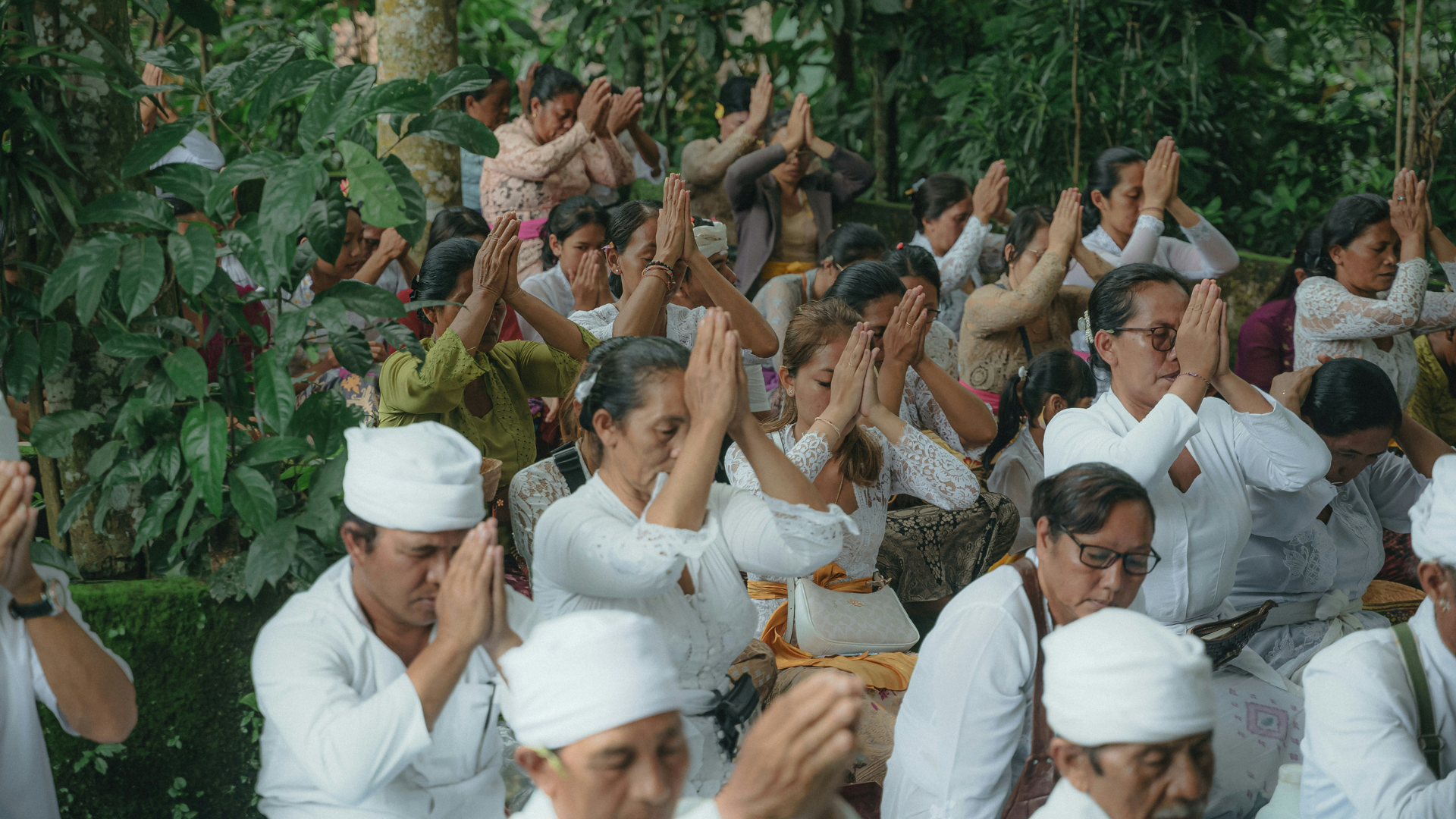
Ngembak Geni is a day of reconnection. Families visit relatives, friends and neighbours to ask forgiveness for past wrongs and to start the new year on good terms. Many return to their temples to perform religious rituals and prayers, and communities hold Dharma Shanti gatherings in the weeks that follow, focused on peace and fellowship. Where the days before Nyepi drive out negative forces and Nyepi itself turns attention inward, Ngembak Geni turns it back toward community, completing the cycle of purification, reflection and spiritual renewal.
Common questions
What is Nyepi day of silence?
Nyepi day of silence is the Balinese New Year in the Saka calendar, a sacred Hindu holiday when the entire island of Bali observes 24 hours of silence, from 6am to 6am the following day. Balinese Hindus spend the day in fasting, meditation and reflection, and everyone on the island, including visitors, stays indoors.
When is Nyepi in 2027?
Nyepi in 2027 falls on Monday 8 March, opening Saka year 1949. The ogoh ogoh parades take place on the evening of Sunday 7 March, and the island reopens at 6am on Tuesday 9 March.
What are the four prohibitions of Nyepi?
The four prohibitions, known as Catur Brata Penyepian, are Amati Geni (abstaining from fire and light), Amati Karya (abstaining from work), Amati Lelungan (abstaining from travel) and Amati Lelanguan (abstaining from entertainment). Together they guide a full day of stillness and self-reflection.
Does the airport close during Nyepi?
Ngurah Rai International Airport closes to all commercial flights for 24 hours on Nyepi, from 6am on the day of silence to 6am the following day. Seaports and ferry crossings to Java and Lombok close for the same period, while the airport stays on standby for emergencies.
What are ogoh ogoh?
Ogoh ogoh are large effigies representing evil spirits and demonic forces, built by Balinese villages from bamboo, wood and paper. They are paraded through the streets on the evening before Nyepi and often ceremonially burned to symbolise the destruction of negative energy before the new year.
Can tourists visit Bali during Nyepi?
Tourists are welcome in Bali during Nyepi and stay within their hotel or villa grounds for the full 24 hours. Arriving a few days early gives visitors the chance to see the Melasti processions and ogoh ogoh parades, and many describe the day of silence as a highlight of their stay.
Do hospitals stay open during Nyepi?
Hospitals remain open during Nyepi, with lights kept inside the buildings. Police and emergency services also operate, making basic services the only exceptions to the island-wide pause.
What happens the day after Nyepi?
The day after Nyepi, called Ngembak Geni, marks the return of daily life. Families visit relatives and friends to ask forgiveness and celebrate the new year together, and in Sesetan, Denpasar, young locals take part in the omed-omedan kissing ritual.
Choose your dates, see the live rate and book your villa in a few minutes.
Book Now
Plan your vacation
Family holidays, reunions, and quiet time together, by the sea in Candidasa.
Learn more →
Host your retreat
A venue for facilitators, with a full hospitality team behind every session.
Learn more →