- Melukat is a Balinese Hindu purification ritual that uses holy water, prayer and offerings to cleanse the body, mind and soul.
- The word traces to sulukat, meaning “good purification,” from Old Javanese.
- The practice is rooted in ancient lontar manuscripts and reflects the Tri Hita Karana philosophy of harmony.
- Tirta Empul Temple, built in 962 AD, is the most widely known melukat site and is tied to the legend of Indra.
- The ritual works on both the physical and spiritual levels to release negative energy and restore balance.
- Balinese tradition recognises seven types of melukat, each linked to a specific purpose or life stage.
- A ceremony moves from preparation and prayer through the holy water bathe to a closing blessing.
- Melukat is traditionally performed on auspicious days such as Purnama, Tilem and Kajeng Kliwon.
- Sacred water sites range from Tirta Empul in central Bali to Sapta Gangga near Candidasa and the sea.
- Visitors are welcome when they wear a sarong and sash and follow the guidance of the priest or local guide.
The melukat ceremony is a Balinese Hindu purification ritual in which holy water is used to cleanse the body, mind, and soul. Participants pray, present offerings, and then bathe beneath the water of a holy spring, waterfall, the sea, or one of the island's sacred rivers, guided by a temple priest. The aim is to release negative energy and return to daily life with a clear mind.
For Balinese Hindus, melukat sits within ordinary religious life. Families perform it on auspicious days of the Balinese calendar, before major life ceremonies, after periods of illness or difficulty, and at key moments in a child's first months. In recent years, visitors from across the world have also joined the ritual at temples and sacred water sites across the island, drawn by a purification ceremony that is deeply rooted in Balinese culture and still practised as it has been for generations.
This guide explores the origins of melukat, the meaning behind the ritual, the seven recognised types, how a ceremony unfolds step by step, and how guests can take part respectfully.
What Does the Word Melukat Mean?
The word melukat has two commonly cited roots. The first traces it to sulukat, where su means good and lukat means purification, giving a literal sense of "good purification." Lukat itself comes from Old Javanese, the literary language that carried Hindu texts and ritual vocabulary into Bali.
The second explanation, offered by Balinese religious leaders, links melukat to the phrase mala kaad. Mala refers to impurity, and kaad means removed or gone. Read this way, melukat describes the act of clearing impurity from a person, both from the physical body, known as angga sarira, and from the person's place within the wider universe.
The Origins of Melukat in Balinese Culture
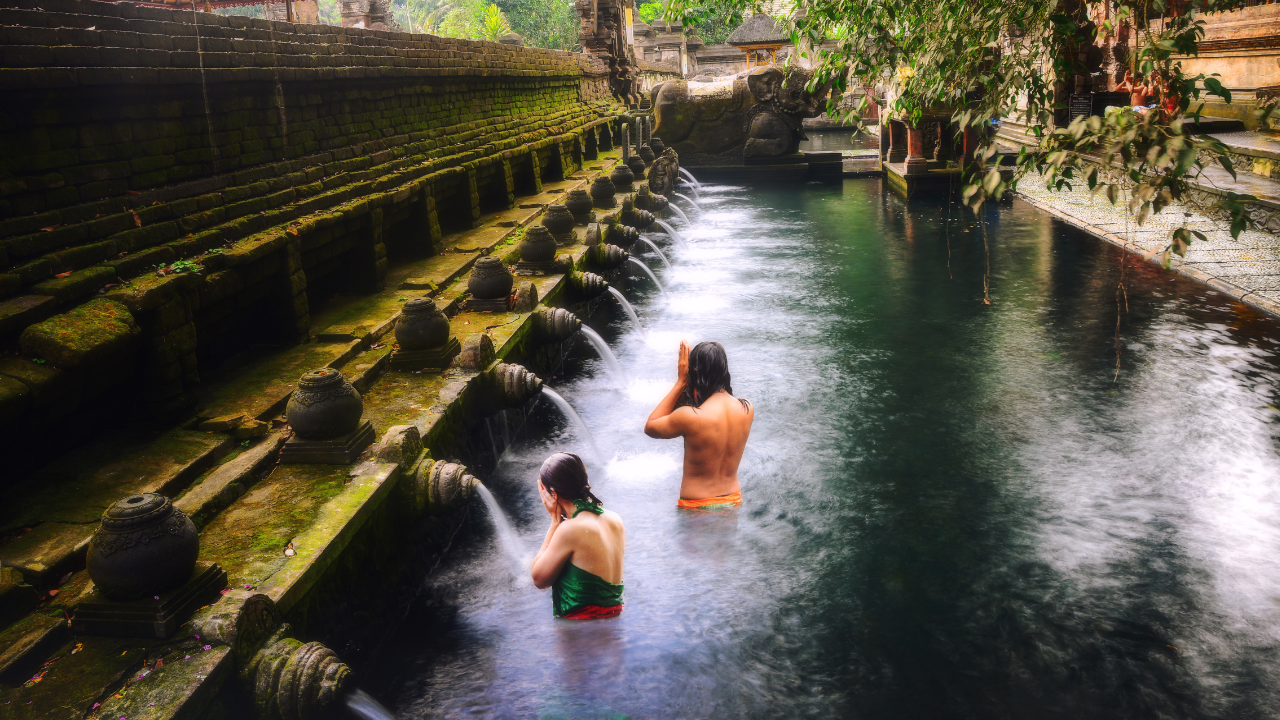
Water holds a central place in Balinese Hinduism. The religion was once commonly described as Agama Tirta, the religion of holy water, and almost every Balinese ceremony uses tirta, water that a priest has blessed through prayer and mantra. Temples are built at springs, lakes, and the meeting points of rivers, and water sourced from these sites carries a sacred status distinct from ordinary water.
Melukat belongs to Manusa Yadnya, the group of rites devoted to the spiritual welfare of human beings across the course of a life. Within this framework, the ritual addresses impurities that accumulate through a person's actions, including the residue of past deeds, known as Sancita Karmaphala, and the effects of actions in the present life.
The practice is regulated in lontar manuscripts, the palm-leaf texts that preserve Balinese religious teaching. These texts set out the purpose of each melukat, the offerings required, and the conditions under which a priest performs the ritual. Religious literature describes the true aim of melukat as the removal of the five inner impurities, or Panca Klesa, the mental and emotional patterns that cloud a person's judgement and spiritual connection.
Melukat also reflects Tri Hita Karana, the Balinese philosophy of harmony between people, nature, and the divine. Water drawn from the land, blessed through prayer, and returned to the body ties all three relationships together in a single act.
The Legend of Tirta Empul Temple
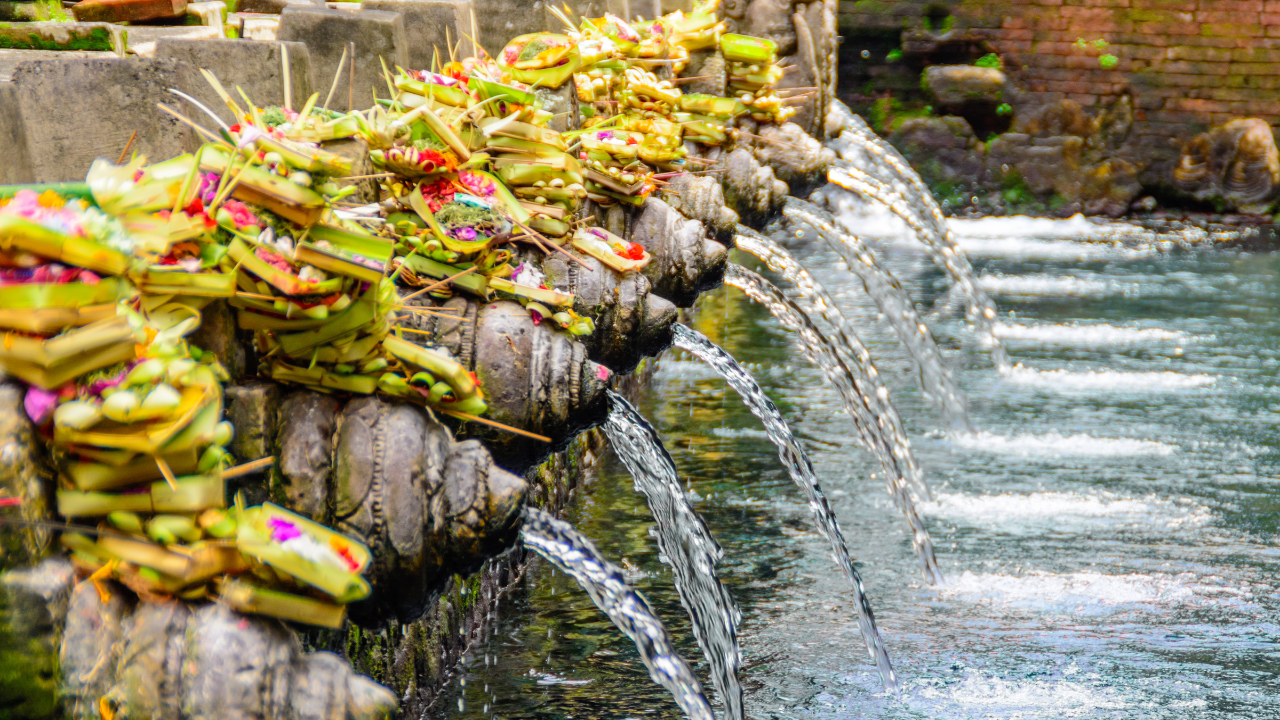
The best-known story connected to melukat centres on Tirta Empul Temple in Manukaya village, Tampaksiring, in Gianyar Regency. The name Tirta Empul translates as "holy water spring," and the bathing complex dates to 962 AD, when it was constructed under King Sri Candrabhaya Singha Warmadewa of the Warmadewa dynasty, one of Bali's earliest Hindu kingdoms.
According to Balinese legend, a powerful king named Mayadenawa ruled from the highlands and forbade his people from worshipping the gods. The god Indra descended to restore order. During the campaign, Mayadenawa crept into Indra's camp at night and poisoned the water source his army relied on. Indra responded by piercing the earth, releasing a spring of pure water that revived his soldiers. That spring is venerated today as Tirta Empul.
Indra's eventual victory over Mayadenawa is linked to Galungan, one of the most significant dates on the Balinese Hindu calendar, which marks the triumph of dharma over adharma. The water of Tirta Empul flows on into the Pakerisan River, and for more than a thousand years Balinese families have travelled to the empul temple to bathe beneath its fountains for healing and spiritual merit.
The Meaning of Melukat: What the Ritual Cleanses
At its core, melukat addresses mala, the impurities that gather in a person through thought, action, and circumstance. Balinese belief describes two layers of existencem inlcuding sekala, the visible and physical world, and niskala, the unseen spiritual world. Melukat works across both. The water cleanses the body in the physical sense, while the prayer, mantra, and offerings address the negative elements a person carries in the unseen realm.
Balinese teaching also describes three qualities, or Tri Guna, present in every person, which is sattwam (clarity and calm), rajas (activity and passion), and tamas (heaviness and inertia). When these fall out of balance, a person may experience misfortune, restlessness, or illness. Several forms of melukat aim to restore that balance.
For many participants, the meaning of melukat is also personal. The ritual offers a structured moment of reflection and a point to set down grief, stress, or a difficult chapter, and to begin again. Balinese families often describe the feeling afterwards as ringan, or lightness. The ceremony is a spiritual journey in miniature, moving from preparation through prayer and cleansing to a closing blessing, and many participants describe it as a form of spiritual renewal.
The Seven Types of Melukat
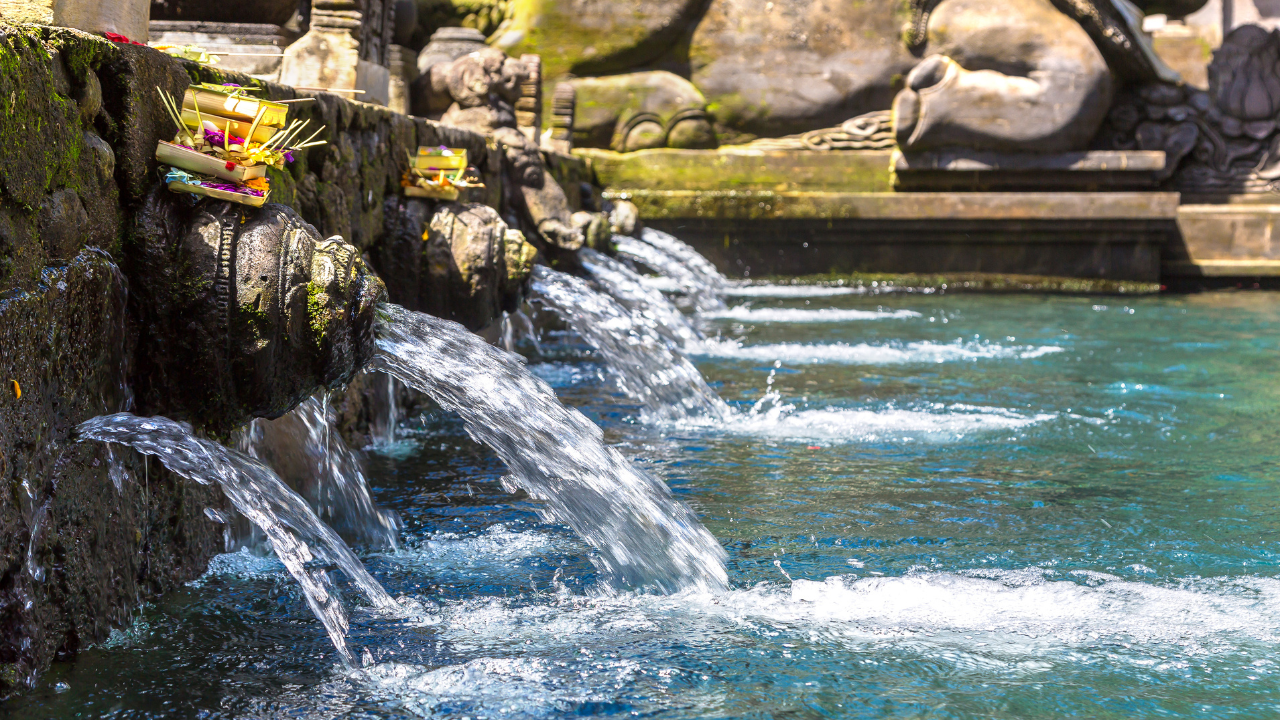
Balinese religious sources describe seven types of melukat, each tied to a specific purpose or life stage. A priest selects the appropriate form based on the person's situation, the timing on the Balinese calendar, and the ceremony it accompanies.
Melukat Astupungku
Melukat Astupungku cleanses a person of misfortune linked to the influence of their day of birth and an imbalance of the Tri Guna within them. In practical terms, it is performed for people experiencing a run of difficulty, conflict, or unrest, with the aim of restoring equilibrium between clarity, activity, and inertia.
Melukat Gini Ngelayang
Melukat Gini Ngelayang, also written Gni Ngelayang, is a healing rite performed for a person affected by illness. It accompanies, rather than replaces, physical treatment, and addresses the spiritual dimension of sickness as Balinese tradition understands it.
Melukat Gomana
Melukat Gomana is linked to a person's oton, the Balinese birthday that recurs every 210 days on the Pawukon calendar. It redeems the effects of unfavourable birth influences tied to the wewaran (day cycles) and wuku (weeks). People born during the week of Wuku Wayang, for example, traditionally undergo this rite.
Melukat Surya Yomana
Melukat Surya Yomana, also known as Surya Gomana, is performed for babies. It releases impurities from the infant and commonly forms part of Nelu Bulanin, the ceremony held when a child reaches three Balinese months, or 105 days. This is often the first time a Balinese child touches the earth after birth, making the cleansing a formal step into community and spiritual life.
Melukat Semarabeda
Melukat Semarabeda takes place as part of Pawiwahan, the Balinese Hindu wedding ceremony. It purifies the couple, symbolised in ritual texts as Sang Kama Jaya and Sang Kama Ratih, the divine pair associated with love. The rite prepares the bride and groom in body and spirit for married life and for the family they may raise together.
Melukat Prabu
Melukat Prabu is performed for leaders. It asks for success, prosperity, and sound judgement for those carrying responsibility for a community or institution.
Melukat Nawa Ratna
Melukat Nawa Ratna shares its purpose with Melukat Prabu, focusing on prosperity and protection from obstacles.
How a Melukat Ceremony Works
- Choosing the day: Timing carries meaning. Melukat is traditionally performed on auspicious days of the Balinese Hindu calendar, including Purnama (full moon), Tilem (new moon), and Kajeng Kliwon, a recurring day considered spiritually charged. Many Balinese also perform melukat on Banyu Pinaruh, the day after Saraswati, when families gather at springs and the sea for purification. Ceremonies can be arranged on other days as well, and a priest or guide advises on the most suitable timing for each visit.
- Preparing body and offerings: The first step is preparation. Participants dress in a sarong and sash, the standard attire for entering a Balinese temple, and many bring a second sarong or set of clothes for after the bathe. Offerings are assembled beforehand: canang sari, the small woven palm-leaf trays of flowers seen across Bali each morning, together with incense and, for a formal melukat, pejati or prayascita and bayuan offerings prepared for purification. Guests can learn to weave their own canang during an on-site canang making session before the ceremony.
- Prayer and the priest's blessing: At the temple, participants present their offerings and kneel for prayer, holding a flower between the fingertips and raising it in a sequence of devotions. A pemangku, the temple priest, leads the prayer and recites mantras over the participants and the offerings. In a formal melukat, the person being purified is first blessed through these mantras before entering the water.
- Coconut water: In many ceremonies, the priest then pours the water of a kelapa gading, a young ivory coconut, over the participant's head. This marks the initial cleansing and prepares the person for the sacred water that follows.
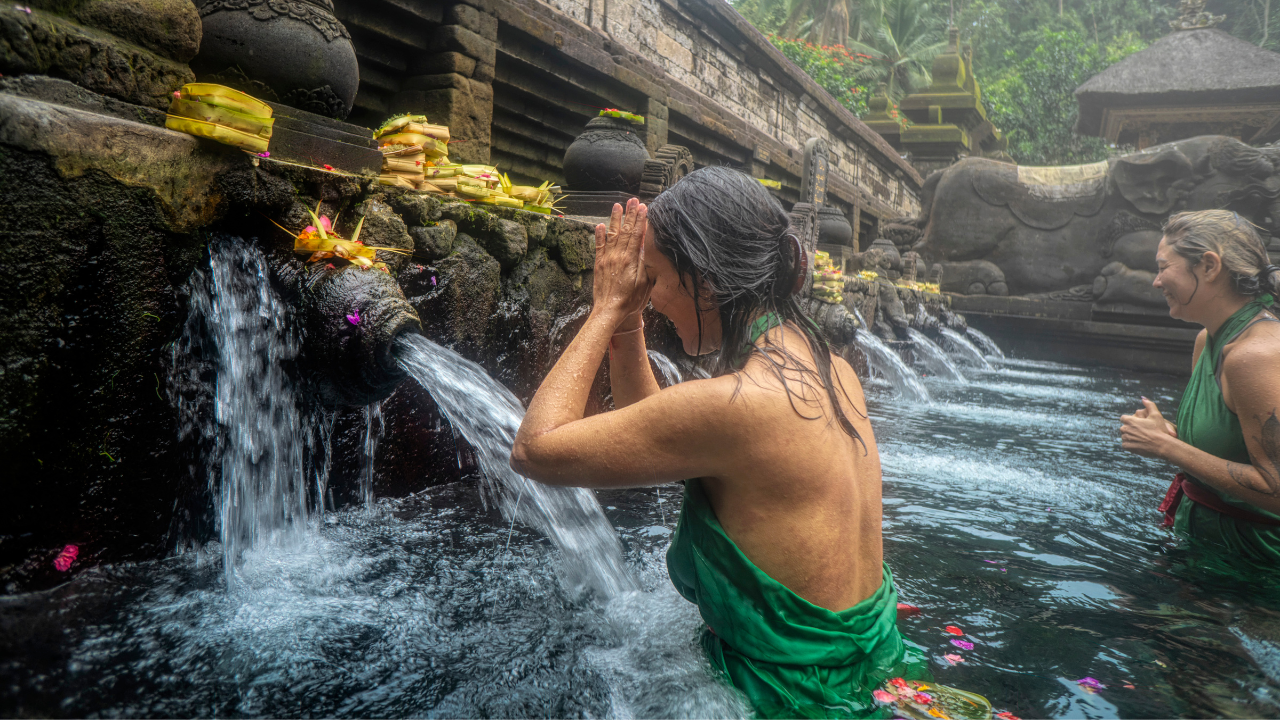
- Bathing in the holy water: The participant then enters the water to purify body and spirit. At temples with carved stone spouts, known as pancoran, this means moving from one fountain to the next in a set order, placing the head beneath each stream while praying. At a river, waterfall, or the sea, the participant immerses the body fully. The water is cool, often fast-flowing, and the moment beneath it forms the centre of the ritual: the point at which negative energy is released and carried away.
- Closing prayer: After bathing, participants change into dry clothes and return for a final prayer. The priest sprinkles holy water over each person, who sips a small amount from cupped hands three times, and presses grains of blessed rice, called bija, to the forehead and temples. The bija symbolises the seed of goodness planted in the mind and marks the ceremony as complete.
Where Melukat Takes Place: Sacred Water Sites
Melukat can take place at any site recognised as holding sacred water. Balinese tradition favours holy springs, river confluences known as campuhan, where two or more water sources meet, waterfalls, lakes, and the sea. Each location carries its own character and history.
Tirta Empul Temple, Tampaksiring
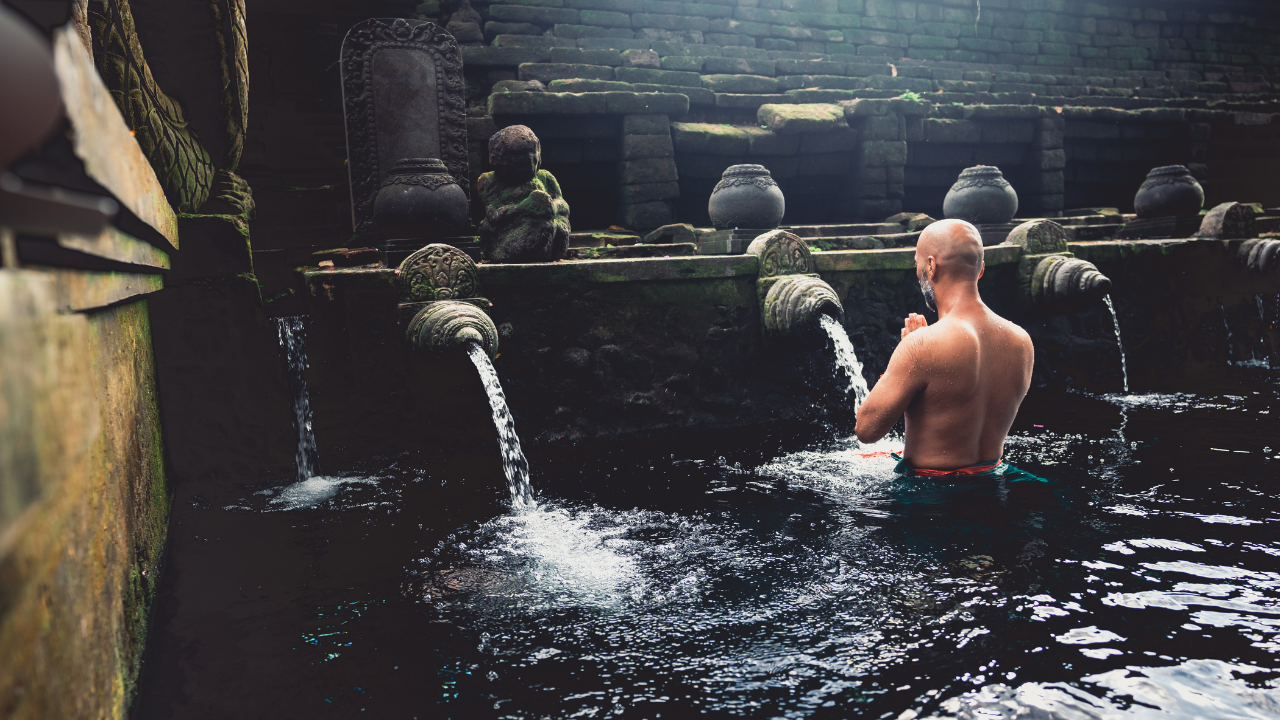
Tirta Empul is the most widely known site for the melukat ritual. The temple follows the traditional three-courtyard Balinese layout, and its purification area centres on long stone pools fed by rows of carved spouts drawing directly from the spring. Balinese worshippers and visitors bathe side by side, moving along the fountains in sequence. Some spouts serve specific ceremonial purposes, including rites for the deceased, and a local guide indicates which fountains to use and which to pass by. Tirta Empul makes a full-day trip from Candidasa.
Sapta Gangga, Timbrah Village
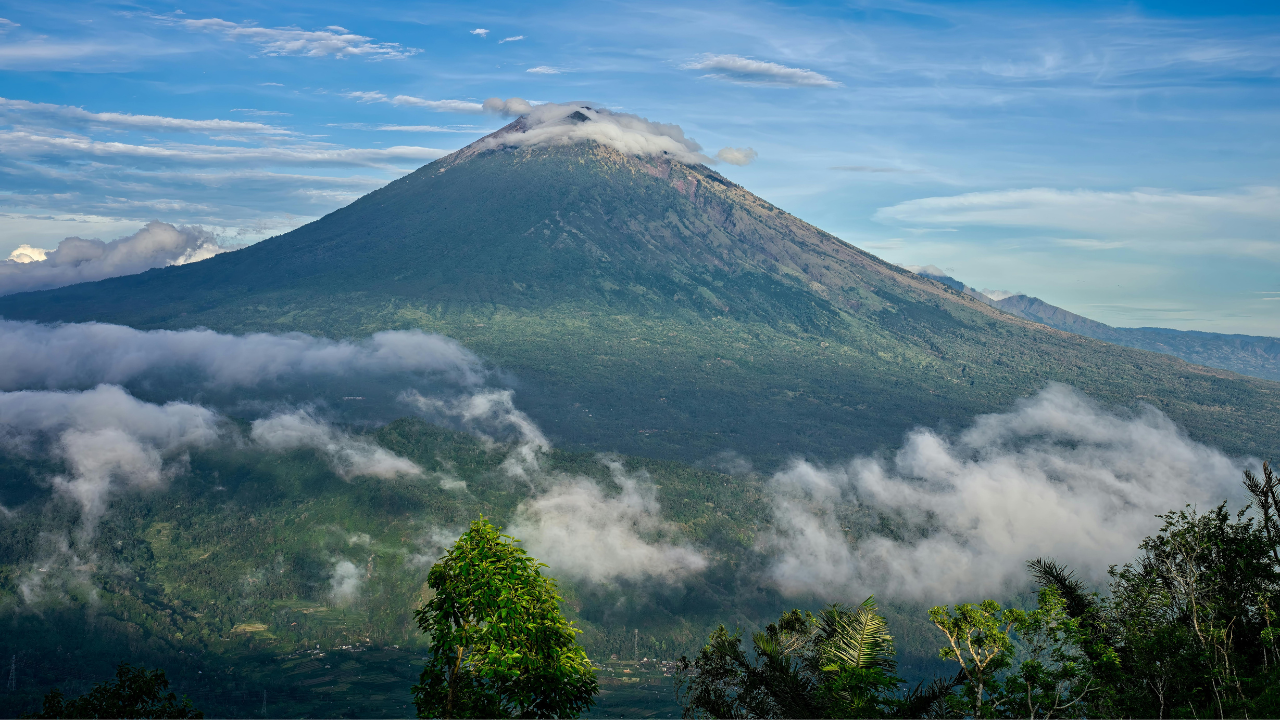
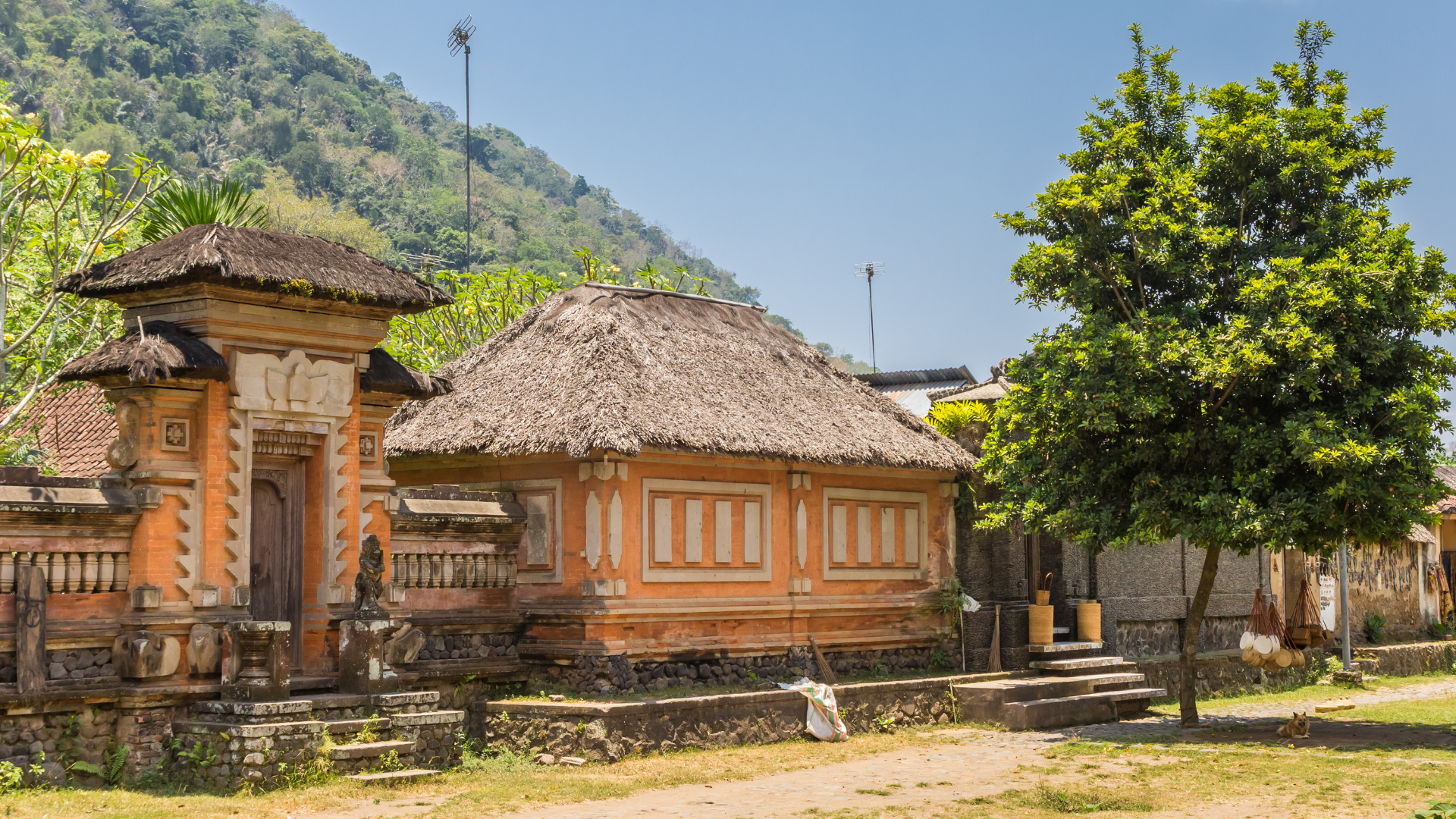
Closer to The Seed, in the Bali Aga village of Timbrah in Karangasem Regency, Pancoran Pengelukatan Sapta Gangga offers a quieter melukat setting. Its seven spouts are fed by a natural spring within the temple compound, and the site sits surrounded by farmland with Mount Agung in the background. Sapta Gangga sees far fewer visitors than the well-known temples of central Bali and draws mainly local worshippers, making it a grounded option for guests who prefer a smaller, community-focused ceremony.
The sea
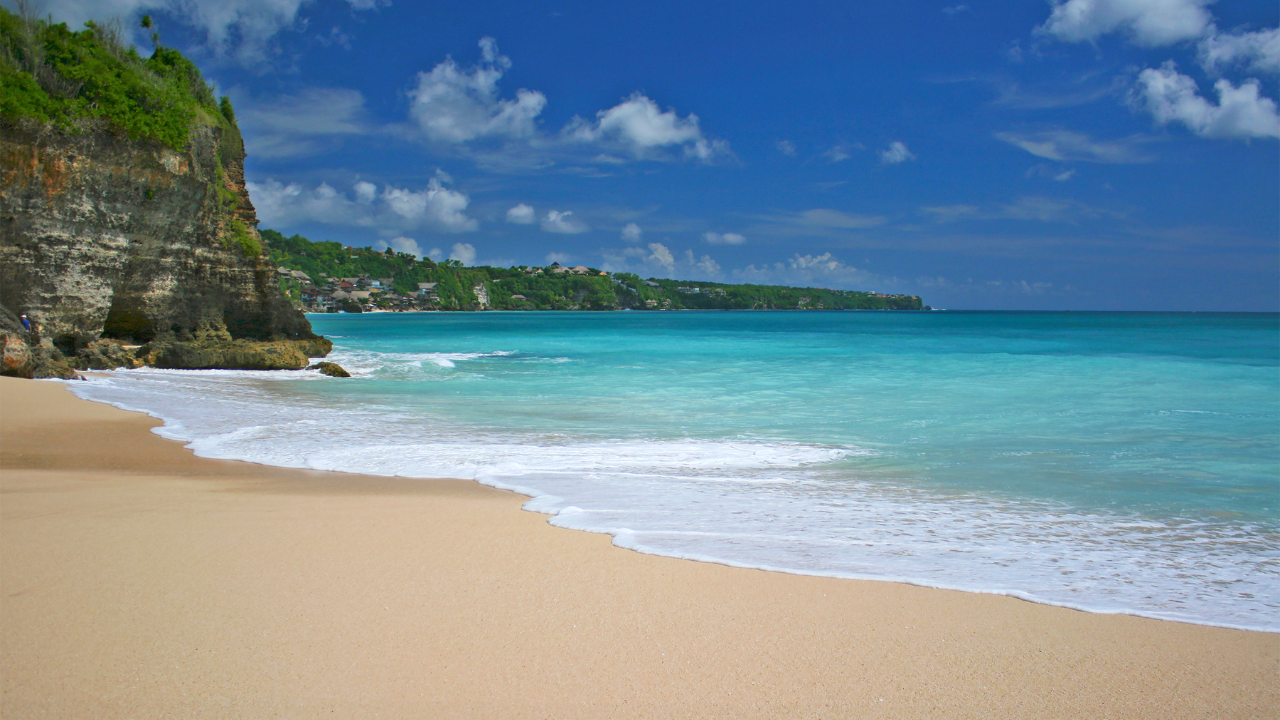
For Balinese Hindus, the sea, or segara, is a powerful purifying force. Before Nyepi, the Balinese New Year, communities across the island carry temple heirlooms to the shore for Melasti, a mass purification at the water's edge. Individual melukat at the sea follows the same logic, where the salt water absorbs and carries away what the ceremony releases. Candidasa's coastline faces east onto the Bali Sea, and early-morning ceremonies on this stretch of coast take place as the sun rises over the water.
Melukat Etiquette for Visitors
Melukat is an active religious practice. Visitors are welcome at most sites, and Balinese communities are proud to share the tradition with those who approach it with care. A few points help every participant prepare:
- Dress: wear a sarong and sash to enter the temple grounds. Many sites provide sarongs for bathing, and a modest layer such as a swimsuit or t-shirt beneath the sarong suits most locations.
- Menstruation: under Balinese Hindu custom, women refrain from entering temples or performing melukat during menstruation.
- Offerings and donations: bring a canang sari or purchase one at the temple, and leave a donation toward the upkeep of the site.
- Order of the fountains: follow the sequence set by the temple and the guidance of the priest or guide, including which spouts to pass by.
- Behaviour: keep voices low, move calmly through the water, and wait for local worshippers at each fountain.
- Photography: ask before photographing worshippers, and keep cameras away from the water during your own ceremony.
- Valuables: use the lockers or storage provided, or leave valuables with your driver.
Approached this way, melukat becomes more than an observation of Balinese culture. It becomes a participation in it, with the local community guiding each step.
Common questions
What is a melukat ceremony?
A melukat ceremony is a Balinese Hindu purification ritual that uses holy water to cleanse the body, mind, and spirit. Participants pray, present offerings, and bathe at a holy spring, river, or the sea under the guidance of a temple priest to release negative energy and restore balance.
What does the word melukat mean?
The word melukat is commonly traced to sulukat, combining su (good) and lukat (purification), from Old Javanese. Balinese religious leaders also link it to mala kaad, meaning impurity removed.
Can visitors take part in the melukat ritual?
Visitors can take part in the melukat ritual at most temples and sacred water sites across Bali, provided they dress in a sarong and sash, follow the order of the fountains, and respect the guidance of the priest or local guide.
What are the types of melukat?
Balinese sources describe seven types of melukat: Astupungku, Gini Ngelayang, Gomana, Surya Yomana, Semarabeda, Prabu, and Nawa Ratna. Each addresses a specific purpose, from healing illness to purifying a couple at their wedding or a baby at three months old.
When is the best time to perform melukat?
Melukat is traditionally performed on auspicious days of the Balinese calendar, including Purnama (full moon), Tilem (new moon), and Kajeng Kliwon, as well as Banyu Pinaruh, the day after Saraswati. Ceremonies can also be arranged on other days with a priest's guidance.
What should I wear to a melukat ceremony?
Wear a sarong and sash to enter the temple, with a swimsuit or modest layer beneath for bathing. Bring a dry change of clothes for the closing prayer, as participants change before the final blessing.
Where is Tirta Empul Temple?
Tirta Empul Temple sits in Manukaya village, Tampaksiring, in Gianyar Regency, central Bali. Built in 962 AD during the Warmadewa dynasty, it is the most widely known site for the melukat ritual and makes a full-day trip from Candidasa.
Can The Seed arrange a melukat ceremony for guests?
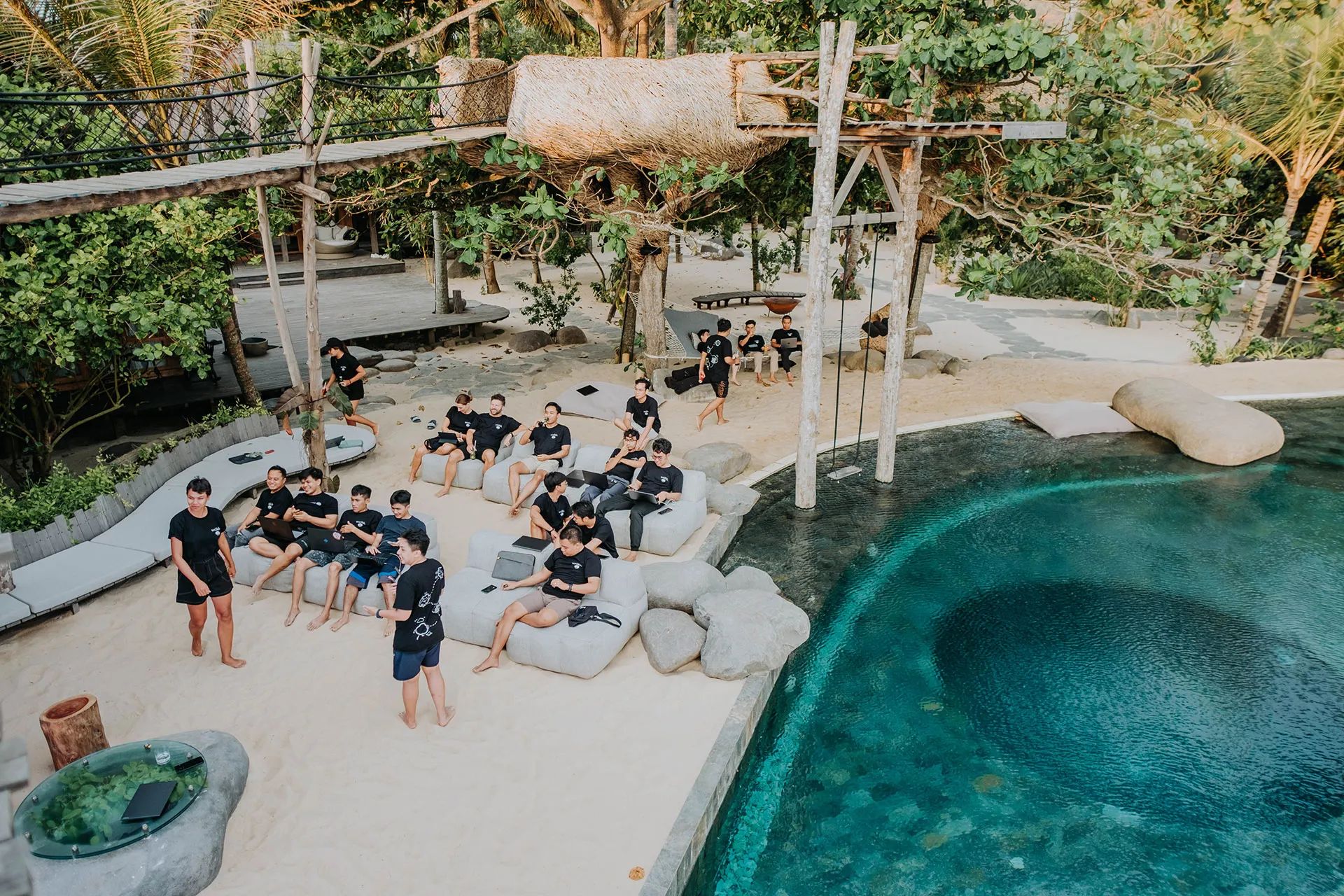
The Seed's concierge team arranges melukat ceremonies for guests, including site selection, timing, a local guide or priest, offerings, and private transport from the estate in Candidasa.
Tell us what you have in mind and we will come back with what the estate can hold.

Plan your vacation
Family holidays, reunions, and quiet time together, by the sea in Candidasa.
Learn more →
Host your retreat
A venue for facilitators, with a full hospitality team behind every session.
Learn more →